



 Chat with AI
Exam 2: Job-Order Costing

Exam 1: Managerial Accounting and Cost Concepts187 Questions
Exam 2: Job-Order Costing144 Questions
Exam 3: Activity-Based Costing208 Questions
Exam 4: Process Costing82 Questions
Exam 5: Cost-Volume-Profit Relationships121 Questions
Exam 6: Variable Costing and Segment Reporting: Tools for Management187 Questions
Exam 7: Master Budgeting229 Questions
Exam 8: Flexible Budgets, Standard Costs, and Variance Analysis173 Questions
Exam 9: Performance Measurement in Decentralized Organizations423 Questions
Exam 10: Differential Analysis: the Key to Decision Making115 Questions
Exam 11: Capital Budgeting Decisions118 Questions
Exam 12: Statement of Cash Flows132 Questions
Exam 13: Financial Statement Analysis289 Questions
Exam 14: Predetermined Overhead Rates and Overhead Analysis in a Standard Costing System111 Questions
Exam 15: Journal Entries to Record Variances56 Questions
Exam 16: The Concept of Present Value13 Questions
Exam 17: The Direct Method of Determining the Net Cash Provided by Operating Activities56 Questions
Select questions type


On August 1, Shead Corporation had $35,000 of raw materials on hand. During the month, the company purchased an additional $56,000 of raw materials. During August, $69,000 of raw materials were requisitioned from the storeroom for use in production. These raw materials included both direct and indirect materials. The indirect materials totaled $6,000. Prepare journal entries to record these events. Use those journal entries to answer the following questions: The credits to the Manufacturing Overhead account as a consequence of the raw materials transactions in August total:
(Multiple Choice)
4.8/5  (89)
(89) Stelmack Corporation, a manufacturing Corporation, has provided data concerning its operations for September. The beginning balance in the raw materials account was $20,000 and the ending balance was $27,000. Raw materials purchases during the month totaled $63,000. Manufacturing overhead cost incurred during the month was $53,000, of which $3,000 consisted of raw materials classified as indirect materials. The direct materials cost for September was:
(Multiple Choice)
5.0/5 (64)
(64) Epolito Corporation incurred $87,000 of actual Manufacturing Overhead costs during September. During the same period, the Manufacturing Overhead applied to Work in Process was $89,000. The journal entry to record the incurrence of the actual Manufacturing Overhead costs would include a:
(Multiple Choice)
4.9/5 (73)
(73) On March 1, Metevier Corporation had $37,000 of raw materials on hand. During the month, the company purchased an additional $62,000 of raw materials. During March, $69,000 of raw materials were requisitioned from the storeroom for use in production. These raw materials included both direct and indirect materials. The indirect materials totaled $6,000. The journal entry to record the purchase of raw materials would include a:
(Multiple Choice)
4.7/5 (89)
(89) Meyers Corporation had the following inventory balances at the beginning and end of November:  During November, $39,000 in raw materials (all direct materials) were drawn from inventory and used in production. The company's predetermined overhead rate was $8 per direct labor-hour, and it paid its direct labor workers $10 per hour. A total of 300 hours of direct labor time had been expended on the jobs in the beginning Work in Process inventory account. The ending Work in Process inventory account contained $4,700 of direct materials cost. The Corporation incurred $28,000 of actual manufacturing overhead cost during the month and applied $26,400 in manufacturing overhead cost. The direct materials cost in the November 1 Work in Process inventory account totaled:
 (Multiple Choice)
4.8/5 (80)
(80) Bakerston Company is a manufacturing firm that uses job-order costing. The company's inventory balances were as follows at the beginning and end of the year:  The company applies overhead to jobs using a predetermined overhead rate based on machine-hours. At the beginning of the year, the company estimated that it would work 33,000 machine-hours and incur $231,000 in manufacturing overhead cost. The following transactions were recorded for the year:
• Raw materials were purchased, $315,000.
• Raw materials were requisitioned for use in production, $307,000 ($281,000 direct and $26,000 indirect).
• The following employee costs were incurred: direct labor, $377,000; indirect labor, $96,000; and administrative salaries, $172,000.
• Selling costs, $147,000.
• Factory utility costs, $10,000.
• Depreciation for the year was $127,000 of which $120,000 is related to factory operations and $7,000 is related to selling, general, and administrative activities.
• Manufacturing overhead was applied to jobs. The actual level of activity for the year was 34,000 machine-hours.
• Sales for the year totaled $1,253,000.
Required:
a. Prepare a schedule of cost of goods manufactured.
b. Was the overhead underapplied or overapplied? By how much?
c. Prepare an income statement for the year. The company closes any underapplied or overapplied overhead to Cost of Goods Sold.
The company applies overhead to jobs using a predetermined overhead rate based on machine-hours. At the beginning of the year, the company estimated that it would work 33,000 machine-hours and incur $231,000 in manufacturing overhead cost. The following transactions were recorded for the year:
• Raw materials were purchased, $315,000.
• Raw materials were requisitioned for use in production, $307,000 ($281,000 direct and $26,000 indirect).
• The following employee costs were incurred: direct labor, $377,000; indirect labor, $96,000; and administrative salaries, $172,000.
• Selling costs, $147,000.
• Factory utility costs, $10,000.
• Depreciation for the year was $127,000 of which $120,000 is related to factory operations and $7,000 is related to selling, general, and administrative activities.
• Manufacturing overhead was applied to jobs. The actual level of activity for the year was 34,000 machine-hours.
• Sales for the year totaled $1,253,000.
Required:
a. Prepare a schedule of cost of goods manufactured.
b. Was the overhead underapplied or overapplied? By how much?
c. Prepare an income statement for the year. The company closes any underapplied or overapplied overhead to Cost of Goods Sold. (Essay)
4.7/5 (90)
(90) Departmental overhead rates are generally preferred to plant-wide overhead rates when:
(Multiple Choice)
4.8/5 (80)
(80) Meyers Corporation had the following inventory balances at the beginning and end of November:  During November, $39,000 in raw materials (all direct materials) were drawn from inventory and used in production. The company's predetermined overhead rate was $8 per direct labor-hour, and it paid its direct labor workers $10 per hour. A total of 300 hours of direct labor time had been expended on the jobs in the beginning Work in Process inventory account. The ending Work in Process inventory account contained $4,700 of direct materials cost. The Corporation incurred $28,000 of actual manufacturing overhead cost during the month and applied $26,400 in manufacturing overhead cost. The actual direct labor-hours worked during November totaled:
 (Multiple Choice)
4.8/5 (87)
(87) The Commonwealth Company uses a job-order costing system and applies manufacturing overhead cost to jobs using a predetermined overhead rate based on the cost of materials used in production. At the beginning of the year, the following estimates were made as a basis for computing the predetermined overhead rate: manufacturing overhead cost, $186,000; direct materials cost, $155,000. The following transactions took place during the year (all purchases and services were acquired on account):
a. Raw materials purchased, $96,000.
b. Raw materials requisitioned for use in production (all direct materials), $88,000.
c. Utility bills incurred in the factory, $17,000.
d. Costs for salaries and wages incurred as follows:  e. Maintenance costs incurred in the factory, $12,000.
f. Advertising costs incurred, $98,000.
g. Depreciation recorded for the year, $75,000 (75 percent relates to factory assets and the remainder relates to selling, general, and administrative assets).
h. Rental cost incurred on buildings, $80,000 (80 percent of the space is occupied by the factory, and 20 percent is occupied by sales and administration).
i. Miscellaneous selling, general, and administrative costs incurred, $12,000.
j. Manufacturing overhead cost was applied to jobs.
k. Cost of goods manufactured for the year, $480,000.
l. Sales for the year (all on account) totaled $900,000. These goods cost $550,000 to manufacture.
Required:
Prepare journal entries to record the information above. Key your entries by the letters a through l.
e. Maintenance costs incurred in the factory, $12,000.
f. Advertising costs incurred, $98,000.
g. Depreciation recorded for the year, $75,000 (75 percent relates to factory assets and the remainder relates to selling, general, and administrative assets).
h. Rental cost incurred on buildings, $80,000 (80 percent of the space is occupied by the factory, and 20 percent is occupied by sales and administration).
i. Miscellaneous selling, general, and administrative costs incurred, $12,000.
j. Manufacturing overhead cost was applied to jobs.
k. Cost of goods manufactured for the year, $480,000.
l. Sales for the year (all on account) totaled $900,000. These goods cost $550,000 to manufacture.
Required:
Prepare journal entries to record the information above. Key your entries by the letters a through l. (Essay)
4.8/5 (84)
(84) Cribb Corporation uses direct labor-hours in its predetermined overhead rate. At the beginning of the year, the estimated direct labor-hours were 17,900 hours and the total estimated manufacturing overhead was $341,890. At the end of the year, actual direct labor-hours for the year were 16,700 hours and the actual manufacturing overhead for the year was $336,890. Overhead at the end of the year was:
(Multiple Choice)
4.8/5 (78)
(78) Killian Corporation began operations on January 1. The predetermined overhead rate was set at $6.00 per direct labor-hour. Debits to Work in Process for the year totaled $550,000. Credits to Work in Process totaled $480,000. Analysis of the Corporation's records indicate that direct labor cost totaled $250,000 for the year, which represents 20,000 direct labor-hours. The direct materials used in production during the year totaled:
(Multiple Choice)
4.9/5 (77)
(77) Echo Corporation uses a job-order costing system and applies overhead to jobs using a predetermined overhead rate. During the year the company's Finished Goods inventory account was debited for $360,000 and credited for $338,800. The ending balance in the Finished Goods inventory account was $36,600. At the end of the year, manufacturing overhead was overapplied by $15,900. If the applied manufacturing overhead was $169,300, the actual manufacturing overhead cost for the year was:
(Multiple Choice)
4.7/5 (81)
(81) The direct labor rate for Brent Corporation is $9.00 per hour, and manufacturing overhead is applied to products using a predetermined overhead rate of $6.00 per direct labor-hour. During May, the company purchased $60,000 in raw materials (all direct materials) and worked 3,200 direct labor-hours. The Raw Materials inventory (all direct materials) decreased by $3,000 between the beginning and end of May. The Work in Process inventory on May 1 consisted of one job which had been charged with $4,000 in direct materials and on which 300 hours of direct labor time had been worked. There was no Work in Process inventory on May 31. The balance in the Work in Process inventory account on May 1 was:
(Multiple Choice)
4.7/5 (71)
(71) Hudek Inc., a manufacturing Corporation, has provided the following data for the month of July. The balance in the Work in Process inventory account was $20,000 at the beginning of the month and $10,000 at the end of the month. During the month, the Corporation incurred direct materials cost of $50,000 and direct labor cost of $22,000. The actual manufacturing overhead cost incurred was $58,000. The manufacturing overhead cost applied to Work in Process was $56,000. The cost of goods manufactured for July was:
(Multiple Choice)
4.8/5 (82)
(82) Jameson Corporation uses a predetermined overhead rate based on direct labor-hours to apply manufacturing overhead to jobs. The Corporation has provided the following estimated costs for the next year: 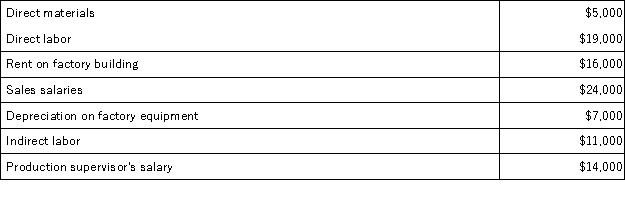 Jameson estimates that 24,000 direct labor-hours will be worked during the year. The predetermined overhead rate per hour will be:
 (Multiple Choice)
4.8/5 (80)
(80) Meyers Corporation had the following inventory balances at the beginning and end of November:  During November, $39,000 in raw materials (all direct materials) were drawn from inventory and used in production. The company's predetermined overhead rate was $8 per direct labor-hour, and it paid its direct labor workers $10 per hour. A total of 300 hours of direct labor time had been expended on the jobs in the beginning Work in Process inventory account. The ending Work in Process inventory account contained $4,700 of direct materials cost. The Corporation incurred $28,000 of actual manufacturing overhead cost during the month and applied $26,400 in manufacturing overhead cost. The amount of direct labor cost in the November 30 Work in Process inventory was:
 (Multiple Choice)
4.8/5 (75)
(75) The following accounts are from last year's books at Sharp Manufacturing: 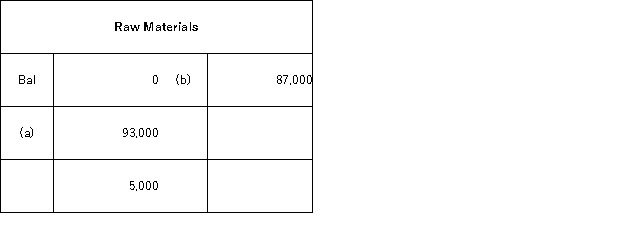
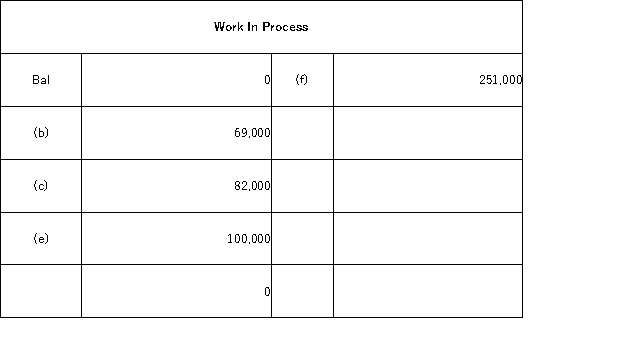

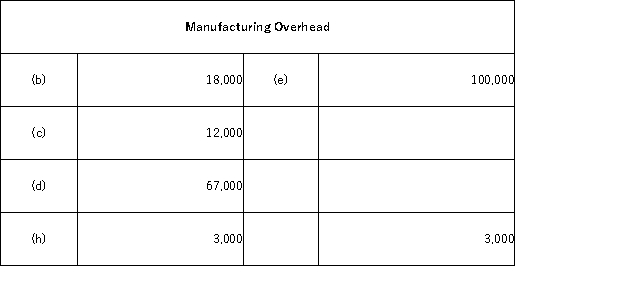
 Sharp uses job-order costing and applies manufacturing overhead to jobs based on direct labor costs. What is the manufacturing overapplied or underapplied for the year?
 (Multiple Choice)
4.8/5 (82)
(82) If the actual manufacturing overhead cost for a period exceeds the manufacturing overhead cost applied, then manufacturing overhead would be considered to be underapplied.
(True/False)
4.9/5 (100)
(100) Cacioppo Corporation bases its predetermined overhead rate on the estimated labor-hours for the upcoming year. At the beginning of the most recently completed year, the company estimated the labor-hours for the upcoming year at 66,000 labor-hours. The estimated variable manufacturing overhead was $7.45 per labor-hour and the estimated total fixed manufacturing overhead was $1,760,220. The actual labor-hours for the year turned out to be 63,800 labor-hours.
Required:
Compute the company's predetermined overhead rate for the recently completed year.
(Essay)
4.9/5 (80)
(80) The formula for computing the predetermined overhead rate is:
Predetermined overhead rate = Estimated total manufacturing overhead cost ÷ Estimated total amount of the allocation base
(True/False)
5.0/5 (83)
(83) 
Filters
- Essay(0)
- Multiple Choice(0)
- Short Answer(0)
- True False(0)
- Matching(0)