



 Chat with AI
Exam 15: Organic Compounds and the Atomic Properties of Carbon

Exam 1: Keys to the Study of Chemistry79 Questions
Exam 2: The Components of Matter105 Questions
Exam 3: Stoichiometry of Formulas and Equations87 Questions
Exam 4: The Major Classes of Chemical Reactions124 Questions
Exam 5: Gases and the Kinetic-Molecular Theory115 Questions
Exam 6: Thermochemistry: Energy Flow and Chemical Change85 Questions
Exam 7: Quantum Theory and Atomic Structure83 Questions
Exam 8: Electron Configuration and Chemical Periodicity85 Questions
Exam 9: Models of Chemical Bonding74 Questions
Exam 10: The Shapes of Molecules109 Questions
Exam 11: Theories of Covalent Bonding58 Questions
Exam 12: Intermolecular Forces: Liquids, Solids, and Phase Changes111 Questions
Exam 13: The Properties of Mixtures: Solutions and Colloids105 Questions
Exam 14: Periodic Patterns in the Main Group Elements: Bonding, Structure, and Reactivity118 Questions
Exam 15: Organic Compounds and the Atomic Properties of Carbon118 Questions
Exam 16: Kinetics: Rates and Mechanisms of Chemical Reactions88 Questions
Exam 17: Equilibrium: the Extent of Chemical Reactions104 Questions
Exam 18: Acid-Base Equilibria103 Questions
Exam 19: Ionic Equilibria in Aqueous Systems119 Questions
Exam 20: Thermodynamics: Entropy, Free Energy, and the Direction of Chemical Reactions94 Questions
Exam 21: Electrochemistry: Chemical Change and Electrical Work102 Questions
Exam 22: The Elements in Nature and Industry57 Questions
Exam 23: The Transition Elements and Their Coordination Compounds92 Questions
Exam 24: Nuclear Reactions and Their Applications94 Questions
Select questions type


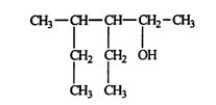

Because organic compounds are associated with living organisms, their properties are governed by fundamentally different chemical principles from those of inorganic compounds.
(True/False)
4.8/5  (81)
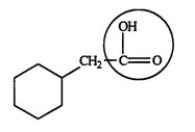
(81) 
Vanillin is a flavoring agent which occurs naturally in the vanilla bean, the seed of an orchid. Identify the functional group circled. 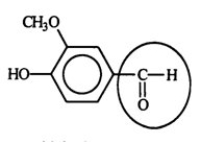
(Multiple Choice)
4.9/5 (78)
(78) Alcohols undergo a variety of reactions. Which one of the following reactions is not undergone by the alcohol functional group?
(Multiple Choice)
4.8/5 (66)
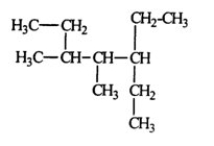
(66) 
Each amino acid has two functional groups in common and one of 20 other groups attached to the -carbon. The two functional groups are
(Multiple Choice)
4.9/5 (67)
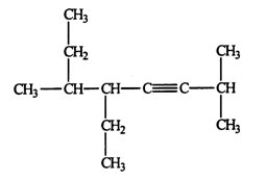
(67) 
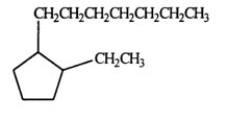
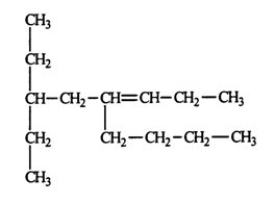
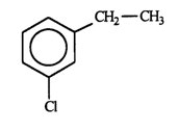
In one sentence, what is the general requirement for a molecule to be optically active?
(Essay)
4.9/5 (70)
(70) Which one of the following classes of organic compound does not contain the carbonyl (C=O) group?
(Multiple Choice)
4.9/5 (79)
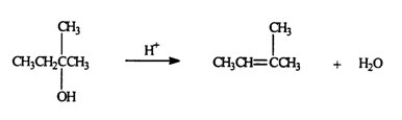
(79) 

Filters
- Essay(0)
- Multiple Choice(0)
- Short Answer(0)
- True False(0)
- Matching(0)