



 Chat with AI
Exam 15: Organic Compounds and the Atomic Properties of Carbon

Exam 1: Keys to the Study of Chemistry79 Questions
Exam 2: The Components of Matter105 Questions
Exam 3: Stoichiometry of Formulas and Equations87 Questions
Exam 4: The Major Classes of Chemical Reactions124 Questions
Exam 5: Gases and the Kinetic-Molecular Theory115 Questions
Exam 6: Thermochemistry: Energy Flow and Chemical Change85 Questions
Exam 7: Quantum Theory and Atomic Structure83 Questions
Exam 8: Electron Configuration and Chemical Periodicity85 Questions
Exam 9: Models of Chemical Bonding74 Questions
Exam 10: The Shapes of Molecules109 Questions
Exam 11: Theories of Covalent Bonding58 Questions
Exam 12: Intermolecular Forces: Liquids, Solids, and Phase Changes111 Questions
Exam 13: The Properties of Mixtures: Solutions and Colloids105 Questions
Exam 14: Periodic Patterns in the Main Group Elements: Bonding, Structure, and Reactivity118 Questions
Exam 15: Organic Compounds and the Atomic Properties of Carbon118 Questions
Exam 16: Kinetics: Rates and Mechanisms of Chemical Reactions88 Questions
Exam 17: Equilibrium: the Extent of Chemical Reactions104 Questions
Exam 18: Acid-Base Equilibria103 Questions
Exam 19: Ionic Equilibria in Aqueous Systems119 Questions
Exam 20: Thermodynamics: Entropy, Free Energy, and the Direction of Chemical Reactions94 Questions
Exam 21: Electrochemistry: Chemical Change and Electrical Work102 Questions
Exam 22: The Elements in Nature and Industry57 Questions
Exam 23: The Transition Elements and Their Coordination Compounds92 Questions
Exam 24: Nuclear Reactions and Their Applications94 Questions
Select questions type


Identify the products for the reaction between cycloheptene and bromine. 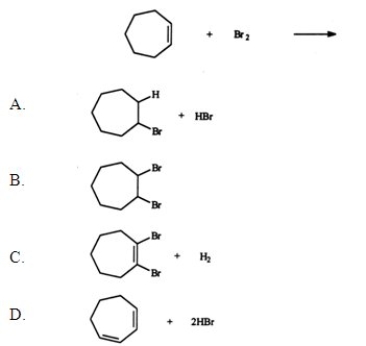
(Multiple Choice)
4.8/5  (82)
(82) 
The millipede ejects the compound shown below to protect itself from its enemies. Identify the functional group circled. 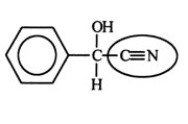
(Multiple Choice)
4.9/5 (73)
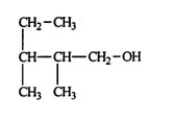
(73) The protein amino acid sequence, the RNA base sequence, and the DNA base sequence are interrelated. Which of the following descriptions is correct?
(Multiple Choice)
4.8/5 (83)
(83)  B)
 C)

All ketone molecules are capable of hydrogen bonding to other ketone molecules.
(True/False)
4.8/5 (88)
(88) Urea carries waste nitrogen from the body in urine. Identify the functional group circled. 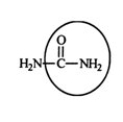
(Multiple Choice)
4.9/5 (89)
(89) Identify the principal organic products for the following reaction. 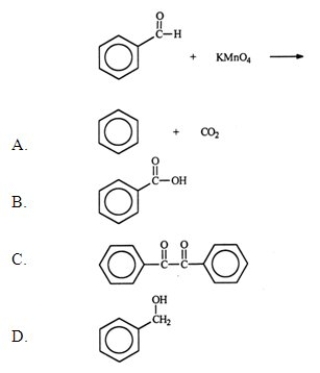
(Multiple Choice)
5.0/5 (87)
(87) Dacron is a ___________ compound and is produced by a __________ reaction.
(Multiple Choice)
4.9/5 (86)
(86) Identify the two principal products of the reaction between ammonia and ethyl propionate. 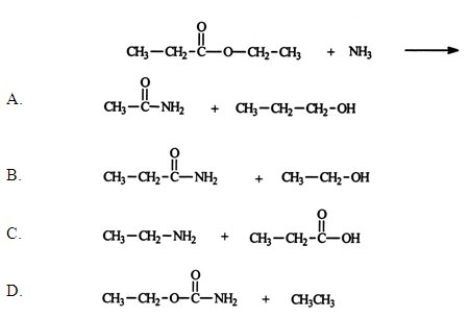
(Multiple Choice)
4.7/5 (79)
(79) Select the correct type for the following reaction. CH3CH2CH2CH2OH + HBr CH3CH2CH2CH2Br + H2O
(Multiple Choice)
4.8/5 (72)
(72) Amygdalin (Laetrile) was once touted for its potential anticancer activity. However, the claims were never scientifically verified. Identify the functional group circled. 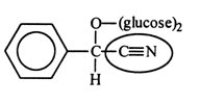
(Multiple Choice)
4.9/5 (77)
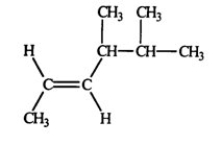
(77) 
Benzene will react with chloromethane in the presence of a catalyst to produce toluene and hydrogen chloride. Select the correct reaction type for the process. 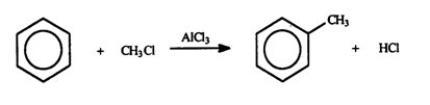
(Multiple Choice)
4.9/5 (77)
(77) Identify the products of the reaction of 3-octene with chlorine. 
(Multiple Choice)
4.8/5 (84)
(84) Identify the organic product when cyclohexanol reacts with excess potassium dichromate in the presence of sulfuric acid. 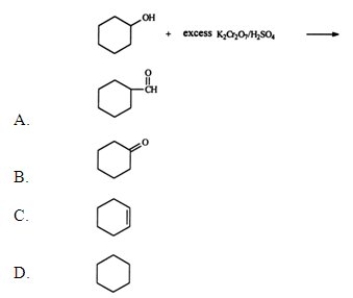
(Multiple Choice)
4.7/5 (84)
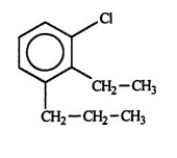
(84) 
Anethole, a derivative of anise, is used in flavoring and as perfume in soap and toothpaste. Identify the functional group circled. 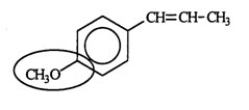
(Multiple Choice)
4.8/5 (77)
(77) 
Filters
- Essay(0)
- Multiple Choice(0)
- Short Answer(0)
- True False(0)
- Matching(0)