



 Chat with AI
Exam 11: Decisions, Judgments, and Reasoning

Exam 1: Cognitive Psychology: An Introduction102 Questions
Exam 2: Cognitive Neuroscience and Cognitive Science118 Questions
Exam 3: Sensation and Perception149 Questions
Exam 4: Attention120 Questions
Exam 5: Short-Term Working Memory110 Questions
Exam 6: Learning and Remembering133 Questions
Exam 7: Knowing105 Questions
Exam 8: Using Knowledge in the Real World110 Questions
Exam 9: Language111 Questions
Exam 10: Comprehension: Written and Spoken Language125 Questions
Exam 11: Decisions, Judgments, and Reasoning98 Questions
Exam 12: Problem Solving106 Questions
Exam 13: Cognition and Emotion107 Questions
Exam 14: Cognitive Development149 Questions
Select questions type


The psychological distance between small numbers is compressed relative to the psychological difference between large numbers.)
(True/False)
4.9/5  (81)
(81) Decisions about size differences are sped up when the stimuli differ by a greater amount.This reflects __________.
(Multiple Choice)
4.8/5 (85)
(85) Sometimes people make decision-making errors because of limited __________.
(Multiple Choice)
5.0/5 (72)
(72) 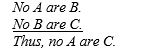
When doing counterfactual thinking,what kind of change is the easiest to imagine and then base decisions upon?
(Multiple Choice)
5.0/5 (78)
(78) The belief that small samples will be representative of the population from which they are selected is __________.
(Multiple Choice)
4.7/5 (90)
(90) Describe how the owners of a used car lot might try to use some of the heuristics discussed in this chapter to their advantage.
(Essay)
4.8/5 (92)
(92) A German sample was better at (correctly)identifying that San Diego was more populous than San Antonio than a U.S.sample.This result is best described as reflecting __________.
(Multiple Choice)
4.8/5 (87)
(87) In judgments of "bigness," "8 vs.12" will be judged more quickly than "8 vs.9."
(True/False)
4.8/5 (82)
(82) The subjective experience of magnitude is a direct function of the amount of physical stimulation.
(True/False)
4.7/5 (75)
(75) When hypothesis testing with increasingly complex if-then relations,the typical mistake is to search for positive,confirming evidence.
(True/False)
4.9/5 (66)
(66) When we alter an unusual story element,substituting a more typical or normal element in its place,we refer to this as reflecting __________.
(Multiple Choice)
4.8/5 (81)
(81) Two groups of participants read identical stories that differed in their endings: meeting a new person and having the story end in a marriage proposal,a rape scenario,or,as a control,a neutral ending (Carli,1999).People __________.
(Multiple Choice)
4.8/5 (90)
(90) The difference in "guestimate" answers for 8x7x6x5x4x3x2x1 versus 1x2x3x4x5x6x7x8 reveals __________.
(Multiple Choice)
4.8/5 (77)
(77) 
Filters
- Essay(0)
- Multiple Choice(0)
- Short Answer(0)
- True False(0)
- Matching(0)