



 Chat with AI
Exam 2: Acids and Bases: Central to Understanding Organic Chemistry

Exam 1: Remembering General Chemistry: Electronic Structure and Bonding90 Questions
Exam 2: Acids and Bases: Central to Understanding Organic Chemistry43 Questions
Exam 3: An Introduction to Organic Compounds: Nomenclature, physical Properties, and Structure136 Questions
Exam 4: Isomers: the Arrangement of Atoms in Space125 Questions
Exam 5: Alkenes: Structure,nomenclature,and an Introduction to Reactivity - Thermodynamics and Kinetics84 Questions
Exam 6: The Reactions of Alkenes - the Stereochemistry of Addition Reactions89 Questions
Exam 7: The Reactions of Alkynes - Introduction to Multistep Synthesis124 Questions
Exam 8: Delocalized Electrons: Their Effect on Stability, pka, and the Products of a Reaction - Aromaticity and Electronic Effects: an Introduction to the Reactions of Benzene185 Questions
Exam 9: Substitution and Elimination Reactions of Alkyl Halides228 Questions
Exam 10: Reactions of Alcohols, ethers, epoxides, amines and Sulfur-Containing Compounds109 Questions
Exam 11: Organometallic Compounds65 Questions
Exam 12: Radicals141 Questions
Exam 13: Mass Spectrometry,infrared Spectroscopy,and Uvvis Spectroscopy140 Questions
Exam 14: Nmr Spectroscopy122 Questions
Exam 15: Reactions of Carboxylic Acids and Carboxylic Acid Derivatives126 Questions
Exam 16: Reactions of Aldehydes and Ketones122 Questions
Exam 17: Reactions at the Α-Carbon121 Questions
Exam 18: Reactions of Benzene and Substituted Benzenes168 Questions
Exam 19: More About Amines - Reactions of Heterocylic Compounds126 Questions
Exam 20: The Organic Chemistry of Carbohydrates110 Questions
Exam 21: Amino Acids,peptides,and Proteins117 Questions
Exam 22: Catalysis in Organic Reactions and in Enzymatic Reactions92 Questions
Exam 23: The Organic Chemistry of the Coenzymes, compounds Derived From Vitamins102 Questions
Exam 24: The Organic Chemistry of the Metabolic Pathways90 Questions
Exam 25: The Organic Chemistry of Lipids37 Questions
Exam 26: The Chemistry of the Nucleic Acids94 Questions
Exam 27: Synthetic Polymers116 Questions
Exam 28: Pericyclic Reactions102 Questions
Select questions type


Consider the set of compounds,NH3,HF,and H2O.Rank these compounds in order of increasing acidity and discuss your rationale.
(Essay)
4.9/5  (78)
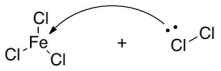
(78) 
At what pH will 25% of a compound with a pKa of 5.3 be in its basic form?
(Short Answer)
4.9/5 (67)
(67) What would be the conjugate acid in the following acid base reaction? 
(Multiple Choice)
4.9/5 (77)
(77) When a small amount of hexanoic acid [CH3(CH2)4CO2H,pKa~4.8],is added to a separatory funnel which contains the organic solvent diethyl ether and water with a pH of 12.0,it is found mainly in the ________ phase as ________.
(Multiple Choice)
4.9/5 (75)
(75) If H2O has a pKa value of 15.7 and HF has a pKa value of 3.2,which is a stronger base,HO- or F-? Explain.
(Essay)
4.8/5 (73)
(73) 2-Propanol is shown below.Draw the structure of its conjugate base.
(CH3)2CHOH
(Essay)
4.8/5 (69)
(69) Predict the direction of equilibrium in the following reaction.Explain your answer. 
(Essay)
4.9/5 (95)
(95) Propanoic acid,CH3CH2COOH,has a pKa =4.9.Draw the structure of the conjugate base of propanoic acid and give the pH above which 90% of the compound will be in this conjugate base form.
(Essay)
4.7/5 (77)
(77) What is the product formed from the following acid-base reaction when ammonia functions as a base? The equilibrium lies far to the reactants. 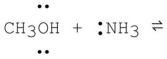
(Multiple Choice)
4.9/5 (67)
(67) Structure of Lorazepam,a widely known drug for short-term anxiety is shown below.Is the indicated lone pair localized or delocalized? 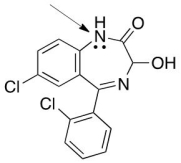
(Short Answer)
4.8/5 (69)
(69) Would you predict trifluoromethanesulfonic acid,CF3SO3H,to be a stronger or weaker acid than methanesulfonic acid,CH3SO3H? Explain your reasoning.
(Essay)
4.9/5 (73)
(73) H-A is an acid with a pKa of 4.5.Which of the following statements about an aqueous solution of H-A is true?
(Multiple Choice)
4.8/5 (90)
(90) 
Filters
- Essay(0)
- Multiple Choice(0)
- Short Answer(0)
- True False(0)
- Matching(0)