



 Chat with AI
Exam 6: Ventricular Rhythms

Exam 1: Anatomy and Physiology66 Questions
Exam 2: Basic Electrophysiology66 Questions
Exam 3: Sinus Mechanisms45 Questions
Exam 4: Atrial Rhythms60 Questions
Exam 5: Junctional Rhythms51 Questions
Exam 6: Ventricular Rhythms60 Questions
Exam 7: Heart Blocks48 Questions
Exam 8: Pacemaker Rhythms17 Questions
Exam 9: Introduction to the 12-Lead ECG36 Questions
Exam 10: Post-Test66 Questions
Select questions type


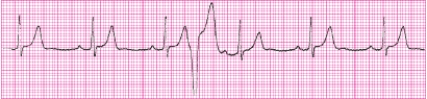
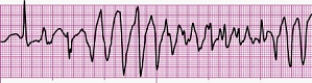
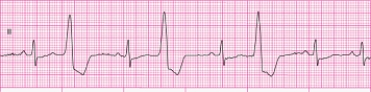
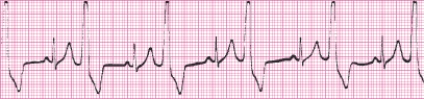

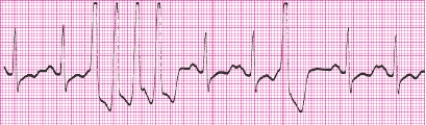
Complete the following ECG criteria for an idioventricular rhythm:
Rlythm_________________________________
Rate_______________________________________
P waves____________________________________
PR interval__________________________________
QRS duration______________________________
(Essay)
4.9/5  (82)
(82) 
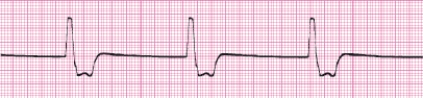
Medications to suppress an idioventricular rhythm should generally be avoided.
(True/False)
4.9/5 (72)
(72) 
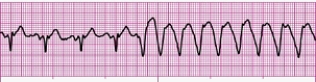
Sustained monomorphic VT is often associated with underlying heart disease,particularly myocardial ischemia,and rarely occurs in patients without underlying structural heart disease.
(True/False)
4.8/5 (80)
(80) 
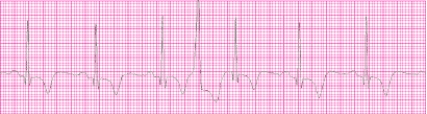
Complete the following ECG criteria for ventricular fibrillation:
Rlythm________________________________
Rate__________________________________
P waves__________________________________
PR interval_____________________________
QRS duration___________________________________
(Essay)
4.8/5 (73)
(73) 
Complete the following ECG criteria for an accelerated idioventricular rhythm:
Rlythm______________________________________
Rate__________________________________________
P waves___________________________________________
PR interval____________________________________
QRS duration_______________________________________
(Essay)
4.8/5 (77)
(77) How would you differentiate a junctional escape rhythm at 40 beats/min from a ventricular escape rhythm at the same rate?
(Multiple Choice)
4.7/5 (69)
(69) Which of the following best describes an idioventricular rhythm?
(Multiple Choice)
4.7/5 (76)
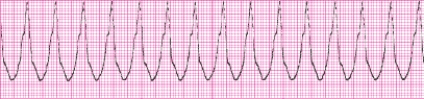
(76) 
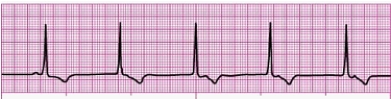
Complete the following ECG criteria for polymorphic ventricular tachycardia:
Rlythm_________________________________________
Rate___________________________________________
P waves_____________________________________________
PR interval___________________________________________
QRS duration__________________________________________
(Essay)
4.8/5 (84)
(84) What is meant by the term pulseless electrical activity (PEA)?
(Multiple Choice)
5.0/5 (86)
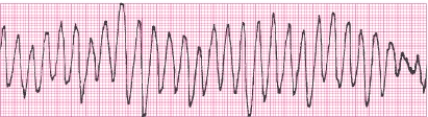
(86) 

Filters
- Essay(0)
- Multiple Choice(0)
- Short Answer(0)
- True False(0)
- Matching(0)