



 Chat with AI
Exam 5: Junctional Rhythms

Exam 1: Anatomy and Physiology66 Questions
Exam 2: Basic Electrophysiology66 Questions
Exam 3: Sinus Mechanisms45 Questions
Exam 4: Atrial Rhythms60 Questions
Exam 5: Junctional Rhythms51 Questions
Exam 6: Ventricular Rhythms60 Questions
Exam 7: Heart Blocks48 Questions
Exam 8: Pacemaker Rhythms17 Questions
Exam 9: Introduction to the 12-Lead ECG36 Questions
Exam 10: Post-Test66 Questions
Select questions type


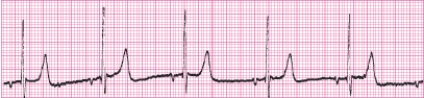
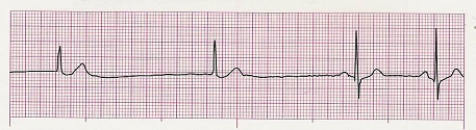
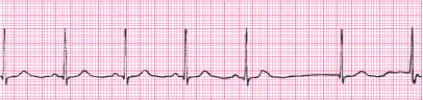
Identify the following rhythm (lead II): ____________________

Free
(Essay)
4.9/5  (85)
(85) Correct Answer: Verified
Junctional escape rhythm at 52 beats/min with elevated T waves
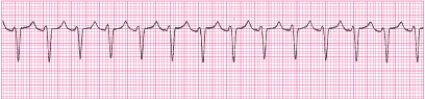
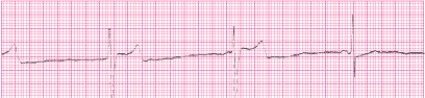
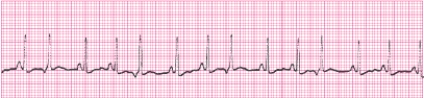
Identify the following rhythm (lead II): ____________________
Free
(Essay)
4.9/5 (83)
(83) Correct Answer:Verified
VerifiedNarrow-QRS tachycardia (probably junctional tachycardia)at 138 beats/min
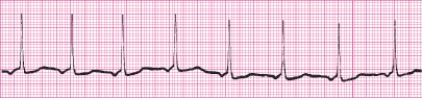
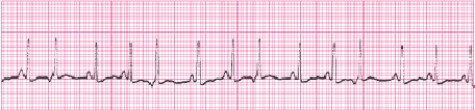
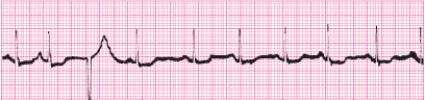
Identify the following rhythm (lead II): ____________________
Free
(Essay)
4.8/5 (76)
(76) Correct Answer:Verified
VerifiedAccelerated junctional rhythm at 83 beats/min
The AV junction consists of the AV node and the nonbranching portion of the bundle of His.
(True/False)
4.8/5 (83)
(83) Depending on the severity of the patient's signs and symptoms,management of slow rhythms originating from the AV junction may require intervention including _____.
(Multiple Choice)
4.8/5 (86)
(86) Common causes of junctional dysrhythmias may include acute coronary syndromes and _____.
(Multiple Choice)
4.9/5 (75)
(75) In a junctional rhythm viewed in lead II,where is the location of the P wave on the ECG if atrial depolarization precedes ventricular depolarization?
(Multiple Choice)
4.7/5 (75)
(75) 
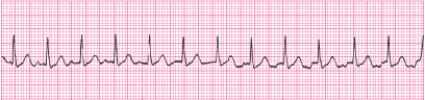
Complete the following ECG criteria for an accelerated junctional rhythm:
Rlythm_________________________________________________________
Rate____________________________________________________________
P waves__________________________________________________________
PR interval__________________________________________________________
QRS duration________________________________________________________
(Essay)
4.9/5 (86)
(86) 
A beat originating from the AV junction that appears later than the next expected sinus beat is called a(n)_____ _____ _____.
(Essay)
4.7/5 (78)
(78) List four reasons why the AV junction may assume responsibility for pacing the heart.
(Essay)
4.9/5 (87)
(87) 
Which of the following medications increases heart rate by accelerating the SA node discharge rate and blocking the vagus nerve?
(Multiple Choice)
5.0/5 (76)
(76) 

Filters
- Essay(0)
- Multiple Choice(0)
- Short Answer(0)
- True False(0)
- Matching(0)