



 Chat with AI
Exam 5: Junctional Rhythms

Exam 1: Anatomy and Physiology66 Questions
Exam 2: Basic Electrophysiology66 Questions
Exam 3: Sinus Mechanisms45 Questions
Exam 4: Atrial Rhythms60 Questions
Exam 5: Junctional Rhythms51 Questions
Exam 6: Ventricular Rhythms60 Questions
Exam 7: Heart Blocks48 Questions
Exam 8: Pacemaker Rhythms17 Questions
Exam 9: Introduction to the 12-Lead ECG36 Questions
Exam 10: Post-Test66 Questions
Select questions type


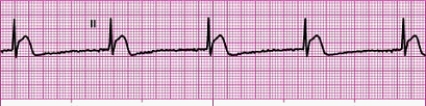
In a junctional rhythm viewed in lead II,where is the location of the P wave on the ECG if atrial and ventricular depolarization occur simultaneously?
(Multiple Choice)
4.9/5  (94)
(94) 
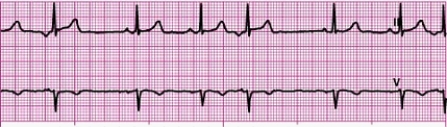
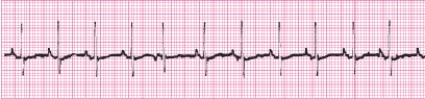
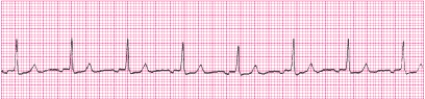
A beat originating from the AV junction that appears later than the next expected sinus beat is called a _____.
(Multiple Choice)
4.8/5 (84)
(84) If the AV junction paces the heart,the electrical impulse must travel in a backward direction to activate the atria.This is called _____ conduction.
(Essay)
5.0/5 (87)
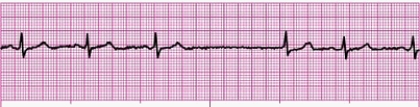
(87) A(n)_____ pause often follows a PJC and represents the delay during which the SA node resets its rhythm for the next beat.
(Essay)
4.7/5 (88)
(88) 
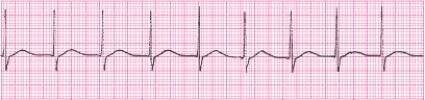
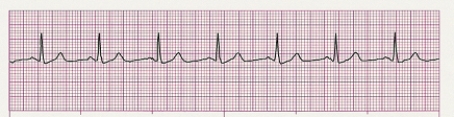
The usual rate of nonparoxysmal junctional tachycardia is _____ beats/min.
(Multiple Choice)
4.8/5 (70)
(70) The pacemaker cells in the AV junction are located near the nonbranching portion of the bundle of His.
(True/False)
4.8/5 (80)
(80) 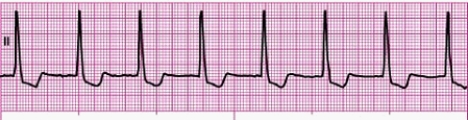
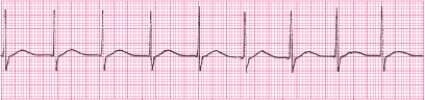
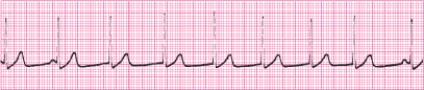
If seen,the P wave of a rhythm originating in the AV junction will appear _____ in lead II.
(Multiple Choice)
4.8/5 (74)
(74) 

Filters
- Essay(0)
- Multiple Choice(0)
- Short Answer(0)
- True False(0)
- Matching(0)