



 Chat with AI
Exam 9: Chemical Bonding I: Lewis Theory

Exam 1: Units of Measurement for Physical and Chemical Change173 Questions
Exam 2: Atoms and Elements161 Questions
Exam 3: Molecules,compounds,and Nomenclature172 Questions
Exam 4: Chemical Reactions and Stoichiometry247 Questions
Exam 5: Gases146 Questions
Exam 6: Thermochemistry145 Questions
Exam 7: The Quantum-Mechanical Model of the Atom164 Questions
Exam 8: Periodic Properties of the Elements129 Questions
Exam 9: Chemical Bonding I: Lewis Theory136 Questions
Exam 10: Chemical Bonding II: Molecular Shapes, valence Bond Theory, and Molecular Orbital Theory158 Questions
Exam 11: Liquids, solids, and Intermolecular Forces127 Questions
Exam 12: Solutions153 Questions
Exam 13: Chemical Kinetics156 Questions
Exam 14: Chemical Equilibrium124 Questions
Exam 15: Acids and Bases141 Questions
Exam 16: Aqueous Ionic Equilibrium159 Questions
Exam 17: Gibbs Energy and Thermodynamics119 Questions
Exam 18: Electrochemistry107 Questions
Exam 19: Radioactivity and Nuclear Chemistry108 Questions
Exam 20: Organic Chemistry I: Structures103 Questions
Exam 21: Organic Chemistry II: Reactions93 Questions
Exam 22: Biochemistry49 Questions
Exam 23: Chemistry of the Nonmetals45 Questions
Exam 24: Metals and Metallurgy42 Questions
Exam 25: Transition Metals and Coordination Compounds50 Questions
Select questions type


Choose the compound below that should have the lowest melting point according to the ionic bonding model.
(Multiple Choice)
4.9/5  (76)
(76) Place the following elements in order of decreasing electronegativity.
S Cl Se
(Multiple Choice)
4.8/5 (89)
(89) Place the following in order of decreasing magnitude of lattice energy.
NaF RbBr KCl
(Multiple Choice)
5.0/5 (89)
(89) How many of the following elements can form hypercoordinate compounds? I O Cl Xe
(Multiple Choice)
4.8/5 (85)
(85) Use the bond energies provided to estimate ΔrH° for the reaction below. CH3OH(l)+ 2O2(g)→ CO2(g)+ 2H2O(g) ΔrH° = ?
Bond Bond Energy (kJ mol-1)
C-H 414
C-O 360
C=O 799
O=O 498
O-H 464
(Multiple Choice)
4.8/5 (80)
(80) Place the following in order of decreasing XO bond length,where "X" represents the central atom in each of the following compounds or ions:
SiO32- CO2 CO32-
(Multiple Choice)
4.9/5 (80)
(80) Which of the following represent the Lewis structure for Br-?
(Multiple Choice)
4.7/5 (91)
(91) Explain why the lattice energy of MgS is approximately four times as large as that of NaCl.
(Essay)
4.8/5 (69)
(69) Using periodic trends,place the following bonds in order of increasing ionic character.
S-F Se-F O-F
(Multiple Choice)
4.8/5 (90)
(90) Rank the following molecules in decreasing bond energy.
Cl2 Br2 F2 I2
(Multiple Choice)
4.8/5 (70)
(70) Use Lewis theory to determine the chemical formula for the compound formed between Ca and N.
(Multiple Choice)
4.8/5 (74)
(74) Which of the following reactions is associated with the lattice energy of RbI
( )?
(Multiple Choice)
4.8/5 (77)
(77) Which of the following reactions is associated with the lattice energy of Li2O
(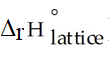 )?
)? (Multiple Choice)
4.9/5 (76)
(76) Which element can act as the centre atom in a hypercoordinate compound?
(Multiple Choice)
4.9/5 (90)
(90) 
Filters
- Essay(0)
- Multiple Choice(0)
- Short Answer(0)
- True False(0)
- Matching(0)