



 Chat with AI
Exam 30: Nuclear Energy and Elementary Particles

Exam 1: Units, Trigonometry, and Vectors100 Questions
Exam 2: Motion in One Dimension79 Questions
Exam 3: Motion in Two Dimensions56 Questions
Exam 4: Newtons Laws of Motion101 Questions
Exam 5: Energy102 Questions
Exam 6: Momentum, Impulse, and Collisions92 Questions
Exam 7: Rotational Motion and Gravitation98 Questions
Exam 8: Rotational Equilibrium and Dynamics82 Questions
Exam 9: Fluids and Solids95 Questions
Exam 10: Thermal Physics99 Questions
Exam 11: Energy in Thermal Processes93 Questions
Exam 12: The Laws of Thermodynamics89 Questions
Exam 13: Vibrations and Waves93 Questions
Exam 14: Sound96 Questions
Exam 15: Electric Forces and Fields90 Questions
Exam 16: Electrical Energy and Capacitance90 Questions
Exam 17: Current and Resistance90 Questions
Exam 18: Direct-Current Circuits96 Questions
Exam 19: Magnetism100 Questions
Exam 20: Induced Voltages and Inductance91 Questions
Exam 21: Alternating-Current Circuits and Electromagnetic Waves122 Questions
Exam 22: Reflection and Refraction of Light90 Questions
Exam 23: Mirrors and Lenses78 Questions
Exam 24: Wave Optics96 Questions
Exam 25: Optical Instruments83 Questions
Exam 26: Relativity93 Questions
Exam 27: Quantum Physics94 Questions
Exam 28: Atomic Physics73 Questions
Exam 29: Nuclear Physics88 Questions
Exam 30: Nuclear Energy and Elementary Particles90 Questions
Select questions type


Which of the following particles is (are)considered to be elementary?
(Multiple Choice)
4.8/5  (76)
(76) What following quantity is conserved in the following reaction: 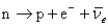 ?
? (Multiple Choice)
4.8/5 (82)
(82) The pion (mπ = 140 MeV/c2)is thought to be the particle exchanged in the nuclear force.What is the maximum range of this particle if its "time of existence" is as long as can be allowed by the uncertainty principle ΔE⋅Δt = h/2π? (h/2π = 1.05 × 10⁻³⁴ J⋅s,c = 3.00 × 10⁸ m/s,and 1 eV = 1.6 × 10⁻¹⁹ J)
(Multiple Choice)
4.7/5 (82)
(82) One in 4 600 water molecules contains a deuterium atom.If all the deuterium could be extracted from 1 m3 of water and then reacted,how much energy could be obtained? (Each D-D fusion liberates 3.65 MeV of energy,1 MeV = 1.6 × 10⁻¹³ J,ρwater = 103 kg/m3,one mole of water has a mass of 18 g,and NA = 6.02 × 10²³)
(Multiple Choice)
4.9/5 (84)
(84) If the lifetime of a particle is roughly inversely proportional to the relative strength of the force involved,then for the strong,electromagnetic,and weak forces,arrange the forces according to their resulting lifetimes ranging from shortest to longest lifetimes.
(Multiple Choice)
4.8/5 (89)
(89) Theoretical physicists have had the greatest success in combining which force with the electromagnetic force?
(Multiple Choice)
4.8/5 (77)
(77) Baryons are composed of 3 quarks.If all 3-quark compositions of particles could happen,what would be the highest possible charge for such a particle?
(Multiple Choice)
4.8/5 (77)
(77) Consider the following reaction.
N → p + e-
This reaction is impossible because it violates which conservation law?
(Multiple Choice)
4.8/5 (67)
(67) The weak force that acts between an electron and a quark is caused by the exchange of
(Multiple Choice)
5.0/5 (90)
(90) Mesons are composed of ________ quarks,and baryons are composed of ________ quarks.
(Multiple Choice)
4.8/5 (86)
(86) If a photon produces an electron-positron pair and one other particle,the other particle may be a(n)
(Multiple Choice)
4.8/5 (81)
(81) Consider the following reaction.
Π+ + n → π- + p
This reaction is impossible because it violates which conservation law?
(Multiple Choice)
4.9/5 (81)
(81) 
Filters
- Essay(0)
- Multiple Choice(0)
- Short Answer(0)
- True False(0)
- Matching(0)