



 Chat with AI
Exam 4: The Tissue Level of Organization

Exam 1: An Introduction to the Human Body74 Questions
Exam 2: The Chemical Level of Organization75 Questions
Exam 3: The Cellular Level of Organization76 Questions
Exam 4: The Tissue Level of Organization75 Questions
Exam 5: The Integumentary System Unit Ii: Principles of Support and Movement74 Questions
Exam 6: The Skeletal System: Bone Tissue75 Questions
Exam 7: The Skeletal System: the Axial Skeleton75 Questions
Exam 8: The Skeletal System: the Appendicular Skeleton75 Questions
Exam 9: Joints75 Questions
Exam 10: Muscle Tissue75 Questions
Exam 11: The Muscular System Unit Iii: Control Systems of the Human Body75 Questions
Exam 12: Nervous Tissue75 Questions
Exam 13: The Spinal Cord and Spinal Nerves75 Questions
Exam 14: The Brain and Cranial Nerves75 Questions
Exam 15: The Autonomic Nervous System75 Questions
Exam 16: Sensory, Motor and Integrative Systems75 Questions
Exam 17: The Special Senses75 Questions
Exam 18: The Endocrine System Unit Iv: Maintenance of the Human Body75 Questions
Exam 19: The Cardiovascular System: the Blood74 Questions
Exam 20: The Cardiovascular System: the Heart74 Questions
Exam 21: The Cardiovascular System: Blood Vessels and Hemodynamics75 Questions
Exam 22: The Lymphatic System, Nonspecific Resistance to Disease, and Immunity75 Questions
Exam 23: The Respiratory System75 Questions
Exam 24: The Digestive System75 Questions
Exam 25: Metabolism73 Questions
Exam 26: The Urinary System73 Questions
Exam 27: Fluid, Electrolyte, and Acid-Base Homeostasis Unit V: Continuity48 Questions
Exam 28: The Reproductive Systems74 Questions
Exam 29: Development and Inheritance75 Questions
Select questions type


In the figure shown,which light micrograph shows dense regular connective tissue?
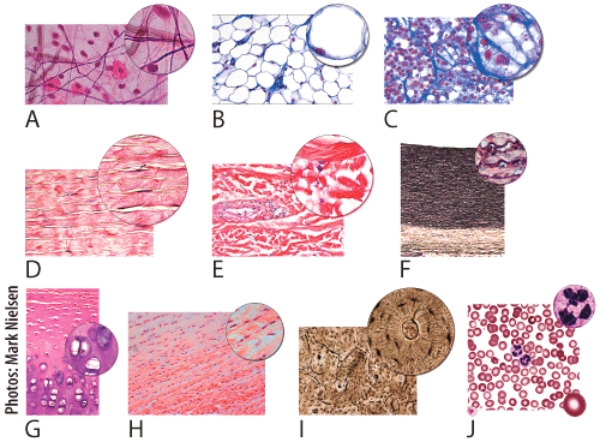
(Multiple Choice)
4.7/5  (82)
(82) In which of the following locations would you most likely find transitional epithelial cells?
(Multiple Choice)
4.8/5 (76)
(76) Which of the following figures shows tissue that is found in tendons and ligaments?
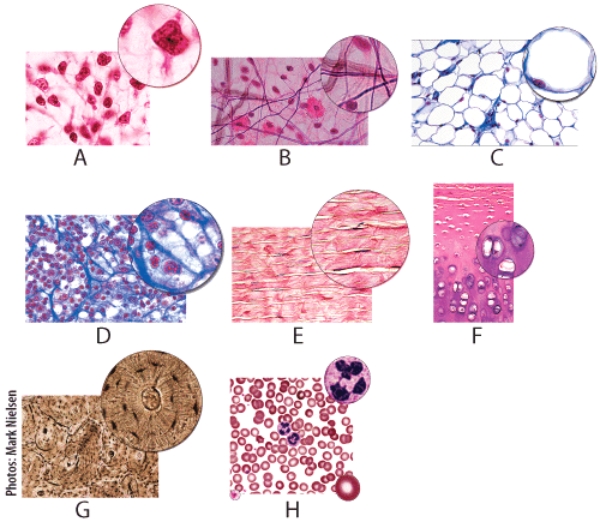
(Multiple Choice)
4.8/5 (74)
(74) In the figure shown,which light micrograph shows a muscle tissue that is under involuntary control?
1 A
2 B
3 C
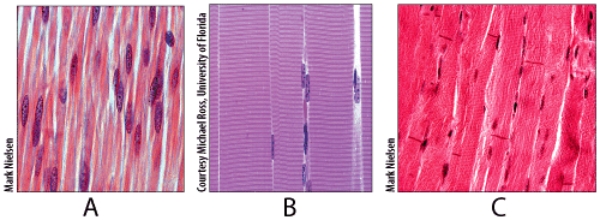
(Multiple Choice)
4.9/5 (73)
(73) Which of the following types of tissues contains multinucleated cells whose movements are under voluntary control?
(Multiple Choice)
4.9/5 (87)
(87) Which of the following types of glands are categorized by whether their ducts are branched or unbranched?
(Multiple Choice)
4.8/5 (78)
(78) Which type of epithelial tissue lines the ducts of sweat glands and esophageal glands?
(Multiple Choice)
4.9/5 (87)
(87) In the figure shown,which light micrograph shows areolar connective tissue?
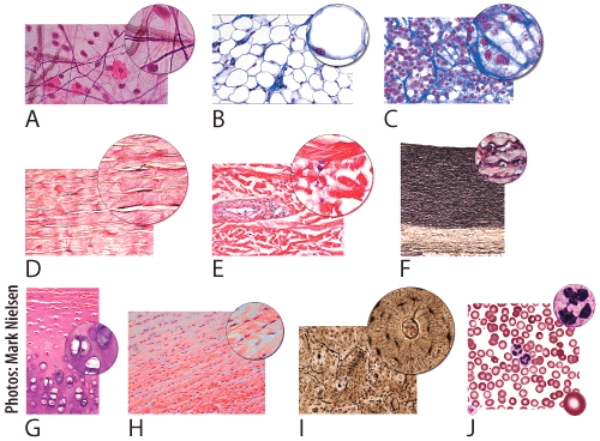
(Multiple Choice)
4.9/5 (87)
(87) Reticular fibers in soft organs like the spleen and liver form a supporting framework called the
(Multiple Choice)
4.9/5 (77)
(77) In the diagram shown below,where is the apical surface of the epithelial cell?
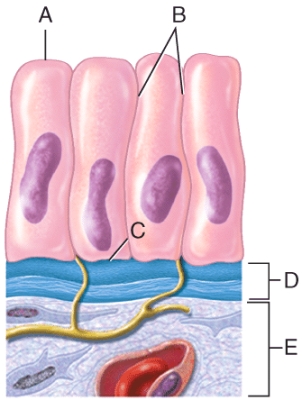
(Multiple Choice)
4.9/5 (83)
(83) In the figure shown,which light micrograph shows the type of cartilage that is most abundant in the human body?
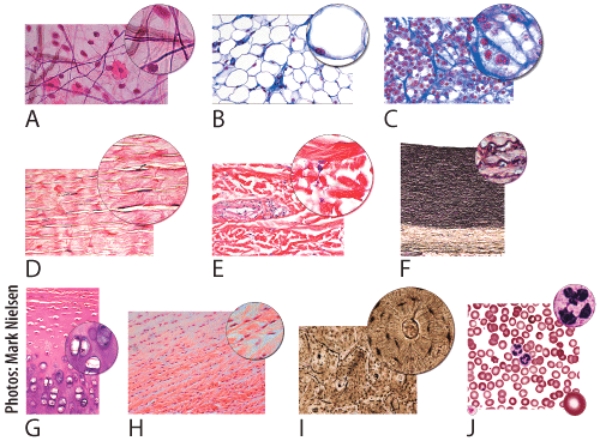
(Multiple Choice)
4.8/5 (83)
(83) Which type of membrane lines a body cavity that does not open directly to the exterior and the organs contained in that body cavity?
(Multiple Choice)
5.0/5 (73)
(73) Which of the light micrographs in the following figure shows the type of epithelial tissue found lining the large excretory ducts of esophageal gland and whose functions include protection and secretion?
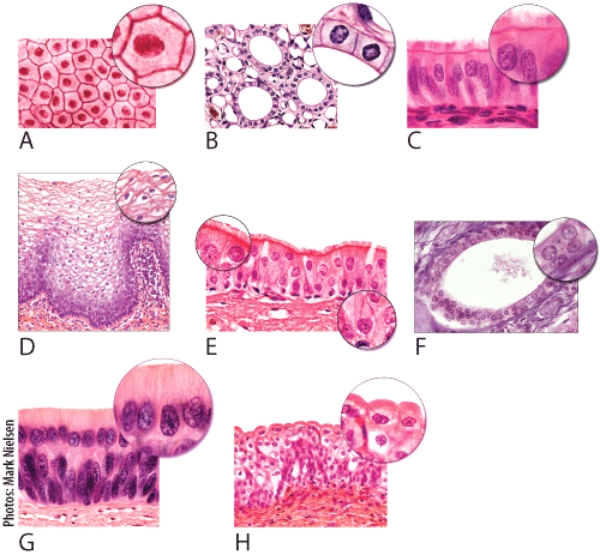
(Multiple Choice)
4.7/5 (77)
(77) Which type of multicellular exocrine gland has a branched rounded secretory part attached to a single unbranched duct and is found mainly in sebaceous glands?
(Multiple Choice)
4.8/5 (85)
(85) Which of the light micrographs in the figure below shows the type of epithelial tissue that lines the kidney tubules?
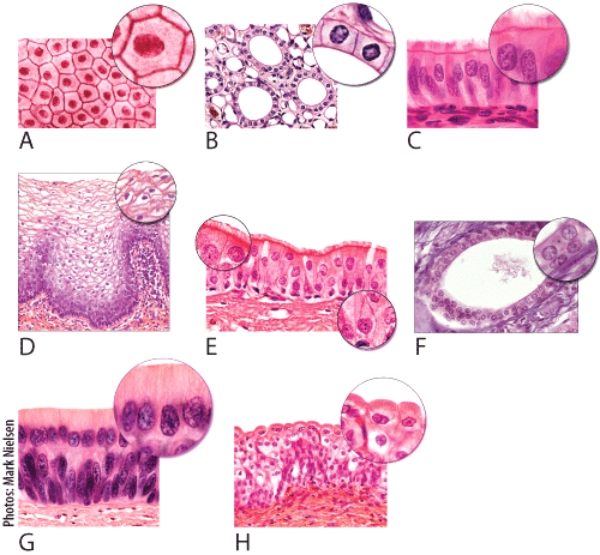
(Multiple Choice)
4.8/5 (77)
(77) 
Filters
- Essay(0)
- Multiple Choice(0)
- Short Answer(0)
- True False(0)
- Matching(0)