



 Chat with AI
Exam 9: Carbohydrates: Sugars, Saccharides, Glycans

Exam 1: The Scope of Biochemistry17 Questions
Exam 2: The Matrix of Life: Weak Interactions in an Aqueous Environment25 Questions
Exam 3: The Energetics of Life25 Questions
Exam 4: Nucleic Acids28 Questions
Exam 5: Introduction to Proteins: the Primary Level of Protein Structure25 Questions
Exam 6: The Three-Dimensional Structure of Proteins24 Questions
Exam 7: Protein Function and Evolution27 Questions
Exam 8: Contractile Proteins and Molecular Motors19 Questions
Exam 9: Carbohydrates: Sugars, Saccharides, Glycans28 Questions
Exam 10: Lipids, Membranes and Cellular Transport25 Questions
Exam 11: Enzymes: Biological Catalysts24 Questions
Exam 12: Chemical Logic of Metabolism25 Questions
Exam 13: Carbohydrate Metabolism: Glycolysis, Gluconeogenesis, Glycogen Metabolism, and the Pentose Phosphate Pathway41 Questions
Exam 14: Citric Acid Cycle and Glyoxylate Cycle25 Questions
Exam 15: Electron Transport, Oxidative Phosphorylation, and Oxygen Metabolism24 Questions
Exam 16: Photosynthesis26 Questions
Exam 17: Lipid Metabolism I: Fatty Acids, Triacylglycerols, and Lipoproteins26 Questions
Exam 18: Interorgan and Intracellular Coordination of Energy Metabolism in Vertebrates22 Questions
Exam 19: Lipid Metabolism Ii: Membrane Lipids, Steroids, Isoprenoids, and Eicosanoids25 Questions
Exam 20: Metabolism of Nitrogenous Compounds I: Principles of Biosynthesis, Utilization, and Turnover25 Questions
Exam 21: Metabolism of Nitogenous Compounds II: Amino Acids, Porphyrins, and Neurotransmitters25 Questions
Exam 22: Nucleotide Metabolism25 Questions
Exam 23: Mechanisms of Signal Transduction24 Questions
Exam 24: Genes, Genomes and Chromosomes25 Questions
Exam 25: DNA Replication25 Questions
Exam 26: DNA Restructuring: Repair, Recombination, Rearrangement, Amplification25 Questions
Exam 27: Information Readout: Transcription and Post-Transcriptional Processing25 Questions
Exam 28: Information Decoding: Translation and Post-Translational Protein Processing28 Questions
Exam 29: Regulation of Gene Expression25 Questions
Select questions type


The source of nitrogen for the synthesis of glucosamine-6-phosphate from fructose-6-phosphate is the amino acid ___________.
(Multiple Choice)
4.9/5  (69)
(69) Antibiotic inhibition of cell wall synthesis can be facilitated by a number of agents. The crosslinking of peptidoglycan strands is inhibited by _________ while polymerization of the growing peptidoglycan is inhibited by __________.
(Multiple Choice)
4.7/5 (83)
(83) Which of the following designations best characterizes the following disaccharide? 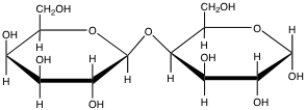
(Multiple Choice)
4.8/5 (83)
(83) Which of the following would be the correct Haworth projection for -D-gulose, whose linear form is seen below? 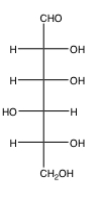
(Multiple Choice)
4.9/5 (90)
(90) Lactose, the disaccharide of galactose and glucose, is synthesized from which of the following activated monosaccharides?
(Multiple Choice)
4.9/5 (77)
(77) Using the structure of D-altrose, shown below, show a Haworth projection for the anomer. 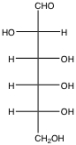
(Essay)
4.8/5 (80)
(80) The role of collagen in vertebrate bones as a matrix for mineral deposition is most analogous to the role of _________ in ___________.
(Multiple Choice)
4.9/5 (81)
(81) 
Filters
- Essay(0)
- Multiple Choice(0)
- Short Answer(0)
- True False(0)
- Matching(0)