



 Chat with AI
Exam 9: Carbohydrates: Sugars, Saccharides, Glycans

Exam 1: The Scope of Biochemistry17 Questions
Exam 2: The Matrix of Life: Weak Interactions in an Aqueous Environment25 Questions
Exam 3: The Energetics of Life25 Questions
Exam 4: Nucleic Acids28 Questions
Exam 5: Introduction to Proteins: the Primary Level of Protein Structure25 Questions
Exam 6: The Three-Dimensional Structure of Proteins24 Questions
Exam 7: Protein Function and Evolution27 Questions
Exam 8: Contractile Proteins and Molecular Motors19 Questions
Exam 9: Carbohydrates: Sugars, Saccharides, Glycans28 Questions
Exam 10: Lipids, Membranes and Cellular Transport25 Questions
Exam 11: Enzymes: Biological Catalysts24 Questions
Exam 12: Chemical Logic of Metabolism25 Questions
Exam 13: Carbohydrate Metabolism: Glycolysis, Gluconeogenesis, Glycogen Metabolism, and the Pentose Phosphate Pathway41 Questions
Exam 14: Citric Acid Cycle and Glyoxylate Cycle25 Questions
Exam 15: Electron Transport, Oxidative Phosphorylation, and Oxygen Metabolism24 Questions
Exam 16: Photosynthesis26 Questions
Exam 17: Lipid Metabolism I: Fatty Acids, Triacylglycerols, and Lipoproteins26 Questions
Exam 18: Interorgan and Intracellular Coordination of Energy Metabolism in Vertebrates22 Questions
Exam 19: Lipid Metabolism Ii: Membrane Lipids, Steroids, Isoprenoids, and Eicosanoids25 Questions
Exam 20: Metabolism of Nitrogenous Compounds I: Principles of Biosynthesis, Utilization, and Turnover25 Questions
Exam 21: Metabolism of Nitogenous Compounds II: Amino Acids, Porphyrins, and Neurotransmitters25 Questions
Exam 22: Nucleotide Metabolism25 Questions
Exam 23: Mechanisms of Signal Transduction24 Questions
Exam 24: Genes, Genomes and Chromosomes25 Questions
Exam 25: DNA Replication25 Questions
Exam 26: DNA Restructuring: Repair, Recombination, Rearrangement, Amplification25 Questions
Exam 27: Information Readout: Transcription and Post-Transcriptional Processing25 Questions
Exam 28: Information Decoding: Translation and Post-Translational Protein Processing28 Questions
Exam 29: Regulation of Gene Expression25 Questions
Select questions type


Which of the following explains the importance of sucrose as a disaccharide?

Free
(Multiple Choice)
5.0/5  (82)
(82) Correct Answer: Verified
D
An N-linked glycan would be attached to ______ while an O-linked glycan would be attached to ________.
Free
(Multiple Choice)
4.8/5 (78)
(78) Correct Answer:Verified
VerifiedA
Which of the following is a ketose?
Free
(Multiple Choice)
4.9/5 (94)
(94) Correct Answer:Verified
VerifiedB
Which of the following polysaccharides contains exclusively glucose in (1 4)glycosidic bonds?
(Multiple Choice)
4.9/5 (83)
(83) The two most common amino sugars, -D-glucosamine and -D-galactosamine are formed from their respective carbohydrates by substitution of an amine group for the hydroxyl on carbon _____.
(Multiple Choice)
4.9/5 (73)
(73) Of the following phosphate esters of monosaccharides, which has the most spontaneous G ´ of hydrolysis?
(Multiple Choice)
4.8/5 (79)
(79) Oseltamivir, also known as Tamiflu, is effective as an antiviral against the influenza virus due to its ability to block the action of which protein associated with the surface of the viral particle?
(Multiple Choice)
4.8/5 (84)
(84) Draw a -disaccharide composed of glucose linked to its C-2 epimer by an (1 4)glycosidic bond with the anomeric carbon of glucose contributing to the glycosidic bond.
(Essay)
4.8/5 (87)
(87) Which of the following correctly identifies key elements present on the exterior of Gram-negative (GN)and Gram-positive (GP)bacteria?
(Multiple Choice)
4.8/5 (67)
(67) The reaction of a cyclic monosaccharide with an alcohol converts a(n)_________ into a(n)________.
(Multiple Choice)
4.8/5 (80)
(80) Which of the following would be an anomer of -D-galactopyranose?
(Multiple Choice)
4.8/5 (84)
(84) How many carbon atoms are found in the smallest molecules that are classified as carbohydrates?
(Multiple Choice)
4.8/5 (65)
(65) Gluconic acid is derived from ________ while glucuronic acid is derived from _______.
(Multiple Choice)
4.9/5 (75)
(75) Show the interaction that would take place between the R-group of asparagine in a protein and the substituent on C-2 of an N-acetylglucosamine residue of a glycan.
(Essay)
4.8/5 (84)
(84) How many stereoisomers would be expected from a ketohexose?
(Multiple Choice)
4.9/5 (93)
(93) Given the structure of D-galactose, draw the structure of L-galactose in both open chain and Haworth projections ( anomer). 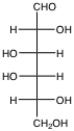
(Essay)
4.8/5 (84)
(84) 
Filters
- Essay(0)
- Multiple Choice(0)
- Short Answer(0)
- True False(0)
- Matching(0)