



 Chat with AI
Exam 11: Chemical Bonding Ii: Valence Bond and Molecular Orbital Theories

Exam 1: Matter: Its Properties and Measurement136 Questions
Exam 2: Atoms and the Atomic Theory119 Questions
Exam 3: Chemical Compounds152 Questions
Exam 4: Chemical Reactions170 Questions
Exam 5: Introduction to Reactions in Aqueous Solutions124 Questions
Exam 6: Gases113 Questions
Exam 7: Thermochemistry125 Questions
Exam 8: Electrons in Atoms123 Questions
Exam 9: The Periodic Table and Some Atomic Properties93 Questions
Exam 10: Chemical Bonding I: Basic Concepts107 Questions
Exam 11: Chemical Bonding Ii: Valence Bond and Molecular Orbital Theories104 Questions
Exam 12: Intermolecular Forces: Liquids and Solids121 Questions
Exam 13: Spontaneous Change: Entropy and Gibbs Energy123 Questions
Exam 14: Solutions and Their Physical Properties132 Questions
Exam 15: Principles of Chemical Equilibrium118 Questions
Exam 16: Acids and Bases137 Questions
Exam 17: Additional Aspects of Acidbase Equilibria130 Questions
Exam 18: Solubility and Complex-Ion Equilibria104 Questions
Exam 19: Electrochemistry127 Questions
Exam 20: Chemical Kinetics124 Questions
Exam 21: Chemistry of the Main-Group Elements I: Groups 1,2,13,and 14116 Questions
Exam 22: Chemistry of the Main-Group Elements Ii: Groups 18,17,16,15,and Hydrogen100 Questions
Exam 23: The Transition Elements108 Questions
Exam 24: Complex Ions and Coordination Compounds104 Questions
Exam 25: Nuclear Chemistry116 Questions
Exam 26: Structures of Organic Compounds99 Questions
Exam 27: Reactions of Organic Compounds94 Questions
Exam 28: Chemistry of the Living State104 Questions
Select questions type


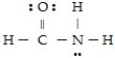
How many σ- and π-bonds,respectively,are there in phenylisothiocyanate,C6H5NCS? Ignore the C-H bonds in your counting.
(Multiple Choice)
4.8/5  (88)
(88) 
According to MO theory,all of the following have a bond order of 2 EXCEPT:
(Multiple Choice)
4.7/5 (75)
(75) How many σ bonds and how many π bonds are present in the carbonic acid molecule,H2CO3?
(Multiple Choice)
4.7/5 (76)
(76) What would be the hybridization of the N in the benzene-like molecule (C5H5N)?
(Multiple Choice)
5.0/5 (90)
(90) According to the valence bond theory,in the ion NH4+,nitrogen is using which orbitals for bonding?
(Multiple Choice)
4.8/5 (83)
(83) According to the molecular orbital (MO)theory,when two oxygen atoms bond together,their 2p orbitals combine to form:
(Multiple Choice)
4.8/5 (68)
(68) Which of the pairs of molecules below have the same hybridization on the central atom? (The central atom is underlined. )
(Multiple Choice)
4.9/5 (87)
(87) The three molecular shapes an sp3 hybridized molecule can have are ________.
(Multiple Choice)
4.8/5 (79)
(79) Find the correct statements about the bonding in methane,CH4.
I.The carbon s and p orbitals combine to form four equivalent sp3 orbitals
II.All C-H bonds have the same strength
III.Molecular geometry is different from electron group geometry
IV.Four C sp3 orbitals combine with the s orbitals of the hydrogens to form bonds
(Multiple Choice)
4.8/5 (71)
(71) How would replacing one of benzene's C atoms and the H atom attached to it with an N atom (C5H5N)affect the delocalized electrons?
(Multiple Choice)
4.8/5 (82)
(82) Resonance structures and delocalized orbitals are different ways to describe the same bonding.
(True/False)
4.8/5 (74)
(74) Using the VSEPR model,the electron-group geometry of the central atom in BF3 is:
(Multiple Choice)
4.9/5 (79)
(79) Which of the following does NOT involve any delocalized π bonds?
(Multiple Choice)
4.9/5 (66)
(66) 
Filters
- Essay(0)
- Multiple Choice(0)
- Short Answer(0)
- True False(0)
- Matching(0)