



 Chat with AI
Exam 23: Molecular Evolution

Exam 1: Genetics: An Introduction42 Questions
Exam 2: DNA: The Genetic Material46 Questions
Exam 3: DNA Replication46 Questions
Exam 4: Gene Function46 Questions
Exam 5: Gene Expression: Transcription46 Questions
Exam 6: Gene Expression: Translation46 Questions
Exam 7: Dna Mutation, DNA Repair, and Transposable Elements46 Questions
Exam 8: Genomics: The Mapping and Sequencing of Genomes50 Questions
Exam 9: Functional and Comparative Genomics46 Questions
Exam 10: Recombinant DNA Technology42 Questions
Exam 11: Mendelian Genetics40 Questions
Exam 12: Chromosomal Basis of Inheritance46 Questions
Exam 13: Extensions of and Deviations From Mendelian Genetic Principles42 Questions
Exam 14: Genetic Mapping in Eukaryotes46 Questions
Exam 15: Genetics of Bacteria and Bacteriophages46 Questions
Exam 16: Variations in Chromosome Structure and Number42 Questions
Exam 17: Regulation of Gene Expression in Bacteria and Bacteriophages46 Questions
Exam 18: Regulation of Gene Expression in Eukaryotes46 Questions
Exam 19: Genetic Analysis of Development46 Questions
Exam 20: Genetics of Cancer46 Questions
Exam 21: Population Genetics42 Questions
Exam 22: Quantitative Genetics45 Questions
Exam 23: Molecular Evolution44 Questions
Select questions type


With regards to the sequence alignment 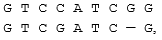 Which of the following statements is not true?
 (Multiple Choice)
4.8/5  (87)
(87) In the 1960s and 1970s,organisms were classified into five kingdoms,one of which was prokaryotes.In the 1980s,organisms were reorganized into three domains,with the prokaryotes split into Archaea and Bacteria,and all of the other four kingdoms lumped together into Eukarya.Why did this happen?
(Essay)
4.9/5 (80)
(80) Which of the following does not provide molecular evidence for evolution?
(Multiple Choice)
4.7/5 (87)
(87) 
Filters
- Essay(0)
- Multiple Choice(0)
- Short Answer(0)
- True False(0)
- Matching(0)