



 Chat with AI
Exam 8: Stocks, Stock Markets, and Market Efficiency

Exam 1: An Introduction to Money and the Financial System30 Questions
Exam 2: Money and the Payments System109 Questions
Exam 3: Financial Instruments, Financial Markets, and Financial Institutions120 Questions
Exam 4: Future Value, Present Value, and Interest Rates119 Questions
Exam 5: Understanding Risk110 Questions
Exam 6: Bonds, Bond Prices, and the Determination of Interest Rates128 Questions
Exam 7: The Risk and Term Structure of Interest Rates132 Questions
Exam 8: Stocks, Stock Markets, and Market Efficiency125 Questions
Exam 9: Derivatives: Futures, Options, and Swaps120 Questions
Exam 10: Foreign Exchange114 Questions
Exam 11: The Economics of Financial Intermediation117 Questions
Exam 12: Depository Institutions: Banks and Bank Management117 Questions
Exam 13: Financial Industry Structure126 Questions
Exam 14: Regulating the Financial System120 Questions
Exam 15: Central Banks in the World Today113 Questions
Exam 16: The Structure of Central Banks: The Federal Reserve and the European Central Bank116 Questions
Exam 17: The Central Bank Balance Sheet and the Money Supply Process109 Questions
Exam 18: Monetary Policy: Stabilizing the Domestic Economy116 Questions
Exam 19: Exchange-Rate Policy and the Central Bank122 Questions
Exam 20: Money Growth, Money Demand, and Modern Monetary Policy114 Questions
Exam 21: Output, Inflation, and Monetary Policy116 Questions
Exam 22: Understanding Business Cycle Fluctuations115 Questions
Exam 23: Modern Monetary Policy and the Challenges Facing Central Bankers107 Questions
Select questions type


Why must caution be employed in comparing stock indexes across countries?
(Essay)
4.9/5  (85)
(85) You make a $1,000 investment in the stock of ABC Inc.Over the next year the investment decreases by 60%.What percentage increase do you need in the following year on your holding to be back to $1,000?
(Essay)
4.9/5 (91)
(91) Which of the following will cause an increase in the current price of a stock? 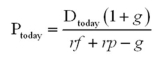
(Multiple Choice)
4.9/5 (92)
(92) If a public corporation goes bankrupt and does not have enough assets to pay off all creditors:
(Multiple Choice)
4.9/5 (80)
(80) If each company that made up the Dow Jones Industrial Average increased the number of their shares outstanding by 10%, but the share prices did not change, the value of the index would:
(Multiple Choice)
4.7/5 (66)
(66) Many small companies currently pay no dividends to their shareholders.Based on the dividend discount model, how is it possible for these stocks to sell for a positive price?
(Essay)
4.9/5 (81)
(81) You have a value-weighted index made up of two companies.One company, we will call A, has a stock price of $25 per share and there are 10,000 shares outstanding.The other company, we will call B, has a stock price of $100 per share and has 1000 shares outstanding.What will be the percentage change in the index from a 10% increase in the share price of company A? What will be the percentage change in the index from a 10% increase in the share price of company B?
(Essay)
4.8/5 (86)
(86) Discuss whether the economy would be more or less efficient if public corporations issued fewer shares of stock.
(Essay)
4.9/5 (81)
(81) You start with a portfolio valued at $500.Over the next twelve months it loses 40%; the following year it has a gain of 30%.At the end of two years your portfolio is worth:
(Multiple Choice)
4.9/5 (74)
(74) Explain why being a residual claimant can increase the risk from owning stocks.
(Essay)
4.7/5 (85)
(85) The basic dividend-discount model is a bit of an oversimplification for valuing stocks because it:
(Multiple Choice)
4.9/5 (78)
(78) 
Filters
- Essay(0)
- Multiple Choice(0)
- Short Answer(0)
- True False(0)
- Matching(0)