



 Chat with AI
Exam 3: Molecules, Compounds and Chemical Equations

Exam 1: Matter, Measurement, and Problem Solving120 Questions
Exam 2: Atoms and Elements116 Questions
Exam 3: Molecules, Compounds and Chemical Equations144 Questions
Exam 4: Chemical Quantities and Aqueous Reactions199 Questions
Exam 5: Gases157 Questions
Exam 6: Thermochemistry110 Questions
Exam 7: The Quantum-Mechanical Model of the Atom100 Questions
Exam 8: Periodic Properties of the Elements120 Questions
Exam 9: Chemical Bonding I: Lewis Theory125 Questions
Exam 10: Chemical Bonding II: Molecular Shapes, Valence Bond Theory, and109 Questions
Exam 11: Liquids, Solids, and Intermolecular Forces123 Questions
Exam 12: Solutions127 Questions
Exam 13: Chemical Kinetics125 Questions
Exam 14: Chemical Equilibrium112 Questions
Exam 15: Acids and Bases126 Questions
Exam 16: Aqueous Ionic Equilibrium148 Questions
Exam 17: Free Energy and Thermodynamics103 Questions
Exam 18: Electrochemistry115 Questions
Exam 19: Radioactivity and Nuclear Chemistry105 Questions
Select questions type


How can one compound contain both ionic and covalent bonds? Give an example.
(Essay)
4.8/5  (90)
(90) Write a balanced equation to show the reaction of gaseous ethane with gaseous oxygen to form carbon monoxide gas and water vapor.
(Multiple Choice)
4.9/5 (76)
(76) Write the formula for the compound formed between potassium and sulfur.
(Multiple Choice)
4.9/5 (73)
(73) Combustion analysis of 1.200 g of an unknown compound containing carbon,hydrogen,and oxygen produced 2.086 g of CO2 and 1.134 g of H2O.What is the empirical formula of the compound?
(Multiple Choice)
4.9/5 (67)
(67) What is the mass of a sample of water (H2O)containing 3.00 × 10²² H2O molecules?
(Multiple Choice)
4.8/5 (73)
(73) Determine the name for CoCl2∙6H2O.Remember that Co forms several ions.
(Multiple Choice)
4.9/5 (78)
(78) Determine the name for TiCO3.Remember that titanium forms several ions.
(Multiple Choice)
4.9/5 (74)
(74) Describe the difference between a molecular formula and an empirical formula.Give an example.
(Essay)
4.9/5 (88)
(88) What is the mass,in kg,of 6.89 × 1025 molecules of CO2? The molar mass of CO2 is 44.01 g/mol.
(Multiple Choice)
4.9/5 (84)
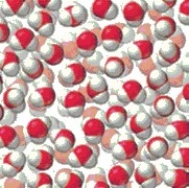
(84) 

Filters
- Essay(0)
- Multiple Choice(0)
- Short Answer(0)
- True False(0)
- Matching(0)