



 Chat with AI
Exam 17: Glycolysis

Exam 1: Biochemistry and the Organization of Cells69 Questions
Exam 2: Water: The Solvent for Biochemical Reactions79 Questions
Exam 3: Amino Acids and Peptides77 Questions
Exam 4: The Three-Dimensional Structure of Proteins77 Questions
Exam 5: Protein Purification and Characterization Techniques58 Questions
Exam 6: The Behavior of Proteins: Enzymes78 Questions
Exam 7: The Behavior of Proteins: Enzymes, Mechanisms, and Control77 Questions
Exam 8: Lipids and Proteins Are Associated in Biological Membranes90 Questions
Exam 9: Nucleic Acids: How Structure Conveys Information60 Questions
Exam 10: Biosynthesis of Nucleic Acids: Replication79 Questions
Exam 11: Transcription of the Genetic Code: Biosynthesis of Rna93 Questions
Exam 12: Protein Synthesis: Translation of the Genetic Message80 Questions
Exam 13: Nucleic Acid Biotechnology Techniques89 Questions
Exam 14: Viruses, Cancer, and Immunology35 Questions
Exam 15: The Importance of Energy Changes and Electron Transfer in Metabolism56 Questions
Exam 16: Carbohydrates88 Questions
Exam 17: Glycolysis63 Questions
Exam 18: Storage Mechanisms and Control in Carbohydrate Metabolism79 Questions
Exam 19: The Citric Acid Cycle77 Questions
Exam 20: Electron Transport and Oxidative Phosphorylation70 Questions
Exam 21: Lipid Metabolism86 Questions
Exam 22: Photosynthesis74 Questions
Exam 23: The Metabolism of Nitrogen78 Questions
Exam 24: Integration of Metabolism: Cellular Signaling60 Questions
Select questions type


Which of the following enzymes of glycolysis is not involved in regulation of the pathway?
(Multiple Choice)
5.0/5  (86)
(86) Consider the following information:  How many molecules of ATP might theoretically have been produced when coupled to the conversion of one molecule phosphoenolpyruvate to pyruvate?
 (Multiple Choice)
4.8/5 (78)
(78) 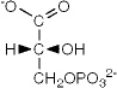
The amino acid cysteine is important in adding a second phosphate to glyceraldehyde phosphate in the glyceraldehyde-3-phosphate dehydrogenase reaction.
(True/False)
4.8/5 (83)
(83) Which of the following exercise(s) allosteric control in the reaction of phosphofructokinase?
(Multiple Choice)
4.9/5 (61)
(61) In the conversion of glucose to pyruvate,how many of the actual steps involve electron transfer?
(Multiple Choice)
4.7/5 (67)
(67) During anaerobic metabolism in yeast,the carbons of glucose end up in
(Multiple Choice)
4.9/5 (81)
(81) The reactions where glucose is converted to glucose 6-phosphate and fructose 6-phosphate is converted to fructose 1,5-bisphosphate are examples of:
(Multiple Choice)
4.7/5 (89)
(89) Which of the following is required for substrate-level phosphorylation?
(Multiple Choice)
4.9/5 (86)
(86) Which of the following sugars can be a substrate for hexokinase?
(Multiple Choice)
4.8/5 (72)
(72) Which of the following enzymes catalyzes the cleavage of fructose bisphosphate into two 3-carbon units?
(Multiple Choice)
4.9/5 (76)
(76) 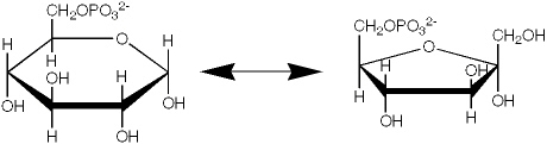
During anaerobic metabolism in red blood cells,the carbons of glucose end up in
(Multiple Choice)
4.7/5 (80)
(80) Which of the following terms describes an enzyme that catalyzes electron transfer reactions?
(Multiple Choice)
5.0/5 (77)
(77) If glycolysis did not lead to the production of ATP,the overall process would
(Multiple Choice)
5.0/5 (76)
(76) 
Filters
- Essay(0)
- Multiple Choice(0)
- Short Answer(0)
- True False(0)
- Matching(0)