



 Chat with AI
Exam 7: Income and Substitution Effects in Consumer Goods Markets

Exam 1: Introduction12 Questions
Exam 2: A Consumers Economic Circumstances26 Questions
Exam 3: Economic Circumstances in Labor and Financial Markets15 Questions
Exam 4: Tastes and Indifference Curves17 Questions
Exam 5: Different Types of Tastes20 Questions
Exam 6: Doing the Best We Can20 Questions
Exam 7: Income and Substitution Effects in Consumer Goods Markets27 Questions
Exam 8: Wealth and Substitution Effects in Labor and Capital Markets19 Questions
Exam 9: Demand for Goods and Supply of Labor and Capital24 Questions
Exam 10: Consumer Surplus and Deadweight Loss28 Questions
Exam 11: One Input and One Output: a Short-Run Producer Model34 Questions
Exam 12: Production With Multiple Inputs34 Questions
Exam 13: Production Decisions in the Short and Long Run31 Questions
Exam 14: Competitive Market Equilibrium24 Questions
Exam 15: The Invisible Hand and the First Welfare Theorem24 Questions
Exam 16: General Equilibrium25 Questions
Exam 17: Choice and Markets in the Presence of Risk26 Questions
Exam 18: Elasticities, Price-Distorting Policies, and Non-Price Rationing28 Questions
Exam 19: Distortionary Taxes and Subsidies32 Questions
Exam 20: Prices and Distortions Across Markets22 Questions
Exam 21: Externalities in Competitive Markets25 Questions
Exam 22: Asymmetric Information in Competitive Markets24 Questions
Exam 23: Monopoly38 Questions
Exam 24: Strategic Thinking and Game Theory37 Questions
Exam 25: Oligopoly22 Questions
Exam 26: Product Differentiation and Innovation in Markets16 Questions
Exam 27: Public Goods21 Questions
Exam 28: Governments and Politics19 Questions
Exam 29: What Is Good Challenges From Psychology and Philosophy23 Questions
Select questions type


Suppose your tastes are defined by the utility function 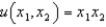 .
a.Suppose your income is $1,000, the price of
 is 1 and the price of
 is
 .Set up your utility maximization problem.
b.Derive the quantity of
 you will consume.
c.What happens to your consumption of
 if
 increases?
d.Now suppose that your and my tastes are captured by the utility function
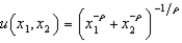 , with the parameter
 different for you than it is for me.When
 increases, you consume more
 than before and I consume less.What range of
 is consistent with your behavior, and what range is consistent with mine? Use your answer to (b) to explain.
.
a.Suppose your income is $1,000, the price of is 1 and the price of is .Set up your utility maximization problem.
b.Derive the quantity of you will consume.
c.What happens to your consumption of if increases?
d.Now suppose that your and my tastes are captured by the utility function , with the parameter different for you than it is for me.When increases, you consume more than before and I consume less.What range of is consistent with your behavior, and what range is consistent with mine? Use your answer to (b) to explain. (Essay)
4.7/5  (67)
(67) Quasilinear goods are borderline goods between the set of normal and the set of inferior goods.
(True/False)
4.8/5 (89)
(89) Bag of chips and bottles of salsa are perfect complements for consumer who eats only chips and salsa, but a bottle of salsa costs $1 more than a bag of chips.The income effect of a 50 cent increase in the price of a bag of chips will be fore the consumer to eat fewer chips and less salsa.
(True/False)
4.8/5 (75)
(75) At most museums, you can either buy a year-long membership that gives you free access to the museum any time, or you can pay a daily fee every time you visit.(Assume for purposes of this exercise that everyone can in principle afford the year-long membership.)
(Multiple Choice)
4.7/5 (78)
(78) Suppose the only two goods you care about in the world are French wine (x) and Cuban cigars (y) and your utility function is given by u(x,y)=xy.You have no income, and the only thing in the world you possess is a large box you have just inherited from your rich uncle who passed away last week (of liver and lung cancer.) You open the box, and much to your liking, you find it contains 9 bottles of fine French wine and 3 boxes of exquisite Cuban cigars.Currently, the wine sells for $1 per bottle, and the cigars sell for $9 per box.Just as you receive the inheritance, you read the headline: "President Lifts Embargo - Price of Cuban Cigars Falls to $4 per Box!"
a.Determine the income (or wealth) and substitution effects of a decrease of the price of cigars from 9 to 4.(Assume fractions of bottles and cigars can be bought.)
b.Are cigars a normal or inferior good for you?
c.How much would you have been willing to pay the President in order not to lift the embargo?
(Essay)
4.8/5 (85)
(85) Suppose you collect stamps and coins for the sheer fun of it.Currently, your collection contains both.For purposes of this problem, suppose that stamps all sell for one price and coins all sell for another, and both are normal goods.
a.Begin by illustrating your current budget constraint (with stamps on the horizontal and coins on the vertical) as well as the bundle A you currently own.Assume that you have done the best you can given your circumstances.
b.The stamp industry has recently marketed its product as a safe way of investing and insuring against inflation.As a result, the price of stamps has been driven up since you chose your current bundle.Show how this changes your budget constraint given that you can buy and sell both stamps and coins --- and assuming you have no additional funds to spend on your collections.
c.Are you happy about the stamp industry's marketing campaign? In what way will you adjust your collection?
d.After a while (and after you have made your desired adjustments), it turns out that the marketing campaign only produced a temporary "bubble" in the stamp market --- and prices fall back to what they were before.Are you happy when the bubble bursts? Will you have more or fewer coins and stamps than you had before the marketing campaign started?
e.True or False: For collectors that collect to satisfy their passion (rather than as an investment strategy), volatility in prices is good.
(Essay)
4.7/5 (82)
(82) Except for the case of Giffen goods, the substitution effect always tells us that a consumer will consume less (or at least no more) of a good whose price has increased.
(True/False)
4.8/5 (79)
(79) 
Filters
- Essay(0)
- Multiple Choice(0)
- Short Answer(0)
- True False(0)
- Matching(0)