



 Chat with AI
Exam 25: Cardiac Surgery

Exam 1: Concepts Basic to Perioperative Nursing25 Questions
Exam 2: Patient Safety and Risk Management25 Questions
Exam 3: Workplace Issues and Staff Safety25 Questions
Exam 4: Infection Prevention and Control30 Questions
Exam 5: Anesthesia36 Questions
Exam 6: Positioning the Patient for Surgery23 Questions
Exam 7: Sutures, sharps, and Instruments25 Questions
Exam 8: Surgical Modalities29 Questions
Exam 9: Wound Healing, dressings, and Drains23 Questions
Exam 10: Postoperative Patient Care and Pain Management24 Questions
Exam 11: Gastrointestinal Surgery21 Questions
Exam 12: Surgery of the Biliary Tract, pancreas, liver, and Spleen23 Questions
Exam 13: Hernia Repair24 Questions
Exam 14: Gynecologic and Obstetric Surgery24 Questions
Exam 15: Genitourinary Surgery25 Questions
Exam 16: Thyroid and Parathyroid Surgery25 Questions
Exam 17: Breast Surgery24 Questions
Exam 18: Ophthalmic Surgery22 Questions
Exam 19: Otorhinolaryngologic Surgery44 Questions
Exam 20: Orthopedic Surgery25 Questions
Exam 21: Neurosurgery23 Questions
Exam 22: Reconstructive and Aesthetic Plastic Surgery24 Questions
Exam 23: Thoracic Surgery23 Questions
Exam 24: Vascular Surgery23 Questions
Exam 25: Cardiac Surgery24 Questions
Exam 26: Pediatric Surgery23 Questions
Exam 27: Geriatric Surgery22 Questions
Exam 28: Trauma Surgery23 Questions
Exam 29: Interventional and Image-Guided Procedures21 Questions
Exam 30: Integrative Health Practices: Complementary and Alternative Therapies21 Questions
Select questions type


Select the noninvasive diagnostic test that illustrates heart wall motion and blood flow through the heart and quantifies cardiac function.

Free
(Multiple Choice)
5.0/5  (77)
(77) Correct Answer: Verified
A
During the preoperative nursing assessment for a patient scheduled for cardiac surgery,the perioperative nurse reviews the patient's medication history with attention to medications that can affect the surgery or cause complications.Select the true statement about specific medications that can affect surgery or cause complications.
Free
(Multiple Choice)
4.9/5 (67)
(67) Correct Answer:Verified
VerifiedB
Thoracic aortic aneurysmectomy is excision of an aneurysmal portion of the ascending aorta,aortic arch,or descending thoracic aorta and replacement with a prosthetic graft,valve-graft conduit,or intra-aortic prosthesis.Aneurysms may be caused by atherosclerosis,trauma,infection,or cystic medial degeneration.Which presenting conditions will indicate that surgical intervention is necessary?
Free
(Multiple Choice)
4.9/5 (86)
(86) Correct Answer:Verified
VerifiedA
Cardiac surgery patients are at risk for decreased cardiac output related to emotional (fear),sensory (pain),or physiologic (electrical,mechanical,or structural)factors.Which outcome indicators will provide evidence that the patient's cardiac output will be consistent or improved?
(Multiple Choice)
5.0/5 (84)
(84) In looking at the illustration below,which option most accurately defines its primary function? 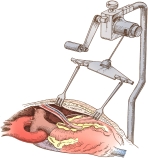
(Multiple Choice)
4.8/5 (83)
(83) During the preoperative assessment of an adult with a previously corrected congenital heart defect,the perioperative nurse should be aware of anatomic anomalies associated with the original defect,or its subsequent repair,that may alter the current surgical plan for a patient who had prior pediatric cardiac surgery.What is an appropriate nursing response when the assessment reveals the adult patient has undergone prior pediatric cardiac surgery?
(Multiple Choice)
4.8/5 (87)
(87) Formerly,ventricular assist devices (VADs)were reserved for those patients who could not be weaned from CPB after open-heart operations,or who had end-stage cardiomyopathy.Current indications and choices have expanded,and a variety of active and passive devices are available to support circulation for short-,intermediate-,and long-term use.Select the statement that best reflects the implications for a patient with a VAD.
(Multiple Choice)
4.8/5 (74)
(74) An aneurysm of the LV can develop after a severe myocardial infarction.The affected area of the myocardium is replaced by thin scar tissue that can rupture.The LV undergoes remodeling when the scar stretches because of the left ventricular pressure and forms an aneurysm.Left ventricular aneurysmectomy (LVA)is the excision of an aneurysmal portion of the LV.LVA is a form of left ventricular reconstruction undertaken to optimize cardiac function.Select the appropriate nursing action in preparation for LVA surgery.
(Multiple Choice)
5.0/5 (82)
(82) Disturbances of the conduction system affect the rate,rhythm,and effectiveness of the contracting heart.Surgical techniques have been developed to treat a variety of supraventricular dysrhythmias and both ischemic and nonischemic ventricular tachydysrhythmias.Preprocedural electrophysiologic mapping of the patient's conduction pathways identifies and locates aberrant pathways,or ectopic foci.A catheter is inserted percutaneously into the femoral vein or artery and threaded retrograde to the right or left atrium and ventricle.Various areas of the heart are tested to reproduce the dysrhythmia; then the area of the heart where the rhythm disturbance originates is ablated.Which treatment modality is employed to produce this selective ablation effect?
(Multiple Choice)
4.8/5 (78)
(78) An implantable cardioverter defibrillator (ICD)is an electronic device designed to monitor cardiac electrical activity and deliver prompt defibrillation.Myocardial or thoracic subcutaneous patches may be added if the transvenous catheters alone do not adequately defibrillate the heart.Patients with previously implanted defibrillator patches may present for removal of a patch(es).Which nursing action would be appropriate during this procedure?
(Multiple Choice)
4.8/5 (99)
(99) Surgery for atrial fibrillation (AF)may also be performed through an open sternotomy or right minithoracotomy incisions.By creating small areas of scar tissue in the cardiac muscle,electrical impulses are forced to follow an alternative conduction path or "maze." Select all the statements regarding nursing considerations for the maze procedure that are true.
(Multiple Choice)
4.9/5 (68)
(68) In the pulmonary circulatory system,blood is pumped from the right ventricle (RV)through the pulmonary valve into the main pulmonary artery (PA).The PA divides into the right and left pulmonary arteries,which further subdivide into the arterioles and capillaries of the lungs.Where does the blood from the lungs flow next?
(Multiple Choice)
4.7/5 (62)
(62) Select the diagnostic test that represents an invasive cardiac study.
(Multiple Choice)
4.8/5 (83)
(83) The internal mammary arteries (IMAs)are frequently used as grafts during coronary bypass surgery.Where are they located?
(Multiple Choice)
4.8/5 (76)
(76) Complete heart block and bradydysrhythmias are the most common indications for pacemaker implantation.A permanent pacemaker (pulse generator and electrodes)initiates atrial or ventricular contraction,or both.What therapy might be used for acute forms of heart block and dysrhythmias that occasionally occur during and after cardiac surgery?
(Multiple Choice)
4.8/5 (74)
(74) A 59-year-old woman is scheduled for an open approach coronary artery bypass graft.During the preoperative interview and assessment,the perioperative nurse reviewed the patient's hematologic tests,including a detailed coagulation profile to uncover possible hemorrhagic disorders.During the assessment,the nurse learned of the patient's many varied comorbid conditions,including prior vascular procedures,and diabetes.The nurse noted one of the patient's many nursing diagnoses as risk for bleeding related to surgical incision(s),tissue dissection,and altered coagulation function.Because of this diagnosis,the nurse implemented measures to have blood available,measure and report blood loss,assist with the use of the autotransfusion system per protocol,and have topical hemostatic agents available.The patient will be free from excessive bleeding as evidenced by:
(Multiple Choice)
4.7/5 (71)
(71) Identify the correct path of the cardiac conduction system.
(Multiple Choice)
4.8/5 (81)
(81) The blood is oxygenated in the lungs and returns to the LA through the pulmonary veins.Where does the blood flow after leaving the LA?
(Multiple Choice)
5.0/5 (83)
(83) A percutaneous method of instituting femoral vein-femoral artery CPB can be used for minimally invasive (or conventional open)procedures and in emergency situations where the environment is not conducive to traditional CPB methods.Select all the areas where percutaneous CPB would be indicated.
(Multiple Choice)
4.8/5 (76)
(76) In traditional cardiopulmonary bypass (CPB),systemic venous return to the heart flows by gravity drainage through cannulae placed in the superior and inferior venae cavae or through a single two-stage cannula in the RA into tubing connected to the bypass machine.Blood is oxygenated,filtered,warmed or cooled,and pumped back into the systemic circulation through a cannula placed in the:
(Multiple Choice)
4.9/5 (89)
(89) 
Filters
- Essay(0)
- Multiple Choice(0)
- Short Answer(0)
- True False(0)
- Matching(0)