



 Chat with AI
Exam 18: Amazing Ice: Glaciers and Ice Ages

Exam 1: The Earth in Context55 Questions
Exam 2: The Way the Earth Works: Plate Tectonics55 Questions
Exam 3: Patterns in Nature: Minerals55 Questions
Exam 4: Up From the Inferno: Magma and Igneous Rocks55 Questions
Exam 5: The Wrath of Vulcan: Volcanic Eruptions55 Questions
Exam 6: Pages of Earth S Past: Sedimentary Rocks55 Questions
Exam 7: Metamorphism: A Process of Change55 Questions
Exam 8: A Violent Pulse: Earthquakes55 Questions
Exam 9: Crags, cracks, and Crumples: Crustal Deformation and Mountain Building55 Questions
Exam 10: Deep Time: How Old Is Old55 Questions
Exam 11: A Biography of Earth55 Questions
Exam 12: Riches in Rock: Energy and Mineral Resources55 Questions
Exam 13: Unsafe Ground: Landslides and Other Mass Movements55 Questions
Exam 14: Streams and Floods: The Geology of Running Water55 Questions
Exam 15: Restless Realm: Oceans and Coasts55 Questions
Exam 16: A Hidden Reserve: Groundwater55 Questions
Exam 17: Dry Regions: The Geology of Deserts55 Questions
Exam 18: Amazing Ice: Glaciers and Ice Ages55 Questions
Exam 19: Global Change in the Earth System55 Questions
Exam 20: Interlude A: Rock Groups30 Questions
Exam 21: Interlude B: A Surface Veneer: Sediments and Soils30 Questions
Exam 22: Interlude C: The Rock Cycle30 Questions
Exam 23: Interlude D: The Earth S Interior Revisited: Insights From Geophysics30 Questions
Exam 24: Interlude E: Memories of Past Life: Fossils and Evolution30 Questions
Exam 25: Interlude F: An Introduction to Landscapes and the Hydrologic Cycle30 Questions
Select questions type


Which of the following figures is of glacial lake-bed deposits?
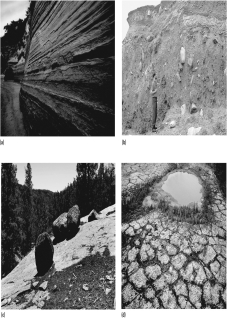
(Multiple Choice)
4.7/5  (84)
(84) During the Pleistocene Ice Age glaciers reached as far south as ________.
(Multiple Choice)
4.9/5 (83)
(83) Which of the following scenarios would lead to glacial advance during a time of global warming?
(Multiple Choice)
4.8/5 (76)
(76) You are hiking in your favorite forest when you encounter a surface that appears to have very fine scratches in it.What are these features?
(Multiple Choice)
4.7/5 (91)
(91) In the movie Ice Age: The Meltdown,there is a large wall of ice that begins to melt and finally breaks,causing a large flood.On what real-life geologic event was this part of the movie based?
(Multiple Choice)
4.9/5 (86)
(86) ________ can be recognized as a series of U-shaped hills that are lined up and represent the ________ of the glacier.
(Multiple Choice)
4.7/5 (70)
(70) What are the circumstances that lead to glacial advance versus glacial retreat? Most glaciers today are in retreat.What does this imply about the glaciers and their environment?
(Essay)
4.9/5 (69)
(69) At the present,glaciers cover about ________ of the surface of the continents.
(Multiple Choice)
4.8/5 (92)
(92) A glacier will always advance from its source area if the rate of accumulation is greater than the rate of ________.
(Multiple Choice)
4.8/5 (87)
(87) By increasing the albedo of Earth,global ice sheets produce conditions that are ________ to their further advance,thus providing an example of ________ feedback.
(Multiple Choice)
4.9/5 (64)
(64) Currently,almost all the glaciers on Earth are in a state of retreat,which means that the rate of ________ is less than the rate of ________.
(Multiple Choice)
5.0/5 (77)
(77) If a volcano were to erupt and release large amounts of ash into the air,how would this affect the climate on Earth?
(Multiple Choice)
4.8/5 (84)
(84) The Milankovitch Cycles describe the relation of Earth and the ________,which affects the amount of insolation Earth receives.
(Multiple Choice)
4.8/5 (92)
(92) 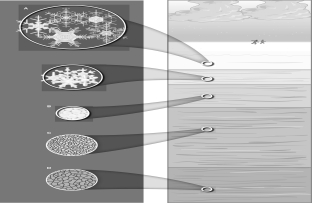
Sea level ________ during glacials and ________ during interglacials.
(Multiple Choice)
4.8/5 (72)
(72) Today,continental glaciers are limited to Antarctica and ________.
(Multiple Choice)
4.9/5 (93)
(93) An important long-term factor that determines whether glacial ice will form on a continent has likely been the proportion of which gas in the atmosphere?
(Multiple Choice)
4.9/5 (83)
(83) Which types of features would you find in a glacially carved landscape?
(Multiple Choice)
4.9/5 (80)
(80) The Mars rover Curiosity has recently found evidence that there was liquid water on the planet's surface at some point in its history.Because we have not found any liquid water on the planet today,what does this imply about Mars?
(Multiple Choice)
4.8/5 (74)
(74) 
Filters
- Essay(0)
- Multiple Choice(0)
- Short Answer(0)
- True False(0)
- Matching(0)