



 Chat with AI
Exam 19: Risk,toxicology,and Human Health

Exam 1: Environmental Problems: an Introduction and Overview85 Questions
Exam 2: Environmental History: Learning From the Past83 Questions
Exam 3: Science, systems, matter, and Energy126 Questions
Exam 4: Ecosystems: What Are They, and How Do They Work201 Questions
Exam 5: Evolution and Biodiversity80 Questions
Exam 6: Climate and Terrestrial Biodiversity156 Questions
Exam 7: Aquatic Biodiversity99 Questions
Exam 8: Community Ecology104 Questions
Exam 9: Population Ecology90 Questions
Exam 10: Applying Population Ecology: the Human Population119 Questions
Exam 11: Sustaining Terrestrial Biodiversity: Managing and Protecting Ecosystems93 Questions
Exam 12: Sustaining Biodiversity: the Species Approach106 Questions
Exam 13: Sustaining Aquatic Biodiversity77 Questions
Exam 14: Food and Soil Resources113 Questions
Exam 15: Water Resources86 Questions
Exam 16: Geology and Nonrenewable Mineral Resources91 Questions
Exam 17: Nonrenewable Energy Resources105 Questions
Exam 18: Energy Efficiency and Renewable Energy106 Questions
Exam 19: Risk,toxicology,and Human Health116 Questions
Exam 20: Air Pollution120 Questions
Exam 21: Climate Change and Ozone Loss99 Questions
Exam 22: Water Pollution110 Questions
Exam 23: Pest Management91 Questions
Exam 24: Solid and Hazardous Waste91 Questions
Exam 25: Sustainable Cities85 Questions
Exam 26: Economics, environment, and Sustainability71 Questions
Exam 27: Politics, environment, and Sustainability65 Questions
Exam 28: Environmental World-views, ethics, and Sustainability78 Questions
Select questions type


Caffeine has a lower ___________________________________ than ether or Lysol.
(Short Answer)
5.0/5  (79)
(79) What legislation regulates the 23,000 chemical substances that are available for commercial use in Canada?
(Multiple Choice)
4.9/5 (89)
(89) Graphic warnings on cigarette packages and the banning of smoking in public places have failed to reduce the incidence of cigarette smoking.
(True/False)
4.9/5 (95)
(95) Which factor contributes most to the rise in the incidence of bacterial diseases that were once controlled by antibiotics?
(Multiple Choice)
5.0/5 (80)
(80) ______________________________ determine the intensity of the statistical association between exposure to a toxin and a health problem.
(Short Answer)
4.8/5 (97)
(97) A problem with adhering to the ______________________________ is that the introduction of any new chemicals into society would be too expensive.
(Short Answer)
5.0/5 (77)
(77) How does human reliability compare to technological reliability?
(Multiple Choice)
4.9/5 (73)
(73) AIDS
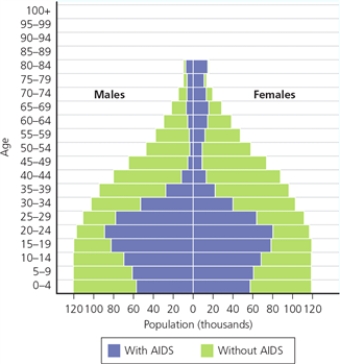 -How many more men between 20 and 24 years of age would live if AIDS could be eradicated?
 (Short Answer)
4.9/5 (77)
(77) Which of the following statements is true about determining exposure levels of toxins?
(Multiple Choice)
4.9/5 (77)
(77) A volcano eruption is a(n)_________________________ because it involves a single event.
(Short Answer)
4.8/5 (81)
(81) Which statement best describes an epidemiologic transition?
(Multiple Choice)
4.7/5 (83)
(83) A transmissible disease is caused by something other than a living organism and can spread from one person to another.
(True/False)
4.8/5 (83)
(83) A(n)___________________________________ is used to show the effects of various dosages of a toxic substance on test organisms.
(Short Answer)
4.7/5 (68)
(68) Malaria cannot be transmitted by blood transfusions or by sharing needles.
(True/False)
4.8/5 (81)
(81) 
Filters
- Essay(0)
- Multiple Choice(0)
- Short Answer(0)
- True False(0)
- Matching(0)