



 Chat with AI
Exam 43: Nursing Management: Lower Gastrointestinal Problems

Exam 1: Contemporary Nursing Practice15 Questions
Exam 2: Health Disparities and Culturally Competent Care17 Questions
Exam 3: Health History and Physical Examination14 Questions
Exam 4: Patient and Caregiver Teaching18 Questions
Exam 5: Chronic Illness and Older Adults19 Questions
Exam 6: Community-Based Nursing and Home Care11 Questions
Exam 7: Complementary and Alternative Therapies11 Questions
Exam 8: Stress and Stress Management10 Questions
Exam 9: Sleep and Sleep Disorders9 Questions
Exam 10: Pain23 Questions
Exam 11: Palliative Care at End of Life14 Questions
Exam 12: Addictive Behaviors21 Questions
Exam 13: Inflammation and Wound Healing20 Questions
Exam 14: Genetics, Altered Immune Responses, and Transplantation30 Questions
Exam 15: Infection and Human Immunodeficiency Virus Infection22 Questions
Exam 16: Cancer37 Questions
Exam 17: Fluid, Electrolyte, and Acid-Base Imbalances32 Questions
Exam 18: Nursing Management: Preoperative Care20 Questions
Exam 19: Nursing Management: Intraoperative Care18 Questions
Exam 20: Nursing Management: Postoperative Care20 Questions
Exam 21: Nursing Assessment: Visual and Auditory Systems21 Questions
Exam 22: Nursing Management: Visual and Auditory Problems40 Questions
Exam 23: Nursing Assessment: Integumentary System12 Questions
Exam 24: Nursing Management: Integumentary Problems24 Questions
Exam 25: Nursing Management: Burns29 Questions
Exam 26: Nursing Assessment: Respiratory System22 Questions
Exam 27: Nursing Management: Upper Respiratory Problems23 Questions
Exam 28: Nursing Management: Lower Respiratory Problems43 Questions
Exam 29: Nursing Management: Obstructive Pulmonary Diseases42 Questions
Exam 30: Nursing Assessment: Hematologic System15 Questions
Exam 31: Nursing Management: Hematologic Problems39 Questions
Exam 32: Nursing Assessment: Cardiovascular System20 Questions
Exam 33: Nursing Management: Hypertension23 Questions
Exam 34: Nursing Management: Coronary Artery Disease and Acute Coronary Syndrome38 Questions
Exam 35: Nursing Management: Heart Failure24 Questions
Exam 36: Nursing Management: Dysrhythmias28 Questions
Exam 37: Nursing Management: Inflammatory and Structural Heart Disorders28 Questions
Exam 38: Nursing Management: Vascular Disorders31 Questions
Exam 39: Nursing Assessment: Gastrointestinal System15 Questions
Exam 40: Nursing Management: Nutritional Problems23 Questions
Exam 41: Nursing Management: Obesity19 Questions
Exam 42: Nursing Management: Upper Gastrointestinal Problems42 Questions
Exam 43: Nursing Management: Lower Gastrointestinal Problems46 Questions
Exam 44: Nursing Management: Liver, Pancreas, and Biliary Tract Problems40 Questions
Exam 45: Nursing Assessment: Urinary System22 Questions
Exam 46: Nursing Management: Renal and Urologic Problems39 Questions
Exam 47: Nursing Management: Acute Kidney Injury and Chronic Kidney Disease36 Questions
Exam 48: Nursing Assessment: Endocrine System20 Questions
Exam 49: Nursing Management: Diabetes Mellitus39 Questions
Exam 50: Nursing Management: Endocrine Problems39 Questions
Exam 51: Nursing Assessment: Reproductive System18 Questions
Exam 52: Nursing Management: Breast Disorders25 Questions
Exam 53: Nursing Management: Sexually Transmitted Diseases16 Questions
Exam 54: Nursing Management: Female Reproductive Problems43 Questions
Exam 55: Nursing Management: Male Reproductive Problems27 Questions
Exam 56: Nursing Assessment: Nervous System20 Questions
Exam 57: Nursing Management: Acute Intracranial Problems35 Questions
Exam 58: Nursing Management: Stroke29 Questions
Exam 59: Nursing Management: Chronic Neurologic Problems32 Questions
Exam 60: Nursing Management: Alzheimers Disease, Dementia, and Delirium16 Questions
Exam 61: Nursing Management: Peripheral Nerve and Spinal Cord Problems29 Questions
Exam 62: Nursing Assessment: Musculoskeletal System14 Questions
Exam 63: Nursing Management: Musculoskeletal Trauma and Orthopedic Surgery39 Questions
Exam 64: Nursing Management: Musculoskeletal Problems18 Questions
Exam 65: Nursing Management: Arthritis and Connective Tissue Diseases40 Questions
Exam 66: Nursing Management: Critical Care37 Questions
Exam 67: Nursing Management: Shock, Systemic Inflammatory Response Syndrome, and Multiple Organ Dysfunction Syndrome25 Questions
Exam 68: Nursing Management: Respiratory Failure and Acute Respiratory Distress Syndrome22 Questions
Exam 69: Nursing Management: Emergency, Terrorism, and Disaster Nursing23 Questions
Select questions type


Which of these prescribed interventions will the nurse implement first when caring for a patient who has just been diagnosed with peritonitis caused by a ruptured diverticulum?

Free
(Multiple Choice)
4.8/5  (79)
(79) Correct Answer: Verified
B
A 67-year-old patient tells the nurse, "I have problems with constipation now that I am older, so I use a suppository every morning." Which action should the nurse take first?
Free
(Multiple Choice)
4.8/5 (94)
(94) Correct Answer:Verified
VerifiedC
Before undergoing a colon resection for cancer of the colon, a patient has an elevated carcinoembryonic antigen ( CEA ) test. The nurse explains that the test is used to
Free
(Multiple Choice)
4.9/5 (81)
(81) Correct Answer:Verified
VerifiedB
A patient with Crohn's disease who is taking infliximab (Remicade) calls the nurse in the outpatient clinic about all of these symptoms. Which symptom is most important to communicate to the health care provider?
(Multiple Choice)
4.9/5 (93)
(93) Which nursing action is most important to include in the plan of care for a patient who had an abdominal-perineal resection the previous day?
(Multiple Choice)
4.9/5 (73)
(73) A critically ill patient develops incontinence of watery stools. What action will be best for the nurse to take to prevent complications associated with ongoing incontinence?
(Multiple Choice)
4.9/5 (64)
(64) A patient with a gunshot wound to the abdomen undergoes surgery, and a colostomy is formed as illustrated. Which information will be included in patient teaching? 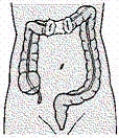
(Multiple Choice)
4.8/5 (70)
(70) A patient is admitted to the emergency department with severe abdominal pain with rebound tenderness. The vital signs include temperature 101° F ( 38.3° C ), pulse 130, respirations 34, and blood pressure ( BP ) 84/50. Which of the following interventions should the nurse implement first?
(Multiple Choice)
4.7/5 (80)
(80) Which nursing action will be included in the plan of care for a patient with bowel irregularity and a new diagnosis of irritable bowel syndrome (IBS)?
(Multiple Choice)
4.8/5 (77)
(77) A patient who has had a total proctocolectomy and permanent ileostomy tells the nurse, "I cannot bear to even look at the stoma. I do not think I can manage all these changes." Which is the best action by the nurse?
(Multiple Choice)
4.9/5 (74)
(74) When implementing the initial plan of care for a patient admitted with acute diverticulitis, the nurse will plan to
(Multiple Choice)
4.9/5 (74)
(74) After teaching a patient to irrigate a new colostomy, the nurse will determine that the teaching has been effective if the patient
(Multiple Choice)
4.9/5 (82)
(82) When interviewing a patient with abdominal pain and possible irritable bowel syndrome, which question will be most important for the nurse to ask?
(Multiple Choice)
4.8/5 (82)
(82) The nurse explains to a patient with a new ileostomy that after the bowel adjusts to the ileostomy, the usual drainage will be about
(Multiple Choice)
5.0/5 (93)
(93) A patient who has an exacerbation of ulcerative colitis is having 15 to 20 stools daily and has excoriated perianal skin. Which patient behavior indicates that teaching regarding maintenance of skin integrity has been effective?
(Multiple Choice)
4.9/5 (81)
(81) A patient who has blunt abdominal trauma after an automobile accident is complaining of severe pain. A peritoneal lavage returns brown drainage with fecal material. Which action will the nurse plan to take next?
(Multiple Choice)
4.9/5 (85)
(85) A hospitalized patient who has been taking antibiotics for several days develops watery diarrhea. Which action should the nurse take first?
(Multiple Choice)
4.7/5 (89)
(89) During preoperative preparation for a patient scheduled for an abdominal-perineal resection, the nurse will
(Multiple Choice)
4.9/5 (75)
(75) A patient who has ulcerative colitis has a proctocolectomy and ileostomy. Which information will the nurse include in patient teaching?
(Multiple Choice)
4.8/5 (74)
(74) A patient is brought to the emergency department with a knife impaled in the abdomen following a domestic fight. During the initial assessment of the patient, the nurse should
(Multiple Choice)
4.8/5 (74)
(74) 
Filters
- Essay(0)
- Multiple Choice(0)
- Short Answer(0)
- True False(0)
- Matching(0)