



 Chat with AI
Exam 13: Utility Systems

Exam 1: Introduction to Process Equipment20 Questions
Exam 2: Valves49 Questions
Exam 3: Piping and Vessels39 Questions
Exam 4: Pumps40 Questions
Exam 5: Compressors49 Questions
Exam 6: Turbines and Motors33 Questions
Exam 7: Heat Exchangers42 Questions
Exam 8: Cooling Towers39 Questions
Exam 9: Steam Generation- Boilers41 Questions
Exam 10: Fired Heaters Furnaces34 Questions
Exam 11: Instruments40 Questions
Exam 12: Process Diagrams7 Questions
Exam 13: Utility Systems32 Questions
Exam 14: Reaction Systems38 Questions
Exam 15: Distillation Systems47 Questions
Exam 16: Extraction and Other Separation Systems20 Questions
Exam 17: Plastics Systems23 Questions
Select questions type


Chemical precipitation uses a chemical to react with dissolved minerals in feed water to form a _________ ________ that drops harmlessly out of solution.
(Multiple Choice)
4.8/5  (71)
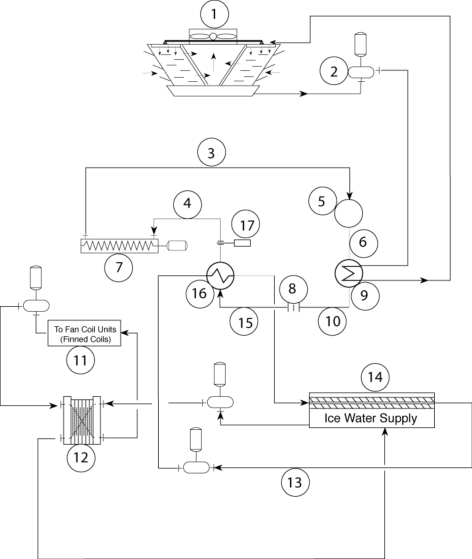
(71) 
A cooling water system is typically designed to have a temperature range of:
(Multiple Choice)
4.9/5 (68)
(68) The recirculating cooling water concentration ratio on a cooling tower is typically designed for a minimum of _______ cycles and is controlled by blowdown.
(Multiple Choice)
4.8/5 (80)
(80) Why do boilers and cooling towers need to be blown-down periodically?
(Multiple Choice)
4.8/5 (86)
(86) Flocculation is a term used to describe the ________ ________ of coagulated particles.
(Multiple Choice)
4.9/5 (79)
(79) 
Filters
- Essay(0)
- Multiple Choice(0)
- Short Answer(0)
- True False(0)
- Matching(0)