



 Chat with AI
Exam 12: Firms in Perfectly Competitive Markets

Exam 1: Economics: Foundations and Models24 Questions
Exam 2: Trade-Offs, Comparative Advantage, and the Market System12 Questions
Exam 3: Where Prices Come From: The Interaction of Demand and Supply29 Questions
Exam 4: Economic Efficiency, Government Price Setting, and Taxes39 Questions
Exam 5: Externalities, Environmental Policy, and Public Goods21 Questions
Exam 6: Elasticity: The Responsiveness of Demand and Supply23 Questions
Exam 7: The Economics of Health Care35 Questions
Exam 8: Firms, the Stock Market, and Corporate Governance23 Questions
Exam 9: Comparative Advantage and the Gains From International Trade26 Questions
Exam 10: Consumer Choice and Behavioral Economics21 Questions
Exam 11: Technology, Production, and Costs43 Questions
Exam 12: Firms in Perfectly Competitive Markets23 Questions
Exam 13: Monopolistic Competition: The Competitive Model in a More Realistic Setting14 Questions
Exam 14: Oligopoly: Firms in Less Competitive Markets8 Questions
Exam 15: Monopoly and Antitrust Policy55 Questions
Exam 16: The Markets for Labor and Other Factors of Production49 Questions
Exam 17: Public Choice, Taxes, and the Distribution of Income69 Questions
Select questions type


In 2015, poultry farmers were able to sell cage-free eggs for a price that more than offset the higher costs of raising cage-free chickens. By 2019, most of that higher return had been wiped out by the entry of additional farmers into the cage-free egg market, which caused the price of those eggs to decline. This example indicates that in a competitive market,
(Multiple Choice)
4.7/5  (85)
(85) When economists refer to a firm breaking even, they mean that the price the firm receives is high enough that the firm's revenue covers ________. Oil executives frequently use the term "breaking even" in a different way, where the term means that the price of oil is just high enough that the firm's revenue is equal to the ________ of pumping oil from a particular well.
(Multiple Choice)
4.9/5 (71)
(71) 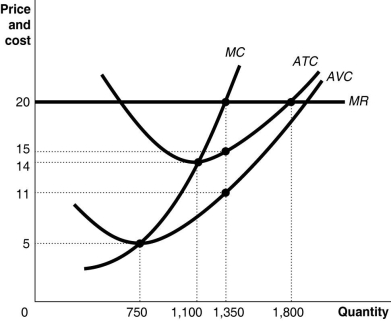 Figure 12-5 shows cost and demand curves facing a typical firm in a constant-cost, perfectly competitive industry.
-Refer to Figure 12-5. If the market price is $20, what is the amount of the firm's profit?
Figure 12-5 shows cost and demand curves facing a typical firm in a constant-cost, perfectly competitive industry.
-Refer to Figure 12-5. If the market price is $20, what is the amount of the firm's profit? (Multiple Choice)
5.0/5 (77)
(77) 
Filters
- Essay(0)
- Multiple Choice(0)
- Short Answer(0)
- True False(0)
- Matching(0)