



 Chat with AI
Exam 5: Hormones and the Brain

Exam 1: Behavioral Neuroscience Scope and Outlook99 Questions
Exam 2: Functional Neuroanatomy: The Cells and Structures of the Nervous System143 Questions
Exam 3: Neurophysiology: The Generation, Transmission, and Integration of Neural Signals136 Questions
Exam 4: The Chemistry of Behavior: Neurotransmitters and Neuropharmacology130 Questions
Exam 5: Hormones and the Brain130 Questions
Exam 6: Evolution of the Brain and Behavior125 Questions
Exam 7: Life-Span Development of the Brain and Behavior127 Questions
Exam 8: General Principles of Sensory Processing, Touch, and Pain127 Questions
Exam 9: Hearing, Balance, Taste, and Smell125 Questions
Exam 10: Vision: From Eye to Brain124 Questions
Exam 11: Motor Control and Plasticity132 Questions
Exam 12: Sex: Evolutionary, Hormonal, and Neural Bases139 Questions
Exam 13: Homeostasis: Active Regulation of the Internal Environment126 Questions
Exam 14: Biological Rhythms, Sleep, and Dreaming138 Questions
Exam 15: Emotions, Aggression, and Stress136 Questions
Exam 16: Psychopathology: Biological Basis of Behavioral Disorders127 Questions
Exam 17: Learning and Memory129 Questions
Exam 18: Attention and Higher Cognition127 Questions
Exam 19: Language and Lateralization127 Questions
Select questions type


Describe neurobehavioral functions of hormones secreted from the adrenal, thyroid and pineal glands.
(Essay)
4.9/5  (82)
(82) If a person does not release sufficient amounts of oxytocin and vasopressin, the sources of the problem are likely to be found in the _______ or the _______.
(Multiple Choice)
5.0/5 (83)
(83) Describe how the molecular structure of the three major classes of hormones influence differences in their interactions with target cells.
(Essay)
4.9/5 (71)
(71) Write a coherent and informative paragraph incorporating each of the following terms or concepts: stress; psychosocial dwarfism; growth hormone; cortisol; somatomedians, GH
(Essay)
4.9/5 (85)
(85) Refer to the figure.
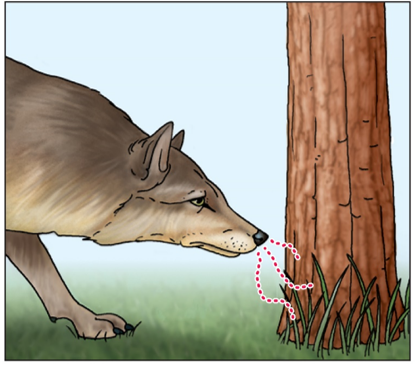 The dotted lines in this figure represent
 (Multiple Choice)
5.0/5 (97)
(97) A cell that releases a hormone that affects the cell next to it is engaged in _______ communication.
(Multiple Choice)
4.9/5 (82)
(82) Normal growth of the body is stimulated not only by growth hormone but also by _______, which are released by the _______.
(Multiple Choice)
4.8/5 (80)
(80) Peptide hormone effects are often mediated by the second messenger
(Multiple Choice)
4.8/5 (82)
(82) Provide an overview of the structure and function of the major link between endocrine and neural communication-the hypothalamus. Describe how the hypothalamus interacts with the lobes of the pituitary as well as how they both interact with the rest of the endocrine system.
(Essay)
5.0/5 (78)
(78) Which of the following is not an anterior pituitary hormone?
(Multiple Choice)
4.8/5 (69)
(69) Which substance acts by passing through plasma membranes to enter cells to couple with receptors inside the cell then interact with DNA, thereby altering gene expression?
(Multiple Choice)
4.8/5 (87)
(87) Based on what we know about meadow voles (i.e., they do not form pair-bonds, and they have multiple mating partners), which peptide hormone receptor would you expect to find in decreased levels in promiscuous human males compared to monogamous human males?
(Multiple Choice)
4.9/5 (83)
(83) Write a coherent and informative paragraph incorporating each of the following terms or concepts: hypothalamus; releasing hormones; tropic hormones; portal system; adenohypophysis
(Essay)
5.0/5 (85)
(85) 
Filters
- Essay(0)
- Multiple Choice(0)
- Short Answer(0)
- True False(0)
- Matching(0)