



 Chat with AI
Exam 7: Waveform Analysis and Application

Exam 1: Principles of Mechanical Ventilation21 Questions
Exam 2: Classification of Mechanical Ventilation19 Questions
Exam 3: Modes of Mechanical Ventilation20 Questions
Exam 4: Non-Invasive and Invasive Airway Management22 Questions
Exam 5: Initiation of Mechanical Ventilation20 Questions
Exam 6: Monitoring in Mechanical Ventilation17 Questions
Exam 7: Waveform Analysis and Application20 Questions
Exam 8: Management of Mechanical Ventilation19 Questions
Exam 9: Critical Care Procedures20 Questions
Exam 10: Pharmacotherapy in Critical Care20 Questions
Exam 11: Weaning From Mechanical Ventilation21 Questions
Exam 12: Neonatal and Pediatric Mechanical Ventilation20 Questions
Exam 13: Medical Critical Care Issues21 Questions
Exam 14: Traumatic Critical Care Issues20 Questions
Exam 15: Critical Care Guidelines and Bundles20 Questions
Select questions type


What do you do if the pressure deflection is greater than normal?

Free
(Multiple Choice)
4.9/5  (87)
(87) Correct Answer: Verified
C
What happens to the waveform, PIP, and Pplat when compliance decreases?
Free
(Multiple Choice)
4.8/5 (73)
(73) Correct Answer:Verified
VerifiedA
How do you typically identify a patient-triggered breath (except when flow compensation is used)?
Free
(Multiple Choice)
4.9/5 (82)
(82) Correct Answer:Verified
VerifiedD
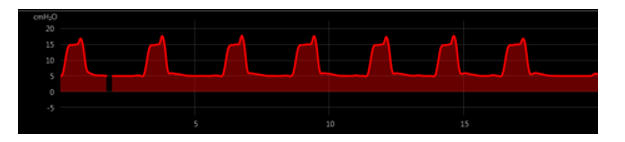
Based on the scenario displayed on the scalars below, which of the following maneuvers is indicated at this point?
(Multiple Choice)
4.7/5 (74)
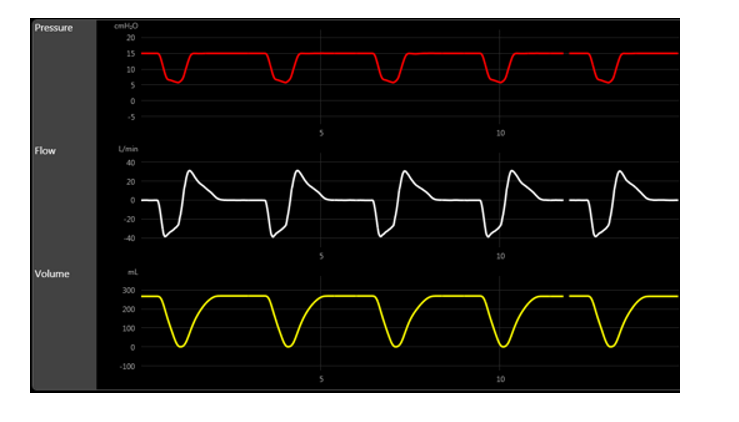
(74) The P-T of a patient displays a bump at the beginning of the initial inspiratory tracing. This change is consistent with:
(Multiple Choice)
4.8/5 (86)
(86) 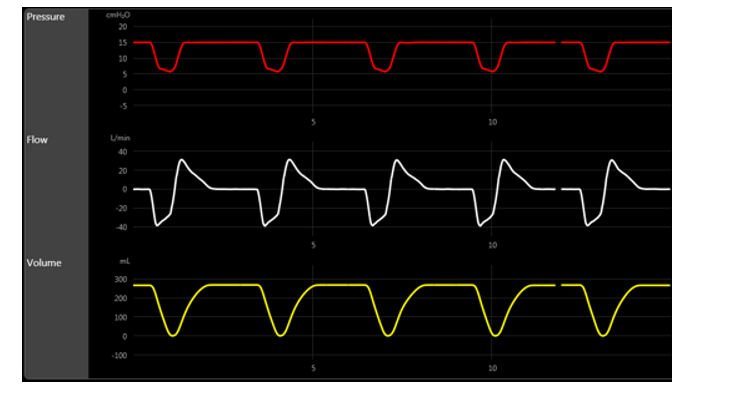
Which waveform is most likely to determine a sensitivity setting problem?
(Multiple Choice)
4.9/5 (85)
(85) In order to assess improvement after administration of a bronchodilator, you should see:
(Multiple Choice)
4.9/5 (75)
(75) The FVL of a patient with tracheoesophageal fistula indicates a leak of at least:
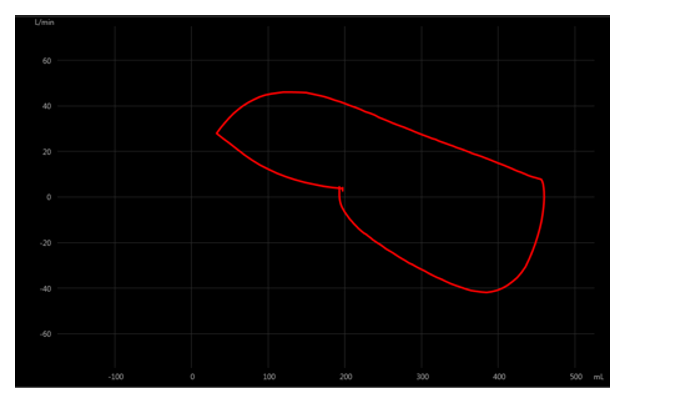
(Multiple Choice)
4.7/5 (85)
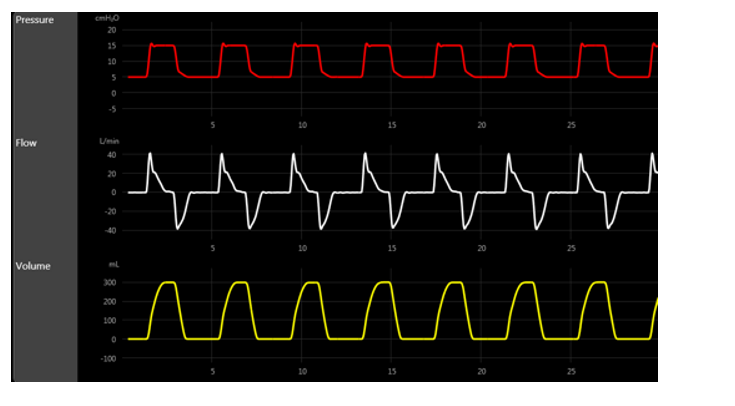
(85) On the first round of the evening, a critical care fellow is asking the respiratory therapist what mode of ventilation these scalars are more consistent with. The RT should answer: 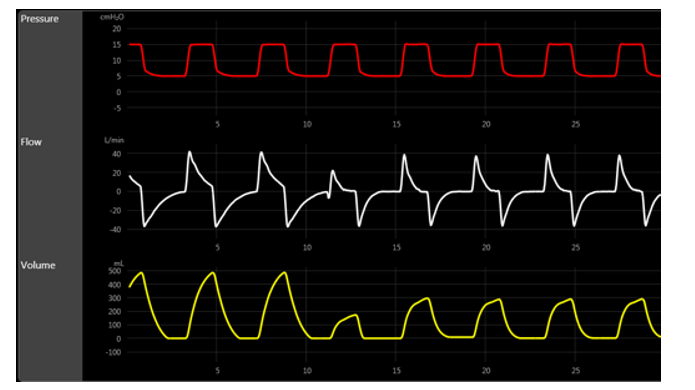
(Multiple Choice)
4.9/5 (87)
(87) When expiratory flow takes longer to return to baseline, what does this indicate on a flow waveform?
(Multiple Choice)
4.9/5 (67)
(67) The P-T and the F-T (with brief inspiratory hold) of a patient admitted for COPD exacerbation confirm the presence of:
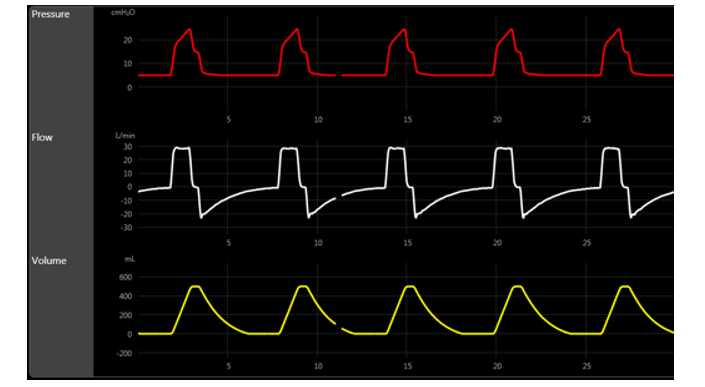
(Multiple Choice)
4.8/5 (92)
(92) The respiratory therapist is taking care of a trauma patient with bilateral chest tubes for pneumothoraces. The inability to sustain adequate ventilation may be related to which of the following situations?
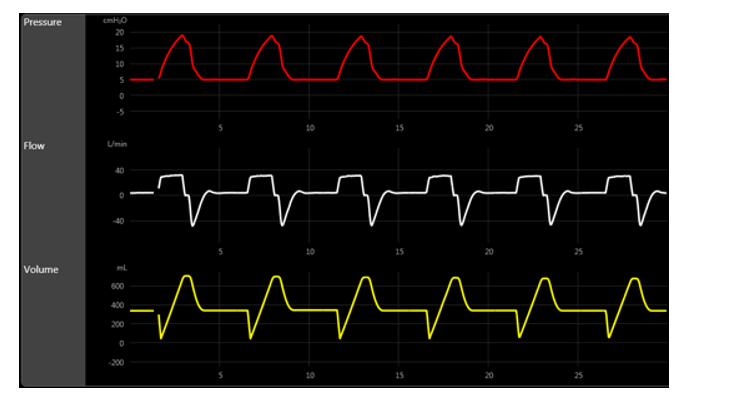
(Multiple Choice)
4.8/5 (80)
(80) An increase in airway resistance causes the pressure-volume loop to do what?
(Multiple Choice)
4.9/5 (71)
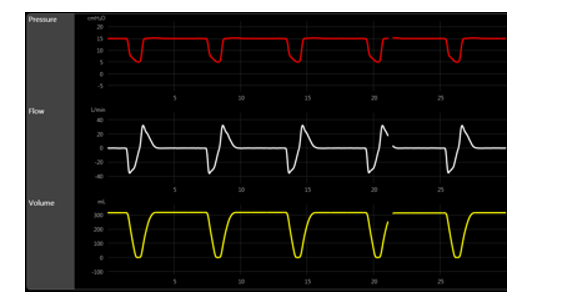
(71) Which mode of ventilation is more consistent with the scalars below?
(Multiple Choice)
4.7/5 (80)
(80) Which waveform is most likely to determine the beneficial effects of a bronchodilator treatment?
(Multiple Choice)
4.7/5 (73)
(73) When inspiratory flow takes longer to return to baseline, what does this indicate on a flow waveform?
(Multiple Choice)
4.9/5 (72)
(72) 
Filters
- Essay(0)
- Multiple Choice(0)
- Short Answer(0)
- True False(0)
- Matching(0)