



 Chat with AI
Exam 11: Health Disparities in Health Insurance Markets

Exam 1: Health Disparities: Entering a Strange Land at a Strange Time45 Questions
Exam 2: What Are Health Disparities45 Questions
Exam 3: How to Conduct Research on Health Disparities27 Questions
Exam 4: Data Sources to Study Health and Health Care Disparities24 Questions
Exam 5: Simple Statistical Tools to Assess Health and Health Care Disparities30 Questions
Exam 6: Physicians, Health Care Quality, and Health Disparities25 Questions
Exam 7: Health Care Disparities in Physician Practices24 Questions
Exam 8: Using Physicianpatient Partnerships to Reduce Health Care Disparities25 Questions
Exam 9: Disparities in Primary, Specialty, and Tertiary Health Care Markets25 Questions
Exam 10: Hospitals and Health Disparities35 Questions
Exam 11: Health Disparities in Health Insurance Markets25 Questions
Exam 12: Disparities in Long-Term Care Institutions41 Questions
Exam 13: They Protect Eagles, Dont They: Using Health Disparity Research to Tell New Stories - Case Study I35 Questions
Exam 14: Uncovering Health Disparities - A Case Study on Adverse Childhood Experiences and Intentional and Unintentional Injuries30 Questions
Exam 15: Health and Health Care Disparities Where Do We Go From Here25 Questions
Select questions type


The group least likely to be uninsured in 2016 was:

Free
(Multiple Choice)
4.9/5  (95)
(95) Correct Answer: Verified
A
Which treatment or treatments below would be billed to your insurance company for problems with the heart:
Free
(Multiple Choice)
4.9/5 (79)
(79) Correct Answer:Verified
VerifiedA
Significant differences in cancer characteristics and treatment exist.
Free
(True/False)
4.9/5 (79)
(79) Correct Answer:Verified
VerifiedTrue
It is important for all health care professionals to know about disparities in health insurance marketplaces.
(True/False)
4.9/5 (80)
(80) When 100% of self-insured vs. self-funded insurance plans are combined with those that are partially self-funded, one can accurately make which statement below:
(Multiple Choice)
4.8/5 (80)
(80) 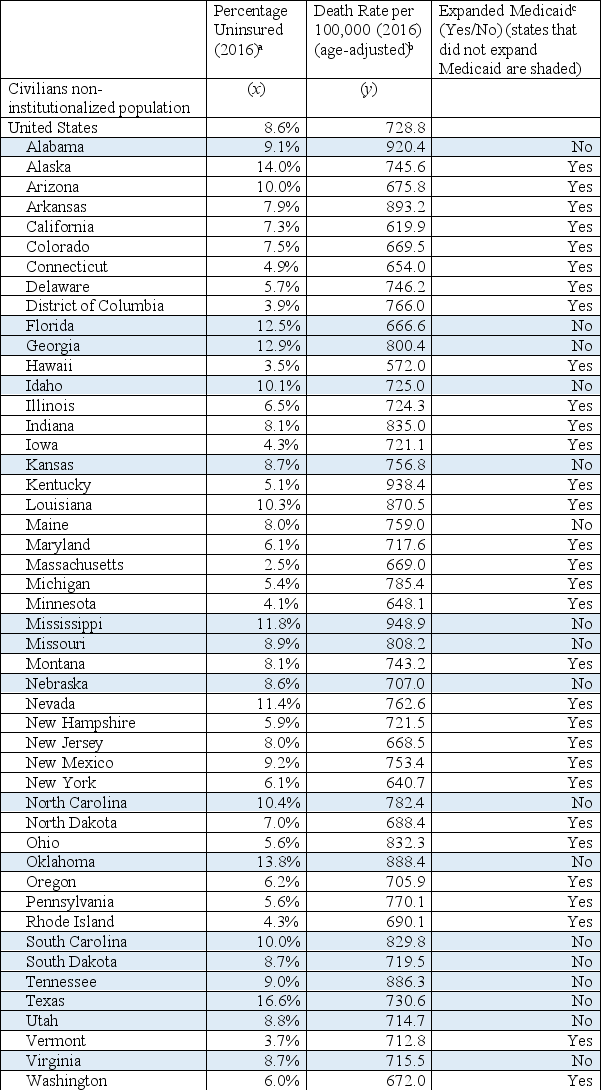
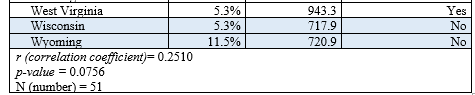 -The change in the percent of the population with private insurance from 1984 to 2015 was greatest among:
 (Multiple Choice)
4.9/5 (82)
(82) According to Barnett and Berchick (2017), the percent of uninsured Americans dropped from 28.6% in 1987 to 8.6% in 2016. Thus, one may say:
(Multiple Choice)
4.8/5 (88)
(88) Antonisse et al. (2014) found that while the ACA was associated with higher rates of insurance coverage, adverse side effects may occur.
(True/False)
4.8/5 (77)
(77) Cancer registries in the United States were established in:
(Multiple Choice)
4.8/5 (84)
(84)
-When data are analyzed for 1984 and 2015 on changes in the percent of the population with private health insurance, it reveals that the total percent of the population with private health insurance:
-When data are analyzed for 1984 and 2015 on changes in the percent of the population with private health insurance, it reveals that the total percent of the population with private health insurance: (Multiple Choice)
4.9/5 (89)
(89) Based upon your reading of Chapter 11, which statement or statements below are true?
(Multiple Choice)
4.9/5 (95)
(95) Several researchers found disparate barriers to health care among same-sex couples enrolled in private healthcare plans.
(True/False)
5.0/5 (82)
(82) Relative to insured and uninsured status, which conclusions can be drawn from the data in Box. 11.1.
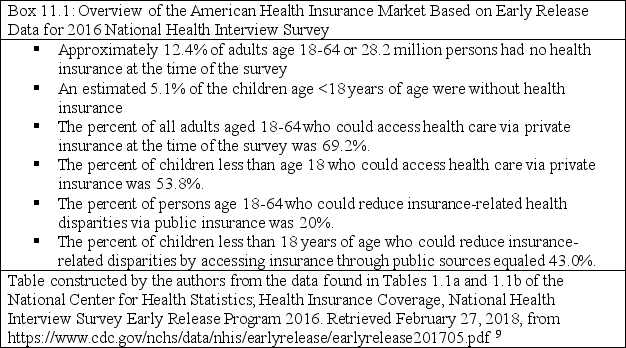
(Multiple Choice)
4.9/5 (80)
(80) Both correlation coefficients that were calculated regarding the relationship between life expectancy by state and the % of persons who are uninsured in each state were:
(Multiple Choice)
4.8/5 (78)
(78) Brunner et al. (2000) found that Medicaid insured children with rheumatoid arthritis had poorer outcomes than privately insured children.
(True/False)
4.8/5 (77)
(77) One set of researchers using a case study of a unionized steel mill and food processing plant, found that:
(Multiple Choice)
4.7/5 (67)
(67) 
Filters
- Essay(0)
- Multiple Choice(0)
- Short Answer(0)
- True False(0)
- Matching(0)