



 Chat with AI
Exam 14: Exponential and Logarithmic Functions

Exam 1: Some Basic Concepts of Arithmetic and Algebra255 Questions
Exam 2: The Real Numbers261 Questions
Exam 3: Equations, Inequalities and Problem Solving327 Questions
Exam 4: Formulas and Problem Solving233 Questions
Exam 5: Coordinate Geometry and Linear Systems396 Questions
Exam 6: Exponents and Polynomials390 Questions
Exam 7: Factoring, Solving Equations and Problem Solving302 Questions
Exam 8: A Transition From Elementary Algebra to Intermediate Algebra276 Questions
Exam 9: Rational Expressions277 Questions
Exam 10: Exponents and Radicals274 Questions
Exam 11: Quadratic Equations and Inequalities283 Questions
Exam 12: Coordinate Geometry: Lines, Parabolas, Circles, Ellipses and Hyperbolas165 Questions
Exam 13: Functions195 Questions
Exam 14: Exponential and Logarithmic Functions228 Questions
Exam 15: Systems of Equations: Matrices and Determinants228 Questions
Select questions type


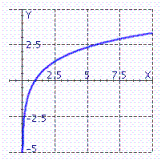

True or false? The function below is one-to-one. f ( x ) = | x | + 1
(True/False)
4.9/5  (93)
(93) Use your calculator to find x when given ln x . Please give the answer to four decimal places.
(Multiple Choice)
4.9/5 (80)
(80) The half-life of a radioactive substance is the amount of time that it takes for one-half of an initial amount of the substance to disappear as the result of decay.
(True/False)
4.8/5 (83)
(83) Mark became overextended in his gambling debt and could not pay $750 he owed. The loan person said he could have five weeks to pay off the $750 at 8% interest per week compounded continuously. How much will Mark have to pay at the end of the five weeks? Please round the answer to the nearest hundredth.
(Multiple Choice)
4.8/5 (69)
(69) True or false? The function below is one-to-one. f ( x ) = 5 x + 3
(True/False)
4.9/5 (96)
(96) If and , then the function f defined by where x is any real number, is called the power function with base b .
(True/False)
4.8/5 (63)
(63) Use a calculator to find each common logarithm. Express answer to four decimal places.
(Short Answer)
4.8/5 (87)
(87) Use a calculator to find each common logarithm. Express answer to four decimal places.
(Multiple Choice)
4.9/5 (78)
(78) 
Filters
- Essay(0)
- Multiple Choice(0)
- Short Answer(0)
- True False(0)
- Matching(0)