



 Chat with AI
Exam 6: Thought and Culture in the Early Nineteenth Century

Exam 1: Transition to the Modern Age: Renaissance and Reformation102 Questions
Exam 2: Political and Economic Transformation: National States, Overseas Expansion, Commercial Revolution84 Questions
Exam 3: Intellectual Transformation: the Scientific Revolution and the Age of Enlightenment86 Questions
Exam 4: The Era of the French Revolution: Affirmation of Liberty and Equality92 Questions
Exam 5: The Industrial Revolution: The Transformation of Society79 Questions
Exam 6: Thought and Culture in the Early Nineteenth Century82 Questions
Exam 7: Surge of Liberalism and Nationalism: Revolution, Counterrevolution, and Unification78 Questions
Exam 8: Thought and Culture in the Mid-Nineteenth Century: Realism, Positivism, Darwinism, and Social Criticism86 Questions
Exam 9: Europe in the Late Nineteenth Century: Modernization, Nationalism, Imperialism93 Questions
Exam 10: Modern Consciousness: New Views of Nature, Human Nature, and the Arts78 Questions
Exam 11: World War I: The West in Despair83 Questions
Exam 12: An Era of Totalitarianism88 Questions
Exam 13: World War II: Western Civilization in the Balance56 Questions
Exam 14: Europe After World War II: Recovery and Realignment, 1945-198963 Questions
Exam 15: The Troubled Present55 Questions
Select questions type


Which of these viewed with horror the democratic creed that all people should share in political power?
(Multiple Choice)
4.9/5  (79)
(79) Please use this outline map of Europe to answer the question(s).
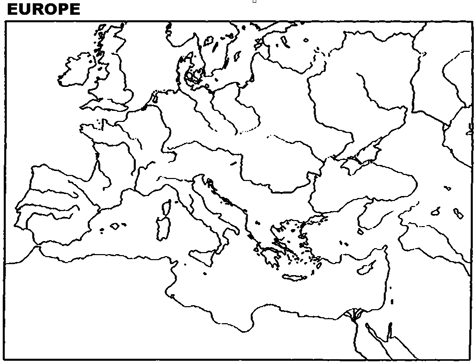 -On a blank map of Europe, designate with arrows the countries that may be associated with the following cultural figures: Shelley, Wordsworth, Keats, and Byron; Hugo and Chateaubriand; Schlegel, Schiller, Schelling, and Beethoven.
 (Essay)
4.8/5 (77)
(77) 
Filters
- Essay(0)
- Multiple Choice(0)
- Short Answer(0)
- True False(0)
- Matching(0)