



 Chat with AI
Exam 6: Thought and Culture in the Early Nineteenth Century

Exam 1: Transition to the Modern Age: Renaissance and Reformation102 Questions
Exam 2: Political and Economic Transformation: National States, Overseas Expansion, Commercial Revolution84 Questions
Exam 3: Intellectual Transformation: the Scientific Revolution and the Age of Enlightenment86 Questions
Exam 4: The Era of the French Revolution: Affirmation of Liberty and Equality92 Questions
Exam 5: The Industrial Revolution: The Transformation of Society79 Questions
Exam 6: Thought and Culture in the Early Nineteenth Century82 Questions
Exam 7: Surge of Liberalism and Nationalism: Revolution, Counterrevolution, and Unification78 Questions
Exam 8: Thought and Culture in the Mid-Nineteenth Century: Realism, Positivism, Darwinism, and Social Criticism86 Questions
Exam 9: Europe in the Late Nineteenth Century: Modernization, Nationalism, Imperialism93 Questions
Exam 10: Modern Consciousness: New Views of Nature, Human Nature, and the Arts78 Questions
Exam 11: World War I: The West in Despair83 Questions
Exam 12: An Era of Totalitarianism88 Questions
Exam 13: World War II: Western Civilization in the Balance56 Questions
Exam 14: Europe After World War II: Recovery and Realignment, 1945-198963 Questions
Exam 15: The Troubled Present55 Questions
Select questions type


Key Terms Instructions: Please define the following key terms. Show Who? What? Where? When? Why Important?
Edmund Burke
(Essay)
4.8/5  (82)
(82) Key Terms Instructions: Please define the following key terms. Show Who? What? Where? When? Why Important?
tabula rasa
(Short Answer)
4.8/5 (79)
(79) All of the following are true statements about the romantics except they
(Multiple Choice)
4.8/5 (77)
(77) Which statement is least associated with the work of Immanuel Kant?
(Multiple Choice)
4.9/5 (77)
(77) Key Terms Instructions: Please define the following key terms. Show Who? What? Where? When? Why Important?
E. J. Hobsbawm
(Essay)
4.9/5 (76)
(76) Key Terms Instructions: Please define the following key terms. Show Who? What? Where? When? Why Important?
John Constable
(Essay)
4.8/5 (86)
(86) Please use this outline map of Europe to answer the question(s).
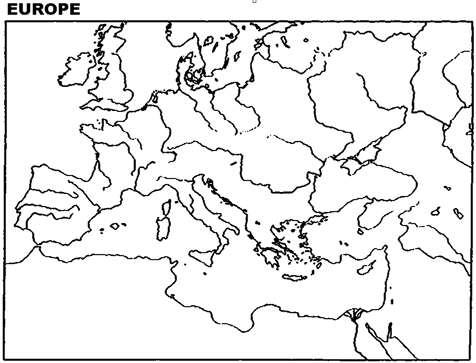 - On a blank map of Europe, designate the state where each of the following philosophers worked: Hegel, Kant, Hume, and Mill.
 (Not Answered)
This question doesn't have any answer yet
Key Terms Instructions: Please define the following key terms. Show Who? What? Where? When? Why Important?
Victor Hugo
(Essay)
4.7/5 (72)
(72) Key Terms Instructions: Please define the following key terms. Show Who? What? Where? When? Why Important?
Hume
(Essay)
4.9/5 (72)
(72) The author of Reflections on the Revolution in France was
(Multiple Choice)
4.9/5 (64)
(64) Key Terms Instructions: Please define the following key terms. Show Who? What? Where? When? Why Important?
Conservatism
(Essay)
4.9/5 (95)
(95) Key Terms Instructions: Please define the following key terms. Show Who? What? Where? When? Why Important?
liberalism
(Essay)
4.9/5 (74)
(74) 
Filters
- Essay(0)
- Multiple Choice(0)
- Short Answer(0)
- True False(0)
- Matching(0)