



 Chat with AI
Exam 26: Bringing in the Supply Side: Unemployment and Inflation

Exam 1: What Is Economics261 Questions
Exam 2: The Economy: Myth and Reality185 Questions
Exam 3: The Fundamental Economic Problem: Scarcity and Choice290 Questions
Exam 4: Supply and Demand: an Initial Look337 Questions
Exam 21: An Introduction to Macroeconomics216 Questions
Exam 22: The Goals of Macroeconomic Policy212 Questions
Exam 23: Economic Growth: Theory and Policy228 Questions
Exam 24: Aggregate Demand and the Powerful Consumer219 Questions
Exam 25: Demand-Side Equilibrium: Unemployment or Inflation216 Questions
Exam 26: Bringing in the Supply Side: Unemployment and Inflation228 Questions
Exam 27: Managing Aggregate Demand: Fiscal Policy210 Questions
Exam 28: Money and the Banking System224 Questions
Exam 29: Monetary Policy: Conventional and Unconventional210 Questions
Exam 30: The Financial Crisis and the Great Recession66 Questions
Exam 31: The Debate Over Monetary and Fiscal Policy219 Questions
Exam 32: Budget Deficits in the Short and Long Run215 Questions
Exam 33: The Trade-Off Between Inflation and Unemployment219 Questions
Exam 34: International Trade and Comparative Advantage226 Questions
Exam 35: The International Monetary System: Order or Disorder218 Questions
Exam 36: Exchange Rates and the Macroeconomy219 Questions
Exam 37: Contemporary Issues in the Us Economy23 Questions
Select questions type


In the mid-1970s, the price of oil rose dramatically. This
(Multiple Choice)
4.9/5  (89)
(89) The primary effect of OPEC actions in the period from 1973 to 1980 was to increase
(Multiple Choice)
5.0/5 (93)
(93) The money wage rate has little effect on the supply curve. It mainly affects the aggregate demand curve.
(True/False)
4.8/5 (80)
(80) A severe hurricane hits Florida, destroying large amounts of the citrus crop. What is the most likely effect of this on the aggregate supply?
(Multiple Choice)
4.8/5 (83)
(83) A outward shift of the aggregate supply curve could be caused by
(Multiple Choice)
4.8/5 (80)
(80) The aggregate supply curve slopes upward because as price rises, the quantity of output supplied rises.
(True/False)
4.8/5 (89)
(89) The recessions of the 1970s are often attributed to an increase in oil prices.
(True/False)
4.9/5 (85)
(85) Figure 10-8
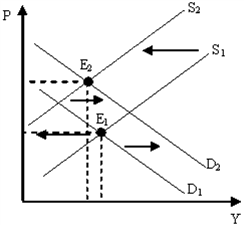 Figure 10-8 describes which of the following periods in the United States?
 (Multiple Choice)
4.8/5 (88)
(88) Which of the following is evidence of an inflationary gap?
(Multiple Choice)
4.9/5 (92)
(92) When OPEC cut energy production in 1973, the aggregate supply curve shifted outward.
(True/False)
4.9/5 (73)
(73) Stabilization policy may be necessary to slow down the speed of the adjustment process.
(True/False)
4.9/5 (80)
(80) Using aggregate demand and aggregate supply analysis, explain why increases in oil did not lead to stagflation in 2006-2008 but did lead to stagflation in the 1970s and early 1980s.
(Essay)
4.8/5 (76)
(76) What does inflation do to the value of the oversimplified multiplier?
(Multiple Choice)
4.9/5 (82)
(82) 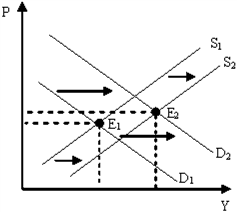 Figure 10-9 illustrates a period of
Over time, aggregate demand and aggregate supply grow by the same amount.
(True/False)
4.8/5 (78)
(78) Figure 10-4
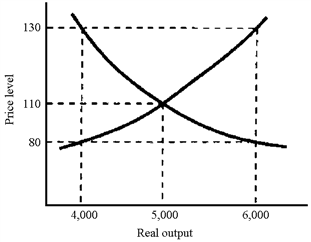 In Figure 10-4, if full employment occurs at an output level of 4,000 and the economy is currently at an output level of 5,000, then we can expect a(n)
 (Multiple Choice)
4.8/5 (77)
(77) A consequence of an inflationary gap is ____ as output begins to decrease and prices continue to increase.
(Multiple Choice)
4.8/5 (79)
(79) 
Filters
- Essay(0)
- Multiple Choice(0)
- Short Answer(0)
- True False(0)
- Matching(0)