



 Chat with AI
Exam 13: Alcohols, Phenols, and Ethers

Exam 1: Matter, Measurements, and Calculations101 Questions
Exam 2: Atoms and Molecules96 Questions
Exam 3: Electronic Structure and the Periodic Law91 Questions
Exam 4: Forces Between Particles94 Questions
Exam 5: Chemical Reactions95 Questions
Exam 6: The States of Matter95 Questions
Exam 7: Solutions and Colloids98 Questions
Exam 8: Reaction Rates and Equilibrium92 Questions
Exam 9: Acids, Bases, and Salts92 Questions
Exam 10: Radioactivity and Nuclear Processes93 Questions
Exam 11: Organic Compounds: Alkanes92 Questions
Exam 12: Unsaturated Hydrocarbons94 Questions
Exam 13: Alcohols, Phenols, and Ethers92 Questions
Exam 14: Aldehydes and Ketones93 Questions
Exam 15: Carboxylic Acids and Esters94 Questions
Exam 16: Amines and Amides92 Questions
Exam 17: Carbohydrates93 Questions
Exam 18: Lipids96 Questions
Exam 19: Proteins97 Questions
Exam 20: Enzymes94 Questions
Exam 21: Nucleic Acids and Protein Synthesis98 Questions
Exam 22: Nutrition and Energy for Life94 Questions
Exam 23: Carbohydrate Metabolism95 Questions
Exam 24: Lipid and Amino Acid Metabolism99 Questions
Exam 25: Body Fluids91 Questions
Select questions type


Identify the type of reaction in which two or more covalent bonds are broken and a new multiple bond is formed.
(Multiple Choice)
4.9/5  (92)
(92) Ethers generally have boiling points ____ those of comparable alcohols.
(Multiple Choice)
4.9/5 (82)
(82) In the acid catalyzed dehydration of an alcohol, the acid catalyst
(Multiple Choice)
4.7/5 (81)
(81) 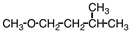
The hydration of propene would result in the formation of which of the following species?
(Multiple Choice)
4.9/5 (85)
(85) 

Identify the correct statement with respect to the oxygen found in an alcohol as compared to the oxygen found in an ether.
(Multiple Choice)
4.8/5 (72)
(72) Which of the following compounds would be considered polyfunctional? 
(Multiple Choice)
4.7/5 (81)
(81) 
Filters
- Essay(0)
- Multiple Choice(0)
- Short Answer(0)
- True False(0)
- Matching(0)