



 Chat with AI
Exam 44: Animal Reproduction

Exam 1: Light and Life109 Questions
Exam 2: The Cell: an Overview155 Questions
Exam 3: Energy and Enzymes66 Questions
Exam 4: Cell Membranes and Signaling81 Questions
Exam 5: Cellular Respiration61 Questions
Exam 6: Photosynthesis95 Questions
Exam 7: Cell Cycles93 Questions
Exam 8: Genetic Recombination88 Questions
Exam 9: The Chromosomal Basis of Mendelian Inheritance86 Questions
Exam 10: Genetic Linkage, Sex-Linkage, and Other Non-Mendelian Inheritance Mechanisms73 Questions
Exam 11: DNA Structure, Replication, and Repair57 Questions
Exam 12: Gene Structure Expression, and Mutation106 Questions
Exam 13: Regulation of Gene Expression91 Questions
Exam 14: Dna Technologies91 Questions
Exam 15: Genomes53 Questions
Exam 16: Evolution: the Development of the Theory66 Questions
Exam 17: Microevolution: Changes Within Populations83 Questions
Exam 18: Speciation and Macroevolution64 Questions
Exam 19: Systematics and Phylogenetics: Revealing the Tree of Life68 Questions
Exam 20: Humans and Evolution54 Questions
Exam 21: Defining Life and Its Origins55 Questions
Exam 22: Viruses, Viroids, and Prions: Infectious Biological Particles38 Questions
Exam 23: Bacteria and Archaea78 Questions
Exam 24: Protists98 Questions
Exam 25: Fungi81 Questions
Exam 26: Plants80 Questions
Exam 27: Animals171 Questions
Exam 28: Conservation of Biodiversity41 Questions
Exam 29: Population Ecology65 Questions
Exam 30: Species Interactions and Community Ecology70 Questions
Exam 31: Ecosystems68 Questions
Exam 32: Animal Behaviour120 Questions
Exam 33: Organization of the Plant Body69 Questions
Exam 34: Transport in Plants80 Questions
Exam 35: Reproduction and Development in Flowering Plants70 Questions
Exam 36: Plant Nutrition97 Questions
Exam 37: Plant Signals and Responses to the Environment93 Questions
Exam 38: Introduction to Animal Organization and Physiology65 Questions
Exam 39: Animal Nutrition98 Questions
Exam 40: Gas Exchange: the Respiratory System56 Questions
Exam 41: Internal Transport: the Circulatory System72 Questions
Exam 42: Regulation of the Internal Environment: Water, Solutes, and Temperature75 Questions
Exam 43: Control of Animal Processes: Endocrine Control80 Questions
Exam 44: Animal Reproduction168 Questions
Exam 45: Control of Animal Processes: Neural Control253 Questions
Exam 46: Muscles, Skeletons, and Body Movements71 Questions
Select questions type


Identify each labelled part of the illustration. 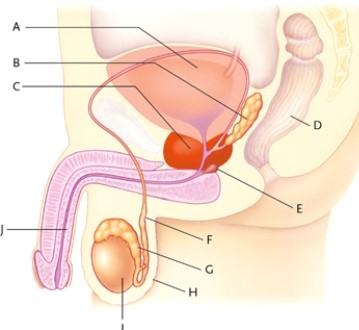 -bulbourethral gland
Free
(Short Answer)
4.8/5  (72)
(72) Correct Answer: Verified
e
Figure 44-2 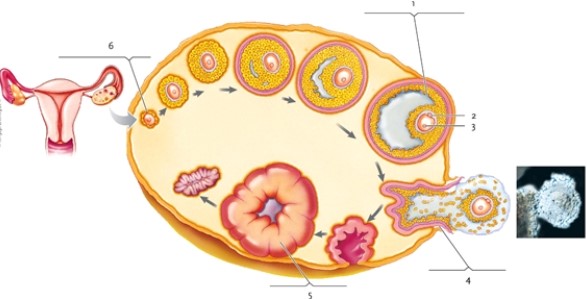 -In Figure 44-2, what process is indicated by number 4?
Free
(Multiple Choice)
5.0/5 (92)
(92) Correct Answer:Verified
VerifiedB
Put the following mechanisms of development in the order in which they occur.
-second mechanism
Free
(Multiple Choice)
4.8/5 (77)
(77) Correct Answer:Verified
VerifiedA
How many times might a human female ovulate in her lifetime?
(Multiple Choice)
4.8/5 (82)
(82) The eggs of which of these organisms contain the lowest percentage of yolk?
(Multiple Choice)
4.8/5 (70)
(70) Cells that undergo apoptosis are essential to the organism throughout its life.
(True/False)
5.0/5 (65)
(65) Identify each labelled part of the illustration. 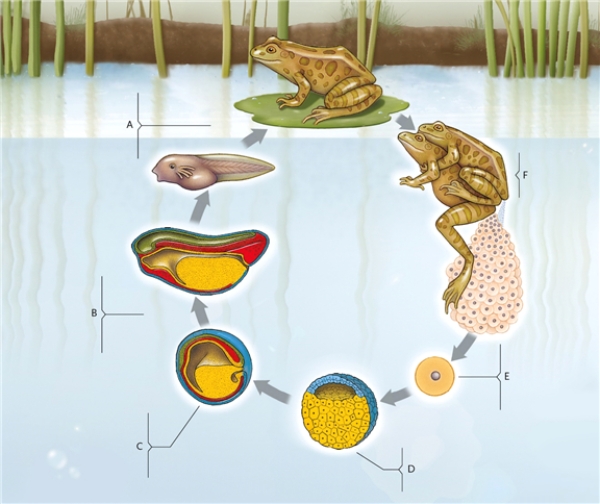 -sexual reproduction
 (Short Answer)
4.7/5 (73)
(73) Identify each labelled part of the illustration.
-fertilization
-fertilization (Short Answer)
5.0/5 (87)
(87) The symmetrical pattern of yolk distribution in a sea urchin represents the beginnings of radial symmetry.
(True/False)
4.9/5 (80)
(80) Identify each labelled part of the illustration.
-organogenesis
-organogenesis (Short Answer)
4.8/5 (81)
(81) Cleavage in a frog embryo takes place more quickly in the vegetal half.
(True/False)
4.9/5 (84)
(84) Identify each labelled part of the illustration.
-development into adult
-development into adult (Short Answer)
4.7/5 (77)
(77) 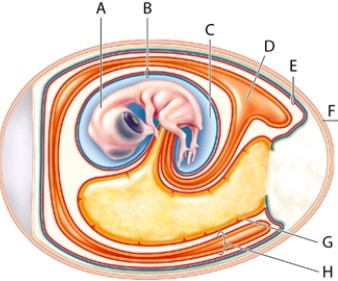 -chorion
Which of these terms refers to an extra-embryonic membrane that secretes fluid around the developing embryo?
(Multiple Choice)
4.7/5 (86)
(86) Put the following mechanisms of development in the order in which they occur.
-sixth mechanism
(Multiple Choice)
4.7/5 (77)
(77) 
Filters
- Essay(0)
- Multiple Choice(0)
- Short Answer(0)
- True False(0)
- Matching(0)