



 Chat with AI
Exam 1: What Is Economics?

Exam 1: What Is Economics?227 Questions
Exam 2: The Economy: Myth and Reality150 Questions
Exam 3: The Fundamental Economic Problem: Scarcity and Choice250 Questions
Exam 4: Supply and Demand: An Initial Look308 Questions
Exam 5: Consumer Choice: Individual and Market Demand202 Questions
Exam 6: Demand and Elasticity209 Questions
Exam 7: Production, Inputs, and Cost: Building Blocks for Supply Analysis216 Questions
Exam 8: Output, Price, and Profit: The Importance of Marginal Analysis189 Questions
Exam 9: Securities: Business Finance, and the Economy: The Tail that Wags the Dog?198 Questions
Exam 10: The Firm and the Industry under Perfect Competition208 Questions
Exam 11: Monopoly203 Questions
Exam 12: Between Competition and Monopoly225 Questions
Exam 13: Limiting Market Power: Regulation and Antitrust152 Questions
Exam 14: The Case for Free Markets I: The Price System220 Questions
Exam 15: The Shortcomings of Free Markets212 Questions
Exam 16: The Market's Prime Achievement: Innovation and Growth110 Questions
Exam 17: Externalities, the Environment, and Natural Resources217 Questions
Exam 18: Taxation and Resource Allocation219 Questions
Exam 19: Pricing the Factors of Production228 Questions
Exam 20: Labor and Entrepreneurship: The Human Inputs223 Questions
Exam 21: Poverty, Inequality, and Discrimination167 Questions
Exam 22: An Introduction to Macroeconomics211 Questions
Exam 23: The Goals of Macroeconomic Policy207 Questions
Exam 24: Economic Growth: Theory and Policy223 Questions
Exam 25: Aggregate Demand and the Powerful Consumer214 Questions
Exam 26: Demand-Side Equilibrium: Unemployment or Inflation?210 Questions
Exam 27: Bringing in the Supply Side: Unemployment and Inflation?223 Questions
Exam 28: Managing Aggregate Demand: Fiscal Policy205 Questions
Exam 29: Money and the Banking System219 Questions
Exam 30: Monetary Policy: Conventional and Unconventional205 Questions
Exam 31: The Financial Crisis and the Great Recession61 Questions
Exam 32: The Debate over Monetary and Fiscal Policy214 Questions
Exam 33: Budget Deficits in the Short and Long Run210 Questions
Exam 34: The Trade-Off between Inflation and Unemployment214 Questions
Exam 35: International Trade and Comparative Advantage226 Questions
Exam 36: The International Monetary System: Order or Disorder?213 Questions
Exam 37: Exchange Rates and the Macroeconomy214 Questions
Select questions type


The market mechanism provides a financial incentive for firms to minimize the pollution they create.

Free
(True/False)
4.8/5  (85)
(85) Correct Answer: Verified
False
The opportunity cost to you of an action is
Free
(Multiple Choice)
4.9/5 (94)
(94) Correct Answer:Verified
VerifiedB
Carefully define the following terms and explain their importance.a.variable
b.ray
c.slope
d.contour map
Free
(Essay)
4.9/5 (78)
(78) Correct Answer:Verified
Verifieda.A variable is an object, such as price, whose magnitude is measured by a number.It is used to analyze what happens to other things when the size of that number changes.
b.A ray is a straight line emanating from a particular point an extending endlessly in one direction.
c.The slope of a line is change per unit from left to right.It is measured by the change in the variable on the vertical axis divided by the change in the variable on the horizontal axis.
d.A contour map shows all points representing different combinations of two variables, e.g., combinations of labor and raw materials capable of producing a given output.(Other examples of contour maps could be drawn from later chapters.)
Abstraction ignores many details in order to focus on the most important elements of a problem.
(True/False)
5.0/5 (76)
(76) In the short run, efforts to reduce the unemployment rate are likely to cause
(Multiple Choice)
5.0/5 (76)
(76) Value judgments are based on people's tastes, preferences, and ethical opinions.
(True/False)
4.9/5 (67)
(67) The achievement of greater efficiency in the United States has been at the expense of growing inequality.
(True/False)
4.9/5 (85)
(85) How would you interpret (1) an upward sloping curve and (2) a zero slope curve in a two variable diagram?
(Essay)
4.9/5 (84)
(84) Greater economic efficiency often leads to greater economic inequality.
(True/False)
4.8/5 (84)
(84) In contrast to the United States, the European Union has chosen
(Multiple Choice)
4.8/5 (74)
(74) Economic efficiency and income equality are often conflicting goals in an economy.
(True/False)
5.0/5 (80)
(80) If trade between two countries is voluntary, one can expect that
(Multiple Choice)
4.9/5 (85)
(85) In Egypt, in 1970, the Aswan Dam was completed.By preventing the annual flood of the Nile (thereby providing millions of acres of arable land) and by providing electricity, the dam was expected to raise the living standard of the Egyptian people-and it has.However, it has also led to a rise in the water table which causes Egypt's limestone structures, including the pyramids, to absorb more salt water and to suffer serious erosion from crystallized salts.Combined with air pollution and traffic vibration, this erosion is turning the pyramids to dust.Economists analyze this type of problem with the concept of
(Multiple Choice)
4.8/5 (72)
(72) Economic analysis requires both mathematical reasoning and historical study.
(True/False)
4.9/5 (77)
(77) Figure 1-2
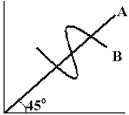 -Identify the slope of the two curves A and B in Figure 1-2.
 (Multiple Choice)
4.9/5 (79)
(79) 
Filters
- Essay(0)
- Multiple Choice(0)
- Short Answer(0)
- True False(0)
- Matching(0)