



 Chat with AI
Exam 5: Integration

Exam 1: Preparation for Calculus125 Questions
Exam 2: Limits and Their Properties85 Questions
Exam 3: Differentiation193 Questions
Exam 4: Applications of Differentiation154 Questions
Exam 5: Integration184 Questions
Exam 6: Differential Equations93 Questions
Exam 7: Applications of Integration119 Questions
Exam 8: Integration Techniques and Improper Integrals130 Questions
Exam 9: Infinite Series181 Questions
Exam 10: Conics, Parametric Equations, and Polar Coordinates114 Questions
Exam 11: Vectors and the Geometry of Space130 Questions
Exam 12: Vector-Valued Functions85 Questions
Exam 13: Functions of Several Variables173 Questions
Exam 14: Multiple Integration143 Questions
Exam 15: Vector Anal142 Questions
Select questions type


 .
 .
 using L'Hopital's Rule if necessary.
 .
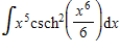

Use the summation formulas to rewrite the expression 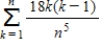 without the summation notation.
 (Multiple Choice)
5.0/5  (69)
(69) Suppose a population of bacteria is changing at a rate of  where t is the time in days. The initial population (when
 ) is 2,000. Write an equation that gives the population at any time t.
where t is the time in days. The initial population (when ) is 2,000. Write an equation that gives the population at any time t. (Multiple Choice)
4.9/5 (65)
(65) 

Sketch the region whose area is given by the definite integral and then use a geometric formula to evaluate the integral. 
(Multiple Choice)
4.9/5 (78)
(78) 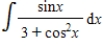 .
Find the indefinite integral of the following function. 
(Multiple Choice)
4.9/5 (83)
(83) Find the area of the shaded region for the function  .
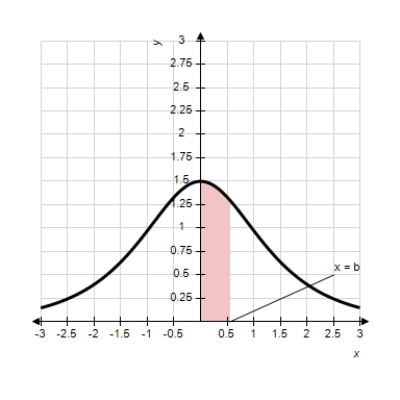
Where
 .
.
Where .
(Multiple Choice)
4.7/5 (73)
(73)  .
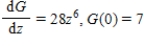
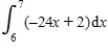
Given,
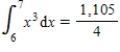 ,
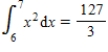 ,
 ,
 .
Use the properties of summation and Theorem 5.2 to evaluate the sum. 
(Multiple Choice)
4.9/5 (78)
(78) Suppose the demand equation for a product is  . Find the average price p on the interval
 . Round your answer to the nearest dollar.
. Find the average price p on the interval . Round your answer to the nearest dollar. (Multiple Choice)
4.8/5 (82)
(82) Evaluate the definite integral of the trigonometric function. 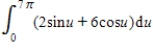
Use a graphing utility to verify your results.
Use a graphing utility to verify your results.
(Multiple Choice)
4.8/5 (71)
(71) Find the solution of the differential equation  which passes through the point
 .
which passes through the point . (Multiple Choice)
4.9/5 (92)
(92) The rate of change in sales S is inversely proportional to time  measured in weeks. Find S as a function of t if sales after 2 and 4 weeks are 250 units and 400 units respectively.
 (Multiple Choice)
4.9/5 (83)
(83) 
Filters
- Essay(0)
- Multiple Choice(0)
- Short Answer(0)
- True False(0)
- Matching(0)