



 Chat with AI
Exam 11: Cell Communication

Exam 1: Introduction: Themes in the Study of Life64 Questions
Exam 2: The Chemical Context of Life83 Questions
Exam 3: Water and Life70 Questions
Exam 4: Carbon and the Molecular Diversity of Life71 Questions
Exam 5: The Structure and Function of Large Biological Molecules109 Questions
Exam 6: A Tour of the Cell80 Questions
Exam 7: Membrane Structure and Function80 Questions
Exam 8: An Introduction to Metabolism80 Questions
Exam 9: Cellular Respiration and Fermentation107 Questions
Exam 10: Photosynthesis81 Questions
Exam 11: Cell Communication69 Questions
Exam 12: The Cell Cycle79 Questions
Exam 13: Meiosis and Sexual Life Cycles70 Questions
Exam 14: Mendel and the Gene Idea73 Questions
Exam 15: The Chromosomal Basis of Inheritance61 Questions
Exam 16: The Molecular Basis of Inheritance57 Questions
Exam 17: From Gene to Protein83 Questions
Exam 18: Regulation of Gene Expression99 Questions
Exam 19: Viruses47 Questions
Exam 20: Biotechnology72 Questions
Exam 21: Genomes and Their Evolution42 Questions
Exam 22: Descent with Modification: A Darwinian View of Life55 Questions
Exam 23: The Evolution of Populations78 Questions
Exam 24: The Origin of Species63 Questions
Exam 25: The History of Life on Earth75 Questions
Exam 26: Phylogeny and the Tree of Life73 Questions
Exam 27: Bacteria and Archaea78 Questions
Exam 28: Protists76 Questions
Exam 29: Plant Diversity I: How Plants Colonized Land74 Questions
Exam 30: Plant Diversity II: The Evolution of Seed Plants102 Questions
Exam 31: Fungi89 Questions
Exam 32: An Overview of Animal Diversity74 Questions
Exam 33: An Introduction to Invertebrates93 Questions
Exam 34: The Origin and Evolution of Vertebrates109 Questions
Exam 35: Plant Structure, Growth, and Development67 Questions
Exam 36: Resource Acquisition and Transport in Vascular Plants82 Questions
Exam 37: Soil and Plant Nutrition83 Questions
Exam 38: Angiosperm Reproduction and Biotechnology86 Questions
Exam 39: Plant Responses to Internal and External Signals108 Questions
Exam 40: Basic Principles of Animal Form and Function77 Questions
Exam 41: Animal Nutrition64 Questions
Exam 42: Circulation and Gas Exchange90 Questions
Exam 43: The Immune System100 Questions
Exam 44: Osmoregulation and Excretion69 Questions
Exam 45: Hormones and the Endocrine System72 Questions
Exam 46: Animal Reproduction94 Questions
Exam 47: Animal Development92 Questions
Exam 48: Neurons, Synapses, and Signaling73 Questions
Exam 49: Nervous Systems65 Questions
Exam 50: Sensory and Motor Mechanisms82 Questions
Exam 51: Animal Behavior69 Questions
Exam 52: An Introduction to Ecology and the Biosphere73 Questions
Exam 53: Population Ecology79 Questions
Exam 54: Community Ecology77 Questions
Exam 55: Ecosystems and Restoration Ecology81 Questions
Exam 56: Conservation Biology and Global Change67 Questions
Select questions type


Phosphorylation cascades involving a series of protein kinases are useful for cellular signal transduction because
(Multiple Choice)
4.9/5  (74)
(74) Because most receptors are membrane proteins, which of the following is usually true?
(Multiple Choice)
4.9/5 (66)
(66) The following questions are based on the figure below:
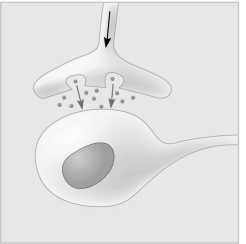 -Which of the following types of signaling is represented in the figure?
 (Multiple Choice)
4.9/5 (80)
(80) An inhibitor of which of the following could be used to block the release of calcium from the endoplasmic reticulum?
(Multiple Choice)
4.8/5 (77)
(77) Binding of a signaling molecule to which type of receptor leads directly to a change in the distribution of ions on opposite sides of the membrane?
(Multiple Choice)
4.9/5 (80)
(80) Adenylyl cyclase has the opposite effect of which of the following?
(Multiple Choice)
4.8/5 (88)
(88) The toxin of Vibrio cholerae causes profuse diarrhea because it
(Multiple Choice)
4.9/5 (84)
(84) Protein phosphorylation is commonly involved with all of the following except
(Multiple Choice)
4.9/5 (79)
(79) Which of the following would be inhibited by a drug that specifically blocks the addition of phosphate groups to proteins?
(Multiple Choice)
4.8/5 (83)
(83) Receptor tyrosine kinases (RTKs)are found at high levels on various cancer cells. A protein, Herceptin, has been found to bind to an RTK known as HER2. This information can now be utilized in breast cancer treatment if which of the following is true?
(Multiple Choice)
4.8/5 (81)
(81) The receptors for a group of signaling molecules known as growth factors are often
(Multiple Choice)
4.8/5 (70)
(70) What is most likely to happen to an animal's target cells that lack receptors for local regulators?
(Multiple Choice)
4.9/5 (81)
(81) If a pharmaceutical company wished to design a drug to maintain low blood sugar levels, one approach might be to design a compound
(Multiple Choice)
4.7/5 (87)
(87) Of the following, a receptor protein in a membrane that recognizes a chemical signal is most similar to
(Multiple Choice)
4.8/5 (97)
(97) GTPase activity is involved in the regulation of signal transduction because it
(Multiple Choice)
4.8/5 (78)
(78) Lipid-soluble signaling molecules, such as testosterone, cross the membranes of all cells but affect only target cells because
(Multiple Choice)
4.8/5 (75)
(75) One inhibitor of cGMP is Viagra. It provides a signal that leads to dilation of blood vessels and increase of blood in the penis, facilitating erection. Since cGMP is inhibited, the signal is prolonged. The original signal that is now inhibited would have
(Multiple Choice)
4.7/5 (82)
(82) Use this information to respond to the following questions.
Humans have receptors for two kinds of beta adrenergic compounds such as catecholamines to control cardiac muscle contractions. Some are beta 1 receptors that promote increased heart rate. Other drugs, called beta blockers, slow heart rate. Smooth muscle cells, however, have beta 2 receptors, which mediate muscle relaxation. Blockers of these effects are sometimes used to treat asthma.
-Beta 2 antagonist drugs might also be used most effectively for which of the following?
(Multiple Choice)
5.0/5 (81)
(81) 
Filters
- Essay(0)
- Multiple Choice(0)
- Short Answer(0)
- True False(0)
- Matching(0)