



 Chat with AI
Exam 3: Water and Life

Exam 1: Introduction: Themes in the Study of Life64 Questions
Exam 2: The Chemical Context of Life83 Questions
Exam 3: Water and Life70 Questions
Exam 4: Carbon and the Molecular Diversity of Life71 Questions
Exam 5: The Structure and Function of Large Biological Molecules109 Questions
Exam 6: A Tour of the Cell80 Questions
Exam 7: Membrane Structure and Function80 Questions
Exam 8: An Introduction to Metabolism80 Questions
Exam 9: Cellular Respiration and Fermentation107 Questions
Exam 10: Photosynthesis81 Questions
Exam 11: Cell Communication69 Questions
Exam 12: The Cell Cycle79 Questions
Exam 13: Meiosis and Sexual Life Cycles70 Questions
Exam 14: Mendel and the Gene Idea73 Questions
Exam 15: The Chromosomal Basis of Inheritance61 Questions
Exam 16: The Molecular Basis of Inheritance57 Questions
Exam 17: From Gene to Protein83 Questions
Exam 18: Regulation of Gene Expression99 Questions
Exam 19: Viruses47 Questions
Exam 20: Biotechnology72 Questions
Exam 21: Genomes and Their Evolution42 Questions
Exam 22: Descent with Modification: A Darwinian View of Life55 Questions
Exam 23: The Evolution of Populations78 Questions
Exam 24: The Origin of Species63 Questions
Exam 25: The History of Life on Earth75 Questions
Exam 26: Phylogeny and the Tree of Life73 Questions
Exam 27: Bacteria and Archaea78 Questions
Exam 28: Protists76 Questions
Exam 29: Plant Diversity I: How Plants Colonized Land74 Questions
Exam 30: Plant Diversity II: The Evolution of Seed Plants102 Questions
Exam 31: Fungi89 Questions
Exam 32: An Overview of Animal Diversity74 Questions
Exam 33: An Introduction to Invertebrates93 Questions
Exam 34: The Origin and Evolution of Vertebrates109 Questions
Exam 35: Plant Structure, Growth, and Development67 Questions
Exam 36: Resource Acquisition and Transport in Vascular Plants82 Questions
Exam 37: Soil and Plant Nutrition83 Questions
Exam 38: Angiosperm Reproduction and Biotechnology86 Questions
Exam 39: Plant Responses to Internal and External Signals108 Questions
Exam 40: Basic Principles of Animal Form and Function77 Questions
Exam 41: Animal Nutrition64 Questions
Exam 42: Circulation and Gas Exchange90 Questions
Exam 43: The Immune System100 Questions
Exam 44: Osmoregulation and Excretion69 Questions
Exam 45: Hormones and the Endocrine System72 Questions
Exam 46: Animal Reproduction94 Questions
Exam 47: Animal Development92 Questions
Exam 48: Neurons, Synapses, and Signaling73 Questions
Exam 49: Nervous Systems65 Questions
Exam 50: Sensory and Motor Mechanisms82 Questions
Exam 51: Animal Behavior69 Questions
Exam 52: An Introduction to Ecology and the Biosphere73 Questions
Exam 53: Population Ecology79 Questions
Exam 54: Community Ecology77 Questions
Exam 55: Ecosystems and Restoration Ecology81 Questions
Exam 56: Conservation Biology and Global Change67 Questions
Select questions type


What is the pH of a solution with a hydroxyl ion [OH⁻] concentration of 10⁻¹² ᴹ?
(Multiple Choice)
4.8/5  (75)
(75) Which of the following takes place as an ice cube cools a drink?
(Multiple Choice)
4.9/5 (88)
(88) The nutritional information on a cereal box shows that one serving of a dry cereal has 200 kilocalories. If one were to burn one serving of the cereal, the amount of heat given off would be sufficient to raise the temperature of 20 kg of water how many degrees Celsius?
(Multiple Choice)
4.9/5 (69)
(69) Measurements show that the pH of a particular lake is 4.0. What is the hydroxide ion concentration of the lake?
(Multiple Choice)
4.9/5 (68)
(68) 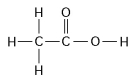 -How many grams of the compound in the figure above would be required to make 1 L of a 0.5 M solution?
(carbon = 12, oxygen = 16, hydrogen = 1)
-How many grams of the compound in the figure above would be required to make 1 L of a 0.5 M solution?
(carbon = 12, oxygen = 16, hydrogen = 1) (Multiple Choice)
4.8/5 (79)
(79) The molar mass of glucose (C₆H₁₂O₆)is 180 g/mol. Which of the following procedures should you carry out to make a 0.5 M solution of glucose?
(Multiple Choice)
5.0/5 (81)
(81) How many molecules of glucose (C₆H₁₂O₆ molecular mass = 180 daltons)would be present in 90 grams of glucose?
(Multiple Choice)
4.8/5 (73)
(73) Which of the following effects is produced by the high surface tension of water?
(Multiple Choice)
4.9/5 (81)
(81) If the pH of a solution is decreased from 9 to 8, it means that the
(Multiple Choice)
4.8/5 (67)
(67) A dietary Calorie equals 1 kilocalorie. Which of the following statements correctly defines 1 kilocalorie?
(Multiple Choice)
4.9/5 (75)
(75) A given solution contains 0.0001(10⁻⁴)moles of hydrogen ions [H⁺] per liter. Which of the following best describes this solution?
(Multiple Choice)
4.8/5 (87)
(87) In a single molecule of water, two hydrogen atoms are bonded to a single oxygen atom by
(Multiple Choice)
4.8/5 (74)
(74) One liter of a solution of pH 2 has how many more hydrogen ions (H⁺)than 1L of a solution of pH 6?
(Multiple Choice)
4.7/5 (79)
(79) You have a freshly prepared 1 M solution of glucose in water. You carefully pour out a 100 mL sample of that solution. How many glucose molecules are included in that 100 mL sample?
(Multiple Choice)
4.9/5 (85)
(85) The molar mass of glucose is 180 g/mol. Which of the following procedures should you carry out to make a 1 M solution of glucose?
(Multiple Choice)
4.9/5 (78)
(78) When an ionic compound such as sodium chloride (NaCl)is placed in water, the component atoms of the NaCl crystal dissociate into individual sodium ions (Na⁺)and chloride ions (Cl⁻). In contrast, the atoms of covalently bonded molecules (e.g., glucose, sucrose, glycerol)do not generally dissociate when placed in aqueous solution. Which of the following solutions would be expected to contain the greatest number of solute particles (molecules or ions)?
(Multiple Choice)
5.0/5 (77)
(77) Carbon dioxide (CO₂)is readily soluble in water, according to the equation CO₂ + H₂O ↔ H₂CO₃. Carbonic acid (H₂CO₃)is a weak acid. If CO₂ is bubbled into a beaker containing pure, freshly distilled water, which of the following graphs correctly describes the results?
(Multiple Choice)
4.7/5 (89)
(89) A small birthday candle is weighed, then lighted and placed beneath a metal can containing 100 mL of water. Careful records are kept as the temperature of the water rises. Data from this experiment are shown on the graph. What amount of heat energy is released in the burning of candle wax?

(Multiple Choice)
4.8/5 (71)
(71) 
Filters
- Essay(0)
- Multiple Choice(0)
- Short Answer(0)
- True False(0)
- Matching(0)