



 Chat with AI
Exam 25: Option Valuation

Exam 1: Introduction to Corporate Finance63 Questions
Exam 2: Financial Statements, Taxes, and Cash Flow91 Questions
Exam 3: Working with Financial Statements104 Questions
Exam 4: Long-Term Financial Planning and Growth95 Questions
Exam 5: Introduction to Valuation: The Time Value of Money64 Questions
Exam 6: Discounted Cash Flow Valuation125 Questions
Exam 7: Interest Rates and Bond Valuation124 Questions
Exam 8: Stock Valuation117 Questions
Exam 9: Net Present Value and Other Investment Criteria108 Questions
Exam 10: Making Capital Investment Decisions104 Questions
Exam 11: Project Analysis and Evaluation99 Questions
Exam 12: Some Lessons from Capital Market History93 Questions
Exam 13: Return, Risk, and the Security Market Line104 Questions
Exam 14: Cost of Capital99 Questions
Exam 15: Raising Capital90 Questions
Exam 16: Financial Leverage and Capital Structure Policy95 Questions
Exam 17: Dividends and Payout Policy99 Questions
Exam 18: Short Term Finance and Planning109 Questions
Exam 19: Cash and Liquidity Management97 Questions
Exam 20: Credit and Inventory Management92 Questions
Exam 21: International Corporate Finance98 Questions
Exam 22: Behavioral Finance: Implications for Financial Management48 Questions
Exam 23: Enterprise Risk Management69 Questions
Exam 24: Options and Corporate Finance102 Questions
Exam 25: Option Valuation78 Questions
Exam 26: Mergers and Acquisitions89 Questions
Exam 27: Leasing71 Questions
Select questions type


If the price of the underlying stock decreases, then the value of the call options ________ and the value of the put options ________.

Free
(Multiple Choice)
4.9/5  (72)
(72) Correct Answer: Verified
B
Assume a stock price of $16.80, risk-free rate of 2.7 percent, standard deviation of 59 percent, N(d₁) value of .93116, and an N(d₂) value of .85708. What is the value of a 6-month call with a strike price of $10 given the Black-Scholes option pricing model?
Free
(Multiple Choice)
4.8/5 (82)
(82) Correct Answer:Verified
VerifiedB
A call option matures in six months. The underlying stock price is $37 and the stock's return has a standard deviation of 27 percent per year. The annual risk-free rate is 3.4 percent, compounded continuously. The exercise price is $0. What is the price of the call option?
Free
(Multiple Choice)
4.8/5 (80)
(80) Correct Answer:Verified
VerifiedE
In the Black-Scholes option pricing formula, N(d₁) is the probability that a standardized, normally distributed random variable is:
(Multiple Choice)
5.0/5 (74)
(74) Assume the standard deviation of the returns on ABC stock increases. This change will ________ the value of the call options and ________ the value of the put options on ABC stock.
(Multiple Choice)
4.8/5 (77)
(77) Webster United stock is priced at $35.79 per share. The 6-month $35 call options are priced at $1.40 and the risk-free rate is 3.2 percent, compounded continuously. What is the per share value of the 6-month put option?
(Multiple Choice)
4.7/5 (84)
(84) The delta of a call option on a firm's assets is .624. How much will a project valued at $48,000 increase the value of equity?
(Multiple Choice)
4.8/5 (79)
(79) According to put-call parity, the present value of the exercise price is equal to the:
(Multiple Choice)
5.0/5 (82)
(82) The current market value of the assets of AMN Co. is $47 million, with a standard deviation of 21 percent per year. The firm has zero-coupon bonds outstanding with a total face value of $35 million. These bonds mature in two years. The risk-free rate is 3.6 percent per year, compounded continuously. What is the value of d₁ as it applies to the Black-Scholes option pricing model?
(Multiple Choice)
4.9/5 (72)
(72) The implied standard deviation used in the Black-Scholes option pricing model is:
(Multiple Choice)
4.8/5 (90)
(90) Use the information below to answer the following question. 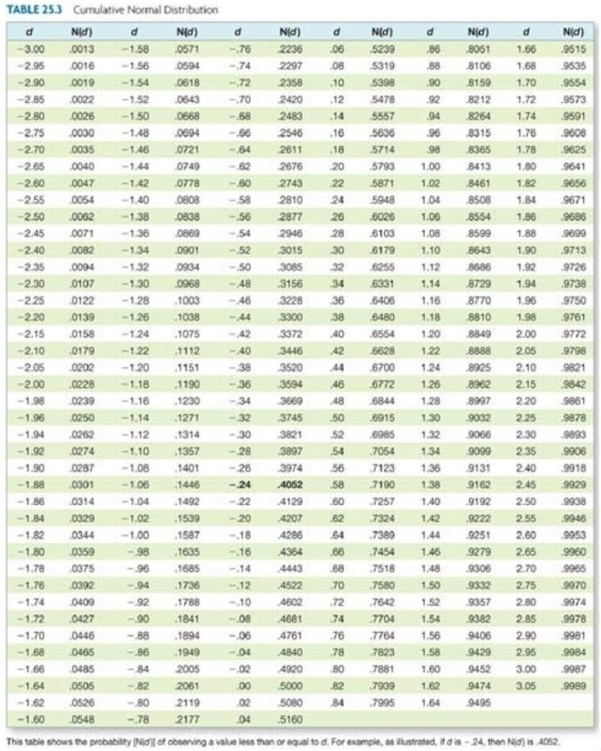 You own a lot in Key West, Florida, that you are considering selling. Similar lots have recently sold for $1.2 million. Over the past five years, the price of land in the area has varied with a standard deviation of 19 percent. A potential buyer wants an option to buy the land in the next 9 months for $1,310,000. The risk-free rate of interest is 7 percent per year, compounded continuously. How much should you charge for the option? Round your answer to the nearest $100.
 (Multiple Choice)
4.9/5 (85)
(85) This morning, Kate put a European protective put strategy in place when the cost of ABC stock was $29.15 per share and the 1-year $30 ABC put was priced at $1.05 per share. How much profit per share will she earn from this strategy if the stock is worth $28 a share on the put expiration date?
(Multiple Choice)
4.9/5 (74)
(74) Which one of the following statements related to the implied standard deviation (ISD) is correct?
(Multiple Choice)
4.9/5 (78)
(78) A call option with an exercise price of $25 and 9 months to expiration has a price of $4.92. The stock is currently priced at $26.90, and the risk-free rate is 4.1 percent per year, compounded continuously. What is the price of a put option with the same exercise price and expiration date?
(Multiple Choice)
4.9/5 (78)
(78) A stock is selling for $62 per share. A call option with an exercise price of $65 sells for $3.85 and expires in three months. The risk-free rate of interest is 2.8 percent per year, compounded continuously. What is the price of a put option with the same exercise price and expiration date?
(Multiple Choice)
4.9/5 (97)
(97) Use the information below to answer the following question. 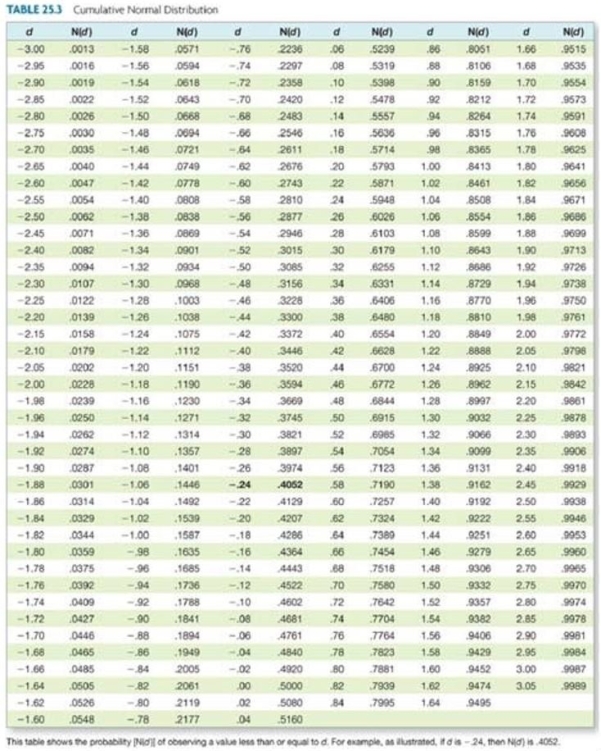 Alpha is considering a purely financial merger with Beta. Alpha currently has a market value of $14 million, an asset return standard deviation of 55 percent, and pure discount debt of $6 million that matures in four years. Beta has a market value of $6 million, an asset return standard deviation of 60 percent, and pure discount debt of $2 million that matures in four years. The risk free rate, continuously compounded, is 3.5 percent. The combined equity value of the two separate firms is $14,180,806. By what amount will the combined equity value change if the merger occurs and the asset return standard deviation of the merged firm is 45 percent?
 (Multiple Choice)
4.8/5 (81)
(81) The estimate of the future volatility of the returns on the underlying asset that is computed using the Black-Scholes option pricing model is referred to as the:
(Multiple Choice)
4.7/5 (75)
(75) A decrease in which of the following will increase the value of a put option on a stock?
(Multiple Choice)
5.0/5 (94)
(94) When computing the value of a call option using the Black-Scholes option pricing model, d₂ is calculated as:
(Multiple Choice)
4.8/5 (81)
(81) A stock is currently selling for $39 a share. The risk-free rate is 2.5 percent and the standard deviation is 26 percent. What is the value of d₁ of a 9-month call option with a strike price of $40?
(Multiple Choice)
4.7/5 (84)
(84) 
Filters
- Essay(0)
- Multiple Choice(0)
- Short Answer(0)
- True False(0)
- Matching(0)