



 Chat with AI
Exam 12: Further Topics in Algebra

Exam 1: Review of Basic Concepts639 Questions
Exam 2: Equations and Inequalities496 Questions
Exam 3: Graphs and Functions522 Questions
Exam 4: Polynomial and Rational Functions508 Questions
Exam 5: Inverse, Exponential, and Logarithmic Functions472 Questions
Exam 6: Trigonometric Functions297 Questions
Exam 7: The Circular Functions and Their Graphs286 Questions
Exam 8: Trigonometric Identities and Equations492 Questions
Exam 9: Applications of Trigonometry447 Questions
Exam 10: Systems and Matrices507 Questions
Exam 11: Analytic Geometry217 Questions
Exam 12: Further Topics in Algebra348 Questions
Select questions type


Find the sum of the first n terms of the following arithmetic sequence.
-
(Multiple Choice)
5.0/5  (86)
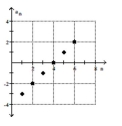
(86) Find a formula for the nth term of the arithmetic sequence shown in the graph.
-
(Multiple Choice)
4.8/5 (85)
(85) Find the sum of the first n terms of the following arithmetic sequence.
-Find the sum of the first 293 positive odd integers.
(Multiple Choice)
4.9/5 (73)
(73) Find the first term and the common ratio for the geometric sequence. Round approximations to the nearest hundredth.
-
(Multiple Choice)
4.8/5 (79)
(79) Decide whether the given sequence is finite or infinite.
-6, 7, 8, 9
(Multiple Choice)
4.8/5 (70)
(70) Find the sum of the first n terms of the following arithmetic sequence.
-
(Multiple Choice)
4.8/5 (79)
(79) Evaluate the sum using the given information.
- =2,=4,=5,=0 , and \Deltax=-0.3;f(x)=3-x f \Deltax
(Multiple Choice)
4.9/5 (84)
(84) Use the summation properties to evaluate the series. The following rules may be needed:
-
(Multiple Choice)
4.8/5 (88)
(88) Find the common ratio r for the given infinite geometric sequence.
-
(Multiple Choice)
4.7/5 (75)
(75) Use the summation properties to evaluate the series. The following rules may be needed:
-
(Multiple Choice)
4.8/5 (80)
(80) Write the indicated term of the binomial expansion.
- th term
(Multiple Choice)
4.9/5 (97)
(97) Provide an appropriate response.
-Consider the selection of officers for a club. Is this a combination, a permutation, or neither?
(Multiple Choice)
4.8/5 (73)
(73) Find the sum of the first n terms of the following arithmetic sequence.
-Find the sum of the first 986 positive integers.
(Multiple Choice)
5.0/5 (77)
(77) 
Filters
- Essay(0)
- Multiple Choice(0)
- Short Answer(0)
- True False(0)
- Matching(0)