



 Chat with AI
Exam 12: Further Topics in Algebra

Exam 1: Review of Basic Concepts639 Questions
Exam 2: Equations and Inequalities496 Questions
Exam 3: Graphs and Functions522 Questions
Exam 4: Polynomial and Rational Functions508 Questions
Exam 5: Inverse, Exponential, and Logarithmic Functions472 Questions
Exam 6: Trigonometric Functions297 Questions
Exam 7: The Circular Functions and Their Graphs286 Questions
Exam 8: Trigonometric Identities and Equations492 Questions
Exam 9: Applications of Trigonometry447 Questions
Exam 10: Systems and Matrices507 Questions
Exam 11: Analytic Geometry217 Questions
Exam 12: Further Topics in Algebra348 Questions
Select questions type


Solve the problem.
-A 5-card hand is dealt from a deck of 52 cards. What is the probability that
a) all are from the same suit?
b) all are hearts?
c) exactly 2 are spades?
(Multiple Choice)
5.0/5  (73)
(73) Solve the problem.
-One digit from the number 3,565,885 is written on each of seven cards. What is the probability of drawing a card that shows 3,5 , or 6 ?
(Multiple Choice)
4.8/5 (71)
(71) Use the sequence feature of a graphing calculator to evaluate the sum of the first 10 terms of the arithmetic sequence.
Round to the nearest thousandth, if necessary.
-
(Multiple Choice)
4.8/5 (70)
(70) Solve the problem.
-How many ways can a president, vice-president, and secretary be chosen from a club with 12 members? Assume that no member can hold more than one office.
(Multiple Choice)
4.8/5 (83)
(83) Evaluate the sum. Round to two decimal places, if necessary.
-
(Multiple Choice)
4.7/5 (75)
(75) Use the sequence feature of a graphing calculator to evaluate the sum of the first 10 terms of the arithmetic sequence.
Round to the nearest thousandth, if necessary.
-Find the sum of all the integers from 56 to 97.
(Multiple Choice)
4.9/5 (77)
(77) Solve the problem.
-A 5-card hand is dealt from a deck of 52 cards. What is the probability that
a) none are queens?
b) all are queens?
(Multiple Choice)
5.0/5 (82)
(82) Use mathematical induction to prove that the statement is true for every positive integer n.
-
(Essay)
4.9/5 (75)
(75) Provide an appropriate response.
-Consider determining how many possible phone numbers are in an area code (repeated numbers allowed). Is this a combination, a permutation, or neither?
(Multiple Choice)
4.8/5 (85)
(85) Provide an appropriate response.
-Consider the selections of seven apples from a barrel of 75 apples. Is this a combination, a permutation, or neither?
(Multiple Choice)
4.9/5 (81)
(81) Provide an appropriate response.
-Consider the selection of a nominating committee for a club. Is this a combination, a permutation, or neither?
(Multiple Choice)
4.9/5 (88)
(88) Solve the problem.
-100 employees of a company are asked how they get to work and whether they work full time or part time. The figure below shows the results. If one of the 100 employees is randomly selected,
Find the probability that the person does not work full time. 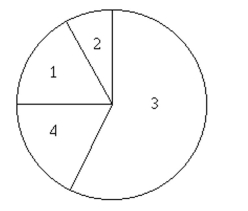 1. Public transportation: 6 full time, 8 part time
2) Bicycle: 3 full time, 3 part time
3) Drive alone: 31 full time, 32 part time
4) Car pool: 7 full time, 10 part time
1. Public transportation: 6 full time, 8 part time
2) Bicycle: 3 full time, 3 part time
3) Drive alone: 31 full time, 32 part time
4) Car pool: 7 full time, 10 part time (Multiple Choice)
4.9/5 (95)
(95) Use the formula for to find the sum of the first five terms of the geometric sequence.
-
(Multiple Choice)
4.9/5 (86)
(86) Use the sequence feature of a graphing calculator to evaluate the sum of the first 10 terms of the arithmetic sequence.
Round to the nearest thousandth, if necessary.
-A stack of poles has 39 poles in the bottom row, 38 poles in the next row, and so on, with 6 poles in the top row. How many poles are there in the stack?
(Multiple Choice)
4.9/5 (68)
(68) Solve the problem.
-How many ways can a president, vice-president, secretary, and treasurer be chosen from a club with 10 members? Assume that no member can hold more than one office.
(Multiple Choice)
4.7/5 (84)
(84) 
Filters
- Essay(0)
- Multiple Choice(0)
- Short Answer(0)
- True False(0)
- Matching(0)