



 Chat with AI
Exam 12: Compensation

Exam 1: An Introduction to Tax110 Questions
Exam 2: Tax Compliance, the Irs, and Tax Authorities112 Questions
Exam 3: Tax Planning Strategies and Related Limitations107 Questions
Exam 4: Individual Income Tax Overview, Exemptions, and Filing Status126 Questions
Exam 5: Gross Income and Exclusions131 Questions
Exam 6: Individual Deductions107 Questions
Exam 7: Investments75 Questions
Exam 8: Individual Income Tax Computation and Tax Credits154 Questions
Exam 9: Business Income, Deductions, and Accounting Methods99 Questions
Exam 10: Property Acquisition and Cost Recovery94 Questions
Exam 11: Property Dispositions110 Questions
Exam 12: Compensation102 Questions
Exam 13: Retirement Savings and Deferred Compensation115 Questions
Exam 14: Tax Consequences of Home Ownership111 Questions
Exam 15: Entities Overview70 Questions
Exam 16: Corporate Operations140 Questions
Exam 17: Accounting for Income Taxes100 Questions
Exam 18: Corporate Taxation: Nonliquidating Distributions98 Questions
Exam 19: Corporate Formation, Reorganization, and Liquidation100 Questions
Exam 20: Forming and Operating Partnerships102 Questions
Exam 21: Dispositions of Partnership Interests and Partnership Distributions100 Questions
Exam 22: S Corporations134 Questions
Exam 23: State and Local Taxes117 Questions
Exam 24: The US Taxation of Multinational Transactions100 Questions
Exam 25: Transfer Taxes and Wealth Planning123 Questions
Select questions type


Employers sometimes pay a "gross-up" to employees to cover taxes associated with taxable fringe benefits they provide.

Free
(True/False)
4.9/5  (94)
(94) Correct Answer: Verified
True
One primary purpose of equity compensation is to motivate employees.
Free
(True/False)
4.7/5 (75)
(75) Correct Answer:Verified
VerifiedTrue
Which of the following benefits cannot be excluded as a no additional cost service fringe benefit?
Free
(Multiple Choice)
4.7/5 (70)
(70) Correct Answer:Verified
VerifiedD
Kaijsa received 20 NQOs (each option gives her the right to purchase 30 shares of stock for $8 per share) from her employer at the time she started working when the stock price was $9 per share. Now that the share price is $18 per share, she intends to exercise all of her options. If Kaijsa holds the shares for two years and sells them when the market price is $25, what is the amount of the deduction and tax savings her employer will receive (assume the employer's marginal tax rate is 30 percent)?
(Essay)
4.9/5 (74)
(74) Stevie recently received 1,000 shares of restricted stock from her employer, NicksCorporation, when the share price was $8 per share. Stevie's restricted shares vestedthree years later when the market price was $11. Stevie held the shares for a little more than a year and sold them when the market price was $16. Assuming Stevie made asection 83(b) election, what is the amount of Stevie's ordinary income with respect to the restricted stock?
(Multiple Choice)
4.9/5 (88)
(88) Corinne's employer offers a cafeteria plan that allows employees to choose among a number of benefits. Each employee is allowed $12,000 in benefits. For the current year, Corinne selected$4,500 of health insurance, $5,500 of dependent care, $1,000 in 401(k) contributions, and $1,000 of cash. How much must Corinne include in taxable income?
(Essay)
4.9/5 (83)
(83) Which of the following is not a requirement of a "qualified employee discount"?
(Multiple Choice)
4.7/5 (69)
(69) Kevin is the financial manager of Levingston BMW. The shop allows employees to purchase72u) p to two vehicles at a discount. Levingston's average gross profit percentage is 15%. This year Kevin purchased a 530 model and a new M3.  What amount must Kevin include in income?
 (Multiple Choice)
4.8/5 (74)
(74) 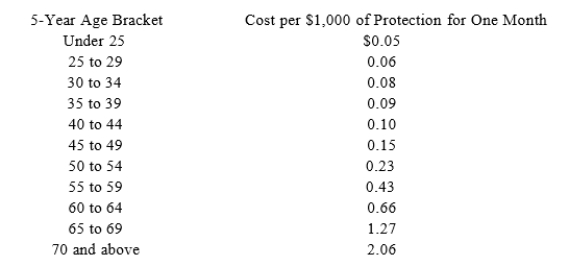
Brandy graduated from Vanderbilt with her bachelor's degree recently. She works for Walton & Company CPAs. The firm pays her tuition ($8,000 per year) for her so that she can receive her MBA. How much of the $8,000 tuition benefit does Brandy need to include in her income?
(Essay)
4.9/5 (72)
(72) Employers always prefer to award incentive stock options rather than nonqualified stock options.
(True/False)
4.9/5 (75)
(75) Current compensation is usually comprised of salary, wages, and bonuses.
(True/False)
4.9/5 (80)
(80) Rachel receives employer provided health insurance. The employer's cost of the health insurance is $6,000 annually. What is her employer's after-tax cost of providing the health insurance, assuming that the employer's marginal tax rate is 35 percent and is profitable?
(Multiple Choice)
4.9/5 (86)
(86) Employees will always prefer to receive incentive stock options over nonqualified stock options.
(True/False)
4.9/5 (81)
(81) If certain conditions are met, an apartment manager can exclude the fair market value of free rent from his or her income.
(True/False)
4.9/5 (79)
(79) Which of the following is a fringe benefit that employers can discriminate among employees?
(Multiple Choice)
4.7/5 (84)
(84) Raja received 20 NQOs (each option gives him the right to purchase 15 shares of stock for $10 per share) from his employer at the time he started working when the stock price was $11 per share. Now that the share price is $20 per share, he intends to exercise all of the options using a same-day sale. What are Raja's after-tax proceeds from the sale if his marginal tax rate is 30 percent?
(Essay)
4.7/5 (75)
(75) Rick recently received 500 shares of restricted stock from his employer, Crazy Corporation, when the share price was $5 per share. Rick's restricted shares vested three years later when the market price was $12. Rick held the shares for a little more than a year and sold them when the market price was $15. What is the amount of Rick's income on the vesting date? Assuming a marginal tax rate of30 percent, what is Rick's tax on the restricted stock?
(Essay)
4.9/5 (75)
(75) 
Filters
- Essay(0)
- Multiple Choice(0)
- Short Answer(0)
- True False(0)
- Matching(0)