



 Chat with AI
Exam 2: Anatomy of Respiration

Exam 1: Basic Elements of Anatomy129 Questions
Exam 2: Anatomy of Respiration122 Questions
Exam 3: Physiology of Respiration121 Questions
Exam 4: Anatomy of Phonation131 Questions
Exam 6: Anatomy of Articulation and Resonation148 Questions
Exam 7: Physiology of Articulation and Resonation121 Questions
Exam 8: Physiology of Mastication and Deglutition152 Questions
Exam 9: Anatomy of Hearing191 Questions
Exam 10: Auditory Physiology142 Questions
Exam 11: Neuroanatomy298 Questions
Exam 12: Neurophysiology163 Questions
Select questions type


When the rib cage becomes smaller during respiration, air will flow (into/out of) ____________________ the lungs.
(Short Answer)
4.8/5  (83)
(83) Match the indicated muscle or component to the correct function. Terms may be used more than once or not at all.
-Internal intercostal, intraosseous component
(Multiple Choice)
4.8/5 (88)
(88) Identify the components indicated on the following figure using the letters provided. Letters may be used more than once or not at all.  -Chondral portion of the rib cage
 (Short Answer)
4.9/5 (77)
(77) Match each muscle to the correct descriptor. Terms may be used more than once or not at all.
-Pulls the ribs closer together as it depresses the rib cage
(Multiple Choice)
4.7/5 (86)
(86) Match each muscle to the correct descriptor. Terms may be used more than once or not at all.
-The primary muscle of inspiration
(Multiple Choice)
4.8/5 (75)
(75) Match each muscle to the correct descriptor. Terms may be used more than once or not at all.
-Unilateral contraction of this muscle helps rotate the trunk in the direction of contraction
(Multiple Choice)
4.9/5 (89)
(89) The ____________________ portion of the internal intercostal muscles is involved in inspiration.
(Short Answer)
4.9/5 (76)
(76) The ____________________ muscle is found on the inner surface of the rib cage, originating on the margin of the sternum, with fibers coursing to the inner chondral surface of ribs 2 through 6. Contraction of this muscle resists elevation of the rib cage and decreases the volume of the thoracic cavity.
(Short Answer)
4.8/5 (81)
(81) Match each term to the correct descriptor. Terms may be used more than once or not at all.
-The inferior-most component of the vertebral column
(Multiple Choice)
4.9/5 (70)
(70) Match each muscle to the correct descriptor. Terms may be used more than once or not at all.
-Muscle of expiration that originates on the inguinal ligament and courses fanlike to insert into the linea semilunaris and lower margin of the rib cage
(Multiple Choice)
4.7/5 (83)
(83) Match the indicated muscle or component to the correct function. Terms may be used more than once or not at all.
-Scalenus anterior
(Multiple Choice)
4.9/5 (84)
(84) Identify the components indicated on the following figure using the letters provided. Letters may be used more than once or not at all.
-Internal intercostal muscle
-Internal intercostal muscle (Short Answer)
4.9/5 (95)
(95) Match each muscle to the correct descriptor. Terms may be used more than once or not at all.
-Arm muscle that attaches to the sternum and elevates the sternum during inspiration
(Multiple Choice)
4.8/5 (80)
(80) Identify the components indicated on the following figure using the letters provided. Letters may be used more than once or not at all. 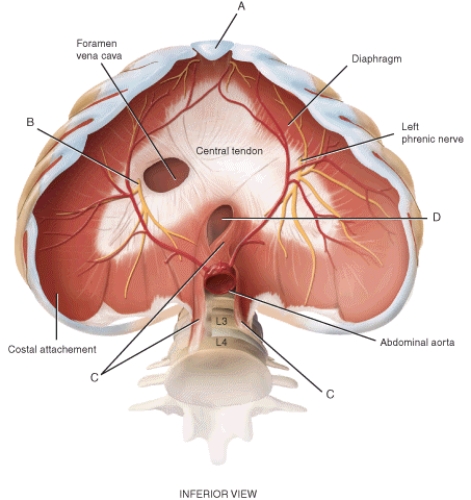 -Point of attachment arising from the L4 and L5 vertebrae
 (Short Answer)
4.8/5 (81)
(81) Identify the components indicated on the following figure using the letters provided. Letters may be used more than once or not at all.
-External intercostal muscle
-External intercostal muscle (Short Answer)
4.8/5 (70)
(70) 
Filters
- Essay(0)
- Multiple Choice(0)
- Short Answer(0)
- True False(0)
- Matching(0)