



 Chat with AI
Exam 3: Consolidations - Subsequent to the Date of Acquisition

Exam 19: Accounting for Estates and Trusts85 Questions
Exam 18: Accounting and Reporting for Private Not-For-Profit Organizations74 Questions
Exam 17: Accounting for State and Local Governments, Part II51 Questions
Exam 16: Accounting for State and Local Governments, Part I87 Questions
Exam 15: Partnerships: Termination and Liquidation73 Questions
Exam 14: Partnerships: Formation and Operation91 Questions
Exam 13: Accounting for Legal Reorganizations and Liquidations88 Questions
Exam 12: Financial Reporting and the Securities and Exchange Commission79 Questions
Exam 11: Worldwide Accounting Diversity and International Accounting Standards65 Questions
Exam 10: Translation of Foreign Currency Financial Statements101 Questions
Exam 9: Foreign Currency Transactions and Hedging Foreign Exchange Risk108 Questions
Exam 8: Segment and Interim Reporting120 Questions
Exam 7: Consolidated Financial Statements - Ownership Patterns and Income Taxes127 Questions
Exam 6: Variable Interest Entities, Intra-Entity Debt, Consolidated Cash Flows, and Other Issues119 Questions
Exam 5: Consolidated Financial Statements Intra-Entity Asset Transactions126 Questions
Exam 4: Consolidated Financial Statements and Outside Ownership128 Questions
Exam 3: Consolidations - Subsequent to the Date of Acquisition123 Questions
Exam 2: Consolidation of Financial Information124 Questions
Exam 1: The Equity Method of Accounting for Investments123 Questions
Select questions type


Matthews Co. acquired all of the common stock of Jackson Co. on January 1, 2020. As of that date, Jackson had the following trial balance: 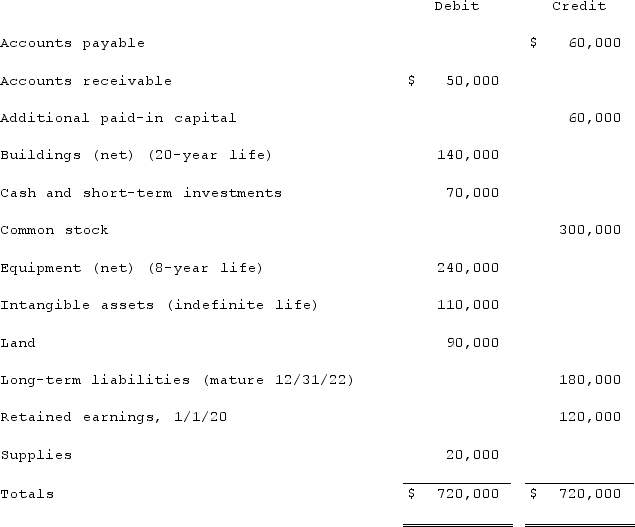 During 2020, Jackson reported net income of $96,000 while paying dividends of $12,000. During 2021, Jackson reported net income of $132,000 while paying dividends of $36,000. Assume that Matthews Co. acquired the common stock of Jackson Co. for $588,000 in cash. As of January 1, 2020, Jackson's land had a fair value of $102,000, its buildings were valued at $188,000, and its equipment was appraised at $216,000. Any excess of consideration transferred over fair value of assets and liabilities acquired is due to an unamortized patent to be amortized over 10 years.Matthews decided to use the equity method for this investment.Required:(A.) Prepare consolidation worksheet entries for December 31, 2020.(B.) Prepare consolidation worksheet entries for December 31, 2021.
 (Essay)
4.9/5  (73)
(73) Anderson, Inc. acquires all of the voting stock of Kenneth, Inc. on January 4, 2020, at an amount in excess of Kenneth's fair value. On that date, Kenneth has equipment with a book value of $90,000 and a fair value of $120,000 (10-year remaining life). Anderson has equipment with a book value of $800,000 and a fair value of $1,200,000 (10-year remaining life). On December 31, 2021, Anderson has equipment with a book value of $975,000 but a fair value of $1,350,000 and Kenneth has equipment with a book value of $105,000 but a fair value of $125,000.If Anderson applies the partial equity method in accounting for Kenneth, what is the consolidated balance for the Equipment account as of December 31, 2021?
(Multiple Choice)
4.9/5 (83)
(83) What is the partial equity method? How does it differ from the equity method? What are its advantages and disadvantages compared to the equity method?
(Essay)
4.8/5 (80)
(80) Watkins, Inc. acquires all of the outstanding stock of Glen Corporation on January 1, 2020. At that date, Glen owns only three assets and has no liabilities: 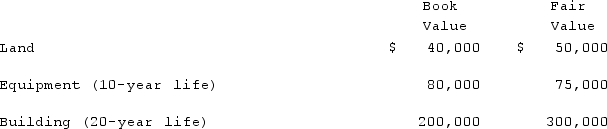 If Watkins pays $450,000 in cash for Glen, what acquisition-date fair value allocation, net of amortization, should be attributed to the subsidiary's Equipment in consolidation at December 31, 2022?
 (Multiple Choice)
4.9/5 (73)
(73) Reeder Corp. acquired one hundred percent of O'Neill Inc. on January 1, 2019, at a price in excess of the subsidiary's fair value. On that date, Reeder's equipment (ten-year life) had a book value of $380,000 but a fair value of $460,000. O'Neill had equipment (ten-year life) with a book value of $240,000 and a fair value of $370,000. Reeder used the partial equity method to record its investment in O'Neill. On December 31, 2021, Reeder had equipment with a book value of $270,000 and a fair value of $400,000. O'Neill had equipment with a book value of $180,000 and a fair value of $300,000. What is the consolidated balance for the Equipment account as of December 31, 2021?
(Multiple Choice)
4.9/5 (64)
(64) When consolidating a subsidiary under the equity method, which of the following statements is true with regard to the subsidiary subsequent to the year of acquisition?
(Multiple Choice)
4.8/5 (71)
(71) According to the FASB ASC regarding the testing procedures for Goodwill Impairment, the proper procedure for conducting impairment testing is:
(Multiple Choice)
5.0/5 (92)
(92) A business combination results in $90,000 of goodwill. Several years later a worksheet is being produced to consolidate the two companies. Describe in words at what amount goodwill will be reported at this date.
(Essay)
4.9/5 (97)
(97) Following are selected accounts for Green Corporation and Vega Company as of December 31, 2023. Several of Green's accounts have been omitted. 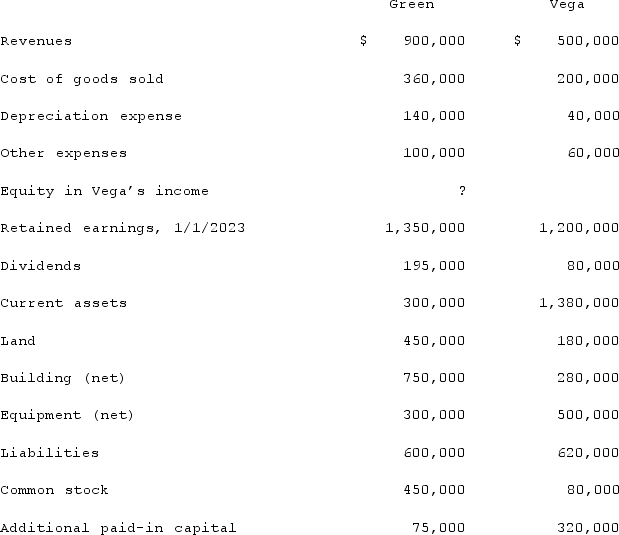 Green acquired 100% of Vega on January 1, 2019, by issuing 10,500 shares of its $10 par value common stock with a fair value of $95 per share. On January 1, 2019, Vega's land was undervalued by $40,000, its buildings were overvalued by $30,000, and equipment was undervalued by $80,000. The buildings have a 20-year life and the equipment has a 10-year life. $50,000 was attributed to an unrecorded trademark with a 16-year remaining life. There was no goodwill associated with this investment.Compute the December 31, 2023 consolidated retained earnings.
 (Multiple Choice)
4.8/5 (84)
(84) Following are selected accounts for Green Corporation and Vega Company as of December 31, 2023. Several of Green's accounts have been omitted. 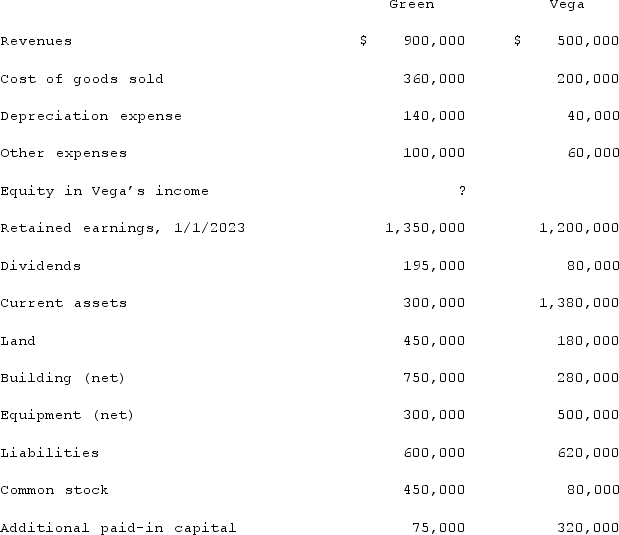 Green acquired 100% of Vega on January 1, 2019, by issuing 10,500 shares of its $10 par value common stock with a fair value of $95 per share. On January 1, 2019, Vega's land was undervalued by $40,000, its buildings were overvalued by $30,000, and equipment was undervalued by $80,000. The buildings have a 20-year life and the equipment has a 10-year life. $50,000 was attributed to an unrecorded trademark with a 16-year remaining life. There was no goodwill associated with this investment.Compute the book value of Vega at January 1, 2019.
 (Multiple Choice)
4.8/5 (75)
(75) Which of the following is false regarding contingent consideration in business combinations?
(Multiple Choice)
5.0/5 (77)
(77) Prince Company acquires Duchess, Inc. on January 1, 2019. At the date of acquisition, Duchess has long-term debt with a fair value of $1,500,000 and a carrying amount of $1,200,000.With respect to long-term debt consolidation worksheet adjustments in periods following the acquisition, which of the following is correct?
(Multiple Choice)
4.9/5 (73)
(73) Jackson Company acquires 100% of the stock of Clark Corporation on January 1, 2020, for $4,100 cash. As of that date Clark has the following trial balance: 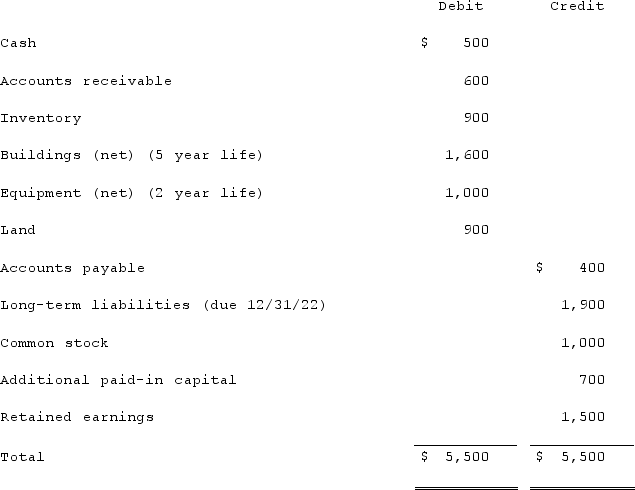 Net income and dividends reported by Clark for 2020 and 2021 follow:
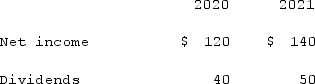 The fair value of Clark's net assets that differ from their book values are listed below:
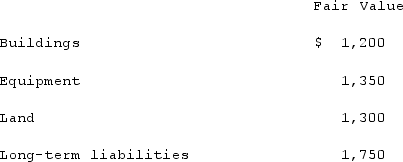 Any excess of consideration transferred over fair value of net assets acquired is considered goodwill with an indefinite life.Compute the amount of Clark's long-term liabilities that would be reported in a December 31, 2021, consolidated balance sheet.
Net income and dividends reported by Clark for 2020 and 2021 follow: The fair value of Clark's net assets that differ from their book values are listed below: Any excess of consideration transferred over fair value of net assets acquired is considered goodwill with an indefinite life.Compute the amount of Clark's long-term liabilities that would be reported in a December 31, 2021, consolidated balance sheet. (Multiple Choice)
4.9/5 (84)
(84) Jaynes Inc. acquired all of Aaron Co.'s common stock on January 1, 2020, by issuing 11,000 shares of $1 par value common stock. Jaynes' shares had a $17 per share fair value. On that date, Aaron reported a net book value of $120,000. However, its equipment (with a five-year remaining life) was undervalued by $6,000 in the company's accounting records. Any excess of consideration transferred over fair value of assets and liabilities acquired is assigned to an unrecorded patent to be amortized over ten years.The following figures came from the individual accounting records of these two companies as of December 31, 2020: 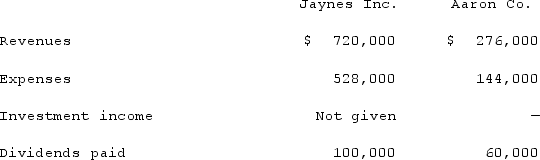 The following figures came from the individual accounting records of these two companies as of December 31, 2021:
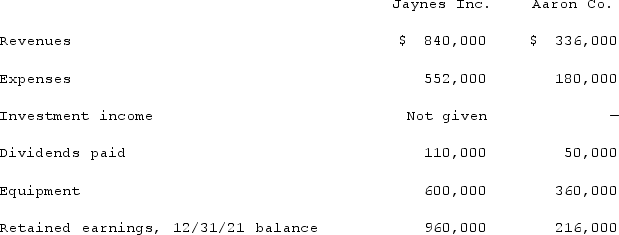 What balance would Jaynes' Investment in Aaron Co. account have shown on December 31, 2021, when the equity method was applied for this acquisition?
The following figures came from the individual accounting records of these two companies as of December 31, 2021: What balance would Jaynes' Investment in Aaron Co. account have shown on December 31, 2021, when the equity method was applied for this acquisition? (Essay)
4.9/5 (85)
(85) Under the initial value method, the parent recognizes income when
(Multiple Choice)
4.8/5 (91)
(91) Anderson, Inc. acquires all of the voting stock of Kenneth, Inc. on January 4, 2020, at an amount in excess of Kenneth's fair value. On that date, Kenneth has equipment with a book value of $90,000 and a fair value of $120,000 (10-year remaining life). Anderson has equipment with a book value of $800,000 and a fair value of $1,200,000 (10-year remaining life). On December 31, 2021, Anderson has equipment with a book value of $975,000 but a fair value of $1,350,000 and Kenneth has equipment with a book value of $105,000 but a fair value of $125,000.If Anderson applies the equity method in accounting for Kenneth, what is the consolidated balance for the Equipment account as of December 31, 2021?
(Multiple Choice)
4.9/5 (85)
(85) Black Co. acquired 100% of Blue, Inc. on January 1, 2020. On that date, Blue had land with a book value of $38,000 and a fair value of $49,000. Also, on the date of acquisition, Blue had a building with a book value of $250,000 and a fair value of $460,000. Blue had equipment with a book value of $340,000 and a fair value of $280,000. The building had a 10-year remaining useful life and the equipment had a 5-year remaining useful life. How much total expense will be in the consolidated financial statements for the year ended December 31, 2020 related to the acquisition allocations of Blue?
(Multiple Choice)
4.9/5 (86)
(86) Kaye Company acquired 100% of Fiore Company on January 1, 2021. Kaye paid $1,000 excess consideration over book value, which is being amortized at $20 per year. There was no goodwill in the combination. Fiore reported net income of $400 in 2021 and paid dividends of $100.Assume the initial value method is applied. How much equity income will Kaye report on its internal accounting records as a result of Fiore's operations?
(Multiple Choice)
4.8/5 (79)
(79) Beatty, Inc. acquires 100% of the voting stock of Gataux Company on January 1, 2020 for $80,000, consisting of $20,000 in cash and 6,000 shares of stock. A contingent payment of $12,000 in cash will be paid on April 1, 2021 if Gataux generates cash flows from operations of $26,500 or more in the next year. Beatty estimates that there is a 30% probability that Gataux will generate at least $26,500 next year, and uses an interest rate of 4% to incorporate the time value of money. The fair value of $12,000 at 4%, using a probability-weighted approach, is $3,461. A contingent payment of $20,000, payable in stock, will be paid to the former owners of Gataux on April 1, 2021 if the market value of Beatty stock drops below $10 per share. Beatty estimates there is a 15% probability that its share price will not exceed that threshold. Using the same interest rate and probability-weighted approach, Beatty calculates the market value of the stock contingency to be $2,884.On April 1, 2021, Beatty stock closes with a market value of $8.98 per share. How many shares of stock, rounded to the next whole number, must it issue to the former owners of Gataux?
(Multiple Choice)
4.9/5 (82)
(82) 
Filters
- Essay(0)
- Multiple Choice(0)
- Short Answer(0)
- True False(0)
- Matching(0)