



 Chat with AI
Exam 3: Consolidations - Subsequent to the Date of Acquisition

Exam 19: Accounting for Estates and Trusts85 Questions
Exam 18: Accounting and Reporting for Private Not-For-Profit Organizations74 Questions
Exam 17: Accounting for State and Local Governments, Part II51 Questions
Exam 16: Accounting for State and Local Governments, Part I87 Questions
Exam 15: Partnerships: Termination and Liquidation73 Questions
Exam 14: Partnerships: Formation and Operation91 Questions
Exam 13: Accounting for Legal Reorganizations and Liquidations88 Questions
Exam 12: Financial Reporting and the Securities and Exchange Commission79 Questions
Exam 11: Worldwide Accounting Diversity and International Accounting Standards65 Questions
Exam 10: Translation of Foreign Currency Financial Statements101 Questions
Exam 9: Foreign Currency Transactions and Hedging Foreign Exchange Risk108 Questions
Exam 8: Segment and Interim Reporting120 Questions
Exam 7: Consolidated Financial Statements - Ownership Patterns and Income Taxes127 Questions
Exam 6: Variable Interest Entities, Intra-Entity Debt, Consolidated Cash Flows, and Other Issues119 Questions
Exam 5: Consolidated Financial Statements Intra-Entity Asset Transactions126 Questions
Exam 4: Consolidated Financial Statements and Outside Ownership128 Questions
Exam 3: Consolidations - Subsequent to the Date of Acquisition123 Questions
Exam 2: Consolidation of Financial Information124 Questions
Exam 1: The Equity Method of Accounting for Investments123 Questions
Select questions type


Vaughn Inc. acquired all of the outstanding common stock of Roberts Co. on January 1, 2020, for $276,000. Annual amortization of $21,000 resulted from this acquisition. Vaughn reported net income of $80,000 in 2020 and $60,000 in 2021 and paid $24,000 in dividends each year. Roberts reported net income of $50,000 in 2020 and $57,000 in 2021 and paid $12,000 in dividends each year. What is the Investment in Roberts Co. balance on Vaughn's books as of December 31, 2021, if the equity method has been applied?
(Multiple Choice)
4.8/5  (93)
(93) Jaynes Inc. acquired all of Aaron Co.'s common stock on January 1, 2020, by issuing 11,000 shares of $1 par value common stock. Jaynes' shares had a $17 per share fair value. On that date, Aaron reported a net book value of $120,000. However, its equipment (with a five-year remaining life) was undervalued by $6,000 in the company's accounting records. Any excess of consideration transferred over fair value of assets and liabilities acquired is assigned to an unrecorded patent to be amortized over ten years.The following figures came from the individual accounting records of these two companies as of December 31, 2020: 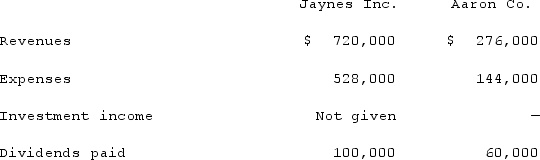 The following figures came from the individual accounting records of these two companies as of December 31, 2021:
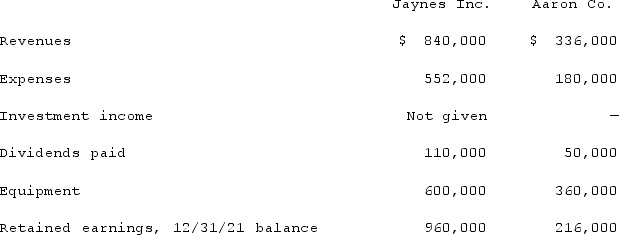 What was the total for consolidated patents as of December 31, 2021?
The following figures came from the individual accounting records of these two companies as of December 31, 2021: What was the total for consolidated patents as of December 31, 2021? (Essay)
4.8/5 (89)
(89) Watkins, Inc. acquires all of the outstanding stock of Glen Corporation on January 1, 2020. At that date, Glen owns only three assets and has no liabilities: 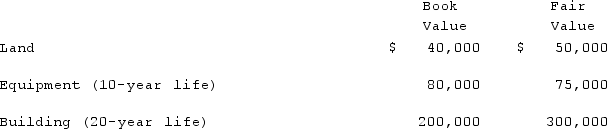 If Watkins pays $400,000 in cash for Glen, what amount would be represented as the subsidiary's Building in a consolidation at December 31, 2022, assuming the book value of the building at that date is still $200,000?
 (Multiple Choice)
4.9/5 (76)
(76) How does the partial equity method differ from the equity method?
(Multiple Choice)
4.8/5 (73)
(73) Jackson Company acquires 100% of the stock of Clark Corporation on January 1, 2020, for $4,100 cash. As of that date Clark has the following trial balance: 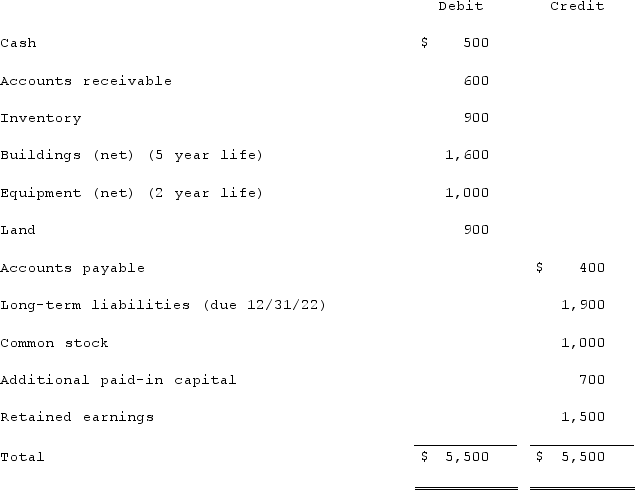 Net income and dividends reported by Clark for 2020 and 2021 follow:
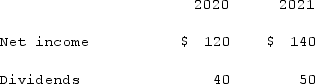 The fair value of Clark's net assets that differ from their book values are listed below:
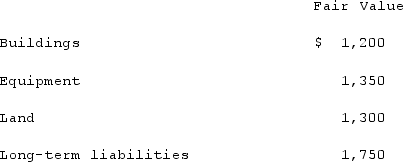 Any excess of consideration transferred over fair value of net assets acquired is considered goodwill with an indefinite life.Compute the amount of Clark's buildings that would be reported in a December 31, 2020, consolidated balance sheet.
Net income and dividends reported by Clark for 2020 and 2021 follow: The fair value of Clark's net assets that differ from their book values are listed below: Any excess of consideration transferred over fair value of net assets acquired is considered goodwill with an indefinite life.Compute the amount of Clark's buildings that would be reported in a December 31, 2020, consolidated balance sheet. (Multiple Choice)
4.7/5 (76)
(76) How is the fair value allocation of an intangible asset allocated to expense when the asset has no legal, regulatory, contractual, competitive, economic, or other factors that limit its life?
(Multiple Choice)
4.9/5 (79)
(79) Utah Inc. acquired all of the outstanding common stock of Trimmer Corp. on January 1, 2019. At that date, Trimmer owned only three assets and had no liabilities: 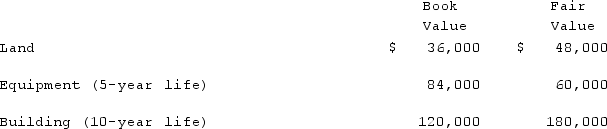 If Utah paid $300,000 in cash for Trimmer, what allocation and amortization should have been assigned to the subsidiary's Building account and its Equipment account in a December 31, 2021 consolidation?
 (Essay)
4.8/5 (79)
(79) Jaynes Inc. acquired all of Aaron Co.'s common stock on January 1, 2020, by issuing 11,000 shares of $1 par value common stock. Jaynes' shares had a $17 per share fair value. On that date, Aaron reported a net book value of $120,000. However, its equipment (with a five-year remaining life) was undervalued by $6,000 in the company's accounting records. Any excess of consideration transferred over fair value of assets and liabilities acquired is assigned to an unrecorded patent to be amortized over ten years.The following figures came from the individual accounting records of these two companies as of December 31, 2020: 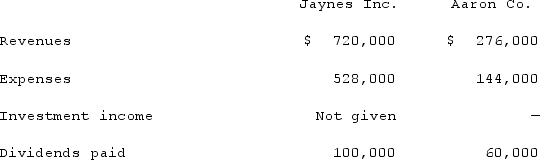 The following figures came from the individual accounting records of these two companies as of December 31, 2021:
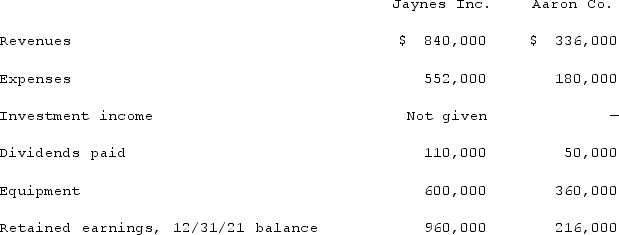 What was consolidated equipment as of December 31, 2021?
The following figures came from the individual accounting records of these two companies as of December 31, 2021: What was consolidated equipment as of December 31, 2021? (Essay)
4.8/5 (78)
(78) On 1/1/19, Sey Mold Corporation acquired 100% of DotDot.Com for $2,000,000 cash. On the date of acquisition, DotDot's net book value was $900,000. DotDot's assets included land that was undervalued by $300,000, a building that was undervalued by $400,000, and equipment that was overvalued by $50,000. The building had a remaining useful life of 8 years and the equipment had a remaining useful life of 4 years. Any excess fair value over consideration transferred is allocated to an undervalued patent and is amortized over 5 years.Determine the amortization expense related to the consolidation at the year-end date of 12/31/27.
(Essay)
4.8/5 (76)
(76) Kaye Company acquired 100% of Fiore Company on January 1, 2021. Kaye paid $1,000 excess consideration over book value, which is being amortized at $20 per year. There was no goodwill in the combination. Fiore reported net income of $400 in 2021 and paid dividends of $100.Assume the initial value method is used. In the year subsequent to acquisition, what additional worksheet entry must be made for consolidation purposes that is not required for the equity method? 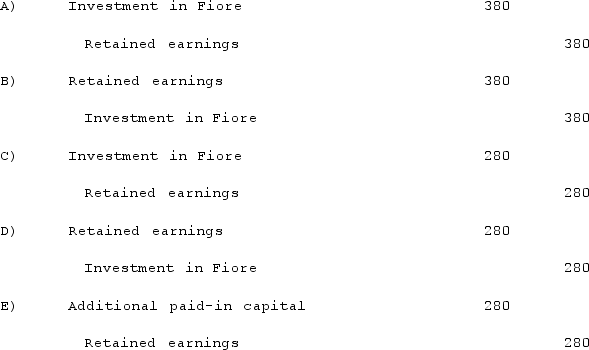
(Multiple Choice)
4.8/5 (82)
(82) Watkins, Inc. acquires all of the outstanding stock of Glen Corporation on January 1, 2020. At that date, Glen owns only three assets and has no liabilities: 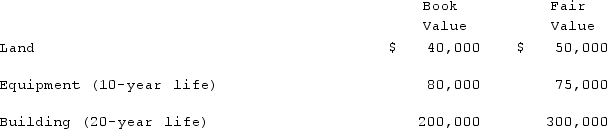 If Watkins pays $300,000 in cash for Glen, at what amount would the subsidiary's Building be represented in a January 2, 2020 consolidation?
 (Multiple Choice)
4.8/5 (88)
(88) Bassett Inc. acquired all of the outstanding common stock of Brinkman Corp. on January 1, 2019, for $422,000. Equipment with a ten-year life was undervalued on Brinkman's financial records by $48,000. Brinkman also owned an unrecorded customer list with an assessed fair value of $71,000 and an estimated remaining life of five years.Brinkman earned reported net income of $185,000 in 2019 and $226,000 in 2020. Dividends of $75,000 were paid in each of these two years. Selected account balances as of December 31, 2021, for the two companies follow. 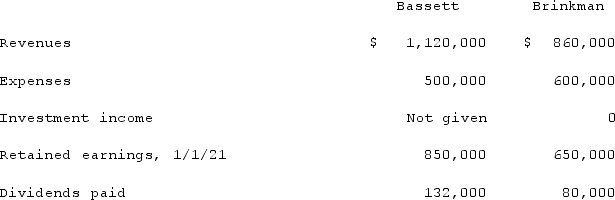 If the partial equity method had been applied, what was 2021 consolidated net income?
 (Multiple Choice)
5.0/5 (79)
(79) One company acquires another company in a combination accounted for under the acquisition method. The acquiring company decides to apply the initial value method in accounting for the combination. What is one reason the acquiring company might have made this decision?
(Multiple Choice)
4.8/5 (87)
(87) For an acquisition when the subsidiary retains its incorporation, which method of internal recordkeeping gives the most accurate portrayal of the accounting results for the entire business combination?
(Essay)
4.8/5 (62)
(62) Hoyt Corporation agreed to the following terms in order to acquire the net assets of Brown Company on January 1, 2021:To issue 400 shares of common stock ($10 par) with a fair value of $45 per share.To assume Brown's liabilities which have a book value of $1,600 and a fair value of $1,500.On the date of acquisition, the consideration transferred for Hoyt's acquisition of Brown would be
(Multiple Choice)
4.8/5 (73)
(73) Jackson Company acquires 100% of the stock of Clark Corporation on January 1, 2020, for $4,100 cash. As of that date Clark has the following trial balance: 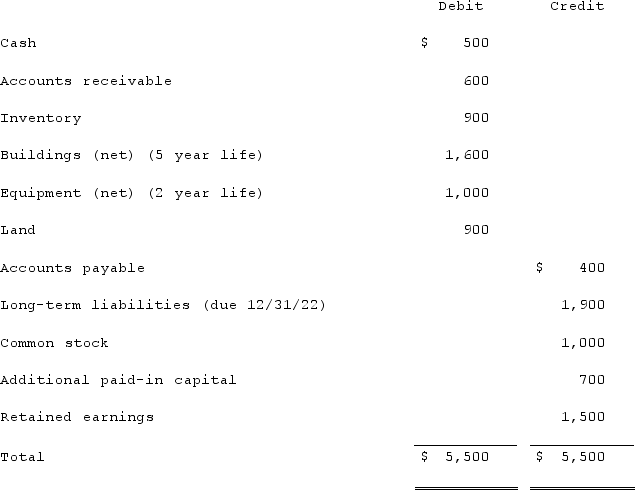 Net income and dividends reported by Clark for 2020 and 2021 follow:
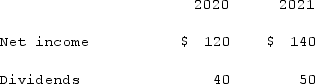 The fair value of Clark's net assets that differ from their book values are listed below:
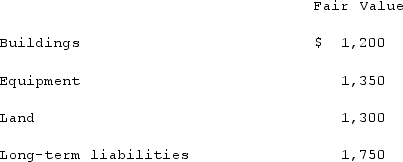 Any excess of consideration transferred over fair value of net assets acquired is considered goodwill with an indefinite life.Compute the amount of Clark's equipment that would be reported in a December 31, 2020, consolidated balance sheet.
Net income and dividends reported by Clark for 2020 and 2021 follow: The fair value of Clark's net assets that differ from their book values are listed below: Any excess of consideration transferred over fair value of net assets acquired is considered goodwill with an indefinite life.Compute the amount of Clark's equipment that would be reported in a December 31, 2020, consolidated balance sheet. (Multiple Choice)
4.8/5 (93)
(93) Jaynes Inc. acquired all of Aaron Co.'s common stock on January 1, 2020, by issuing 11,000 shares of $1 par value common stock. Jaynes' shares had a $17 per share fair value. On that date, Aaron reported a net book value of $120,000. However, its equipment (with a five-year remaining life) was undervalued by $6,000 in the company's accounting records. Any excess of consideration transferred over fair value of assets and liabilities acquired is assigned to an unrecorded patent to be amortized over ten years.The following figures came from the individual accounting records of these two companies as of December 31, 2020: 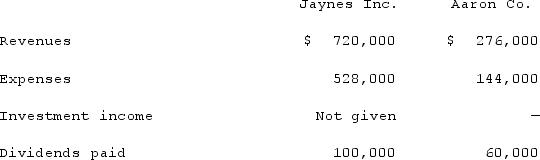 The following figures came from the individual accounting records of these two companies as of December 31, 2021:
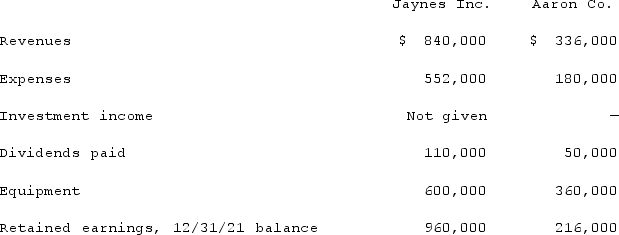 What was consolidated net income for the year ended December 31, 2021?
The following figures came from the individual accounting records of these two companies as of December 31, 2021: What was consolidated net income for the year ended December 31, 2021? (Essay)
4.7/5 (59)
(59) One company acquires another company in a combination accounted for under the acquisition method. The acquiring company decides to apply the equity method in accounting for the combination. What is one reason the acquiring company might have made this decision?
(Multiple Choice)
4.8/5 (83)
(83) Beatty, Inc. acquires 100% of the voting stock of Gataux Company on January 1, 2020 for $80,000, consisting of $20,000 in cash and 6,000 shares of stock. A contingent payment of $12,000 in cash will be paid on April 1, 2021 if Gataux generates cash flows from operations of $26,500 or more in the next year. Beatty estimates that there is a 30% probability that Gataux will generate at least $26,500 next year, and uses an interest rate of 4% to incorporate the time value of money. The fair value of $12,000 at 4%, using a probability-weighted approach, is $3,461. A contingent payment of $20,000, payable in stock, will be paid to the former owners of Gataux on April 1, 2021 if the market value of Beatty stock drops below $10 per share. Beatty estimates there is a 15% probability that its share price will not exceed that threshold. Using the same interest rate and probability-weighted approach, Beatty calculates the market value of the stock contingency to be $2,884.What will Beatty record as its Investment in Gataux on January 1, 2020?
(Multiple Choice)
4.9/5 (86)
(86) 
Filters
- Essay(0)
- Multiple Choice(0)
- Short Answer(0)
- True False(0)
- Matching(0)