



 Chat with AI
Exam 13: How Cells Obtain Energy From Food

Exam 1: Cells: The Fundamental Units of Life64 Questions
Exam 2: Chemical Components of Cells74 Questions
Exam 3: Energy, Catalysis, and Biosynthesis73 Questions
Exam 4: Protein Structure and Function71 Questions
Exam 5: DNA and Chromosomes69 Questions
Exam 6: DNA Replication and Repair61 Questions
Exam 7: From DNA to Protein62 Questions
Exam 8: Control of Gene Expression68 Questions
Exam 9: How Genes and Genomes Evolve60 Questions
Exam 10: Analyzing the Structure and Function of Genes59 Questions
Exam 11: Membrane Structure57 Questions
Exam 12: Transport Across Cell Membranes67 Questions
Exam 13: How Cells Obtain Energy From Food71 Questions
Exam 14: Energy Generation in Mitochondria and Chloroplasts72 Questions
Exam 15: Intracellular Compartments and Protein Transport55 Questions
Exam 16: Cell Signaling60 Questions
Exam 17: Cytoskeleton59 Questions
Exam 18: The Cell-Division Cycle67 Questions
Exam 19: Sexual Reproduction and the Power of Genetics61 Questions
Exam 20: Cell Communities: Tissues, Stem Cells, and Cancer57 Questions
Select questions type


Glycolysis and the citric acid cycle comprise two different sets of oxidation reactions.The reaction sequence for glycolysis is linear, whereas the reaction sequence for the citric acid cycle forms a circle.How does this difference in the arrangement of reactions influence the rate of these processes when an excess amount of a single intermediate is added?
(Essay)
4.9/5  (77)
(77) Although ATP and NADH are both important activated carrier molecules, ATP hydrolysis provides the direct molecular energy for most biochemical reactions.Why do the mitochondria also need to generate high levels of NADH?
(Essay)
4.7/5 (74)
(74) Indicate whether the following statements are TRUE or FALSE. If a statement is false, explain why it is false.
Correct Answer: Verified
Premises:
Responses:
(Matching)
4.8/5 (79)
(79) Which of the following processes do NOT take place in the mitochondria?
(Multiple Choice)
4.9/5 (84)
(84) Steps 7 and 10 of glycolysis result in substrate-level phosphorylation.Which of the following best describes this process?
(Multiple Choice)
4.8/5 (88)
(88) The simultaneous oxidation and phosphorylation of glyceraldehyde 3-phosphate forms a highly reactive covalent thioester bond between a cysteine side chain (reactive group ?SH) on the enzyme (glyceraldehyde 3-phosphate dehydrogenase) and the oxidized intermediate (see the arrow in Figure 13-23A).If the enzyme had a serine (reactive group ?OH) instead of a cysteine at this position, which could form only a much lower energy bond to the oxidized substrate (see the arrow in Figure 13-23B), how might this new enzyme act? (A)
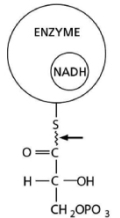 (B)
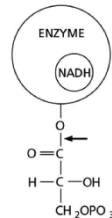 Figure 13-23
(B)
Figure 13-23 (Multiple Choice)
4.8/5 (73)
(73) The concentration of H+ ions inside the mitochondrial matrix is lower than it is in the cytosol or the mitochondrial intermembrane space.What would be the IMMEDIATE effect of a membrane-permeable compound that carries and releases protons into the mitochondrial matrix?
(Multiple Choice)
4.9/5 (71)
(71) Name the catabolic process that use substrate-level phosphorylation, identify where it takes place and how it is connected to oxidative phosphorylation.
(Essay)
4.8/5 (83)
(83) In step 2 of the citric acid cycle, the enzyme aconitase generates isocitrate from citrate.Which of the following statements about this reaction is TRUE?
(Multiple Choice)
4.8/5 (84)
(84) Which of the following cells rely exclusively on glycolysis to supply them with ATP?
(Multiple Choice)
4.8/5 (73)
(73) Pyruvate must move from the cytosol into the mitochondria, where it is oxidized to form CO2 and acetyl CoA by the pyruvate dehydrogenase complex.How many different enzymes and what total number of polypeptides, respectively, are required to perform this oxidation process in the mitochondrion?
(Multiple Choice)
4.8/5 (83)
(83) The advantage to the cell of the gradual oxidation of glucose during cellular respiration compared with its combustion to CO2 and H2O in a single step is that
(Multiple Choice)
4.7/5 (79)
(79) Compare and contrast the catabolism of carbohydrates, proteins and fats.Specifically, highlight the similarities and differences in how they are broken down (extracellular, and intracellular) for conversion into acetyl-CoA, the entry point into the citric acid cycle.
(Essay)
4.9/5 (75)
(75) The oxygen-dependent reactions required for cellular respiration were originally thought to occur in a linear pathway.By using a competitive inhibitor for one enzyme in the pathway, investigators discovered that these reactions occur in a cycle.What compound served as the inhibitor?
(Multiple Choice)
4.8/5 (69)
(69) Anaerobically growing yeast further metabolizes the pyruvate produced by glycolysis to CO2 and ethanol as part of a series of fermentation reactions.
A.What other important reaction occurs during this fermentation step?
B.Why is this reaction (that is, the answer to part A) essential for the anaerobically growing cell?
(Essay)
5.0/5 (93)
(93) In step 4 of glycolysis, a six-carbon sugar (fructose 1,6-bisphosphate) is cleaved to produce two three-carbon molecules (dihydroxyacetone phosphate and glyceraldehyde 3-phosphate).Which enzyme catalyzes this reaction?
(Multiple Choice)
4.9/5 (78)
(78) Glycolysis is an anaerobic process used to catabolize glucose.What does it mean for this process to be anaerobic?
(Multiple Choice)
4.9/5 (86)
(86) Which of the following descriptions best matches the function of a mutase?
(Multiple Choice)
4.9/5 (77)
(77) 
Filters
- Essay(0)
- Multiple Choice(0)
- Short Answer(0)
- True False(0)
- Matching(0)