



 Chat with AI
Exam 18: Ketones and Aldehydes

Exam 1: Structure and Bonding127 Questions
Exam 2: Acids and Bases; Functional Groups136 Questions
Exam 3: Structure and Stereochemistry of Alkanes134 Questions
Exam 4: The Study of Chemical Reactions128 Questions
Exam 5: Stereochemistry132 Questions
Exam 6: Alkyl Halides; Nucleophilic Substitution137 Questions
Exam 7: Structure and Synthesis of Alkenes; Elimination131 Questions
Exam 8: Reactions of Alkenes134 Questions
Exam 10: Structure and Synthesis of Alcohols136 Questions
Exam 11: Reactions of Alcohols125 Questions
Exam 12: Infrared Spectroscopy and Mass Spectrometry121 Questions
Exam 13: Nuclear Magnetic Resonance Spectroscopy130 Questions
Exam 14: Ethers, Epoxides, and Thioethers127 Questions
Exam 15: Conjugated Systems, Orbital Symmetry, and Ultraviolet Spectroscopy130 Questions
Exam 16: Aromatic Compounds128 Questions
Exam 17: Reactions of Aromatic Compounds129 Questions
Exam 18: Ketones and Aldehydes131 Questions
Exam 19: Amines127 Questions
Exam 20: Carboxylic Acids125 Questions
Exam 21: Carboxylic Acid Derivatives130 Questions
Exam 22: Condensations and Alpha Substitutions of Carboxyl Compounds127 Questions
Exam 23: Carbohydrates and Nucleic Acids126 Questions
Exam 24: Amino Acids, Peptides, and Proteins127 Questions
Exam 25: Lipids127 Questions
Exam 26: Synthetic Polymers128 Questions
Select questions type


In carbon NMR, the carbon atom of the carbonyl group in aldehydes and ketones has a chemical shift of about ________.
(Multiple Choice)
4.7/5  (80)
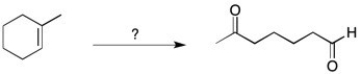
(80) 
When the carbonyl group of a neutral ketone is protonated ________.
(Multiple Choice)
4.7/5 (71)
(71) Provide the single reagent necessary for the conversion of cyclobutanone to the compound shown below. 
(Essay)
4.8/5 (71)
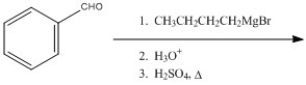
(71) 
An ylide is a molecule that can be described as a ________.
(Multiple Choice)
4.7/5 (69)
(69) Consider the equilibrium of each of the carbonyl compounds with HCN to produce cyanohydrins. Which is the correct ranking of compounds in order of increasing Keq for this equilibrium?
(Multiple Choice)
4.9/5 (82)
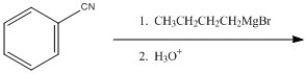
(82) 
Provide the major organic product which results when PhCHO is treated with the following sequence of reagents: 


(Short Answer)
4.9/5 (73)
(73) 
Filters
- Essay(0)
- Multiple Choice(0)
- Short Answer(0)
- True False(0)
- Matching(0)