Multiple Choice
A solution of Compound 1, shown below, absorbs light maximally at 448 nm in the absence of copper(II) ions but shifts to a 623 nm absorption maximum upon the addition of Cu2+. Which of the following best describes this process? 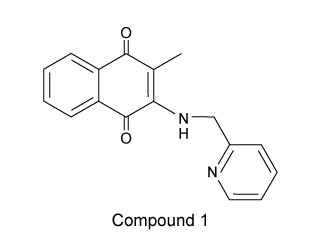
A) Changes in electronic structure cause the solution to change from yellow to blue.
B) Changes in vibrational modes cause the solution to change from green to yellow.
C) Changes in the mass-to-charge ratio (m/z) cause the solution to change from violet to orange.
D) Changes in nuclear spin cause the solution to change from colorless to violet.
Correct Answer:

Verified
Correct Answer:
Verified
Q175: Passage<br>The β-lactam scaffold is an important feature
Q176: Which term can be used to classify
Q177: Passage<br>Fluorescent amino acids are useful for labeling
Q178: Passage<br>Chloramphenicol (Compound <strong>1</strong>) is an antibiotic that
Q179: Compound <strong>1</strong> is shown below. <img src="https://d2lvgg3v3hfg70.cloudfront.net/MD0008/.jpg"
Q181: What structure is equivalent to Compound 1
Q182: The solutes in an aqueous reaction mixture
Q183: Passage<br>The protozoan Euglena gracilis expresses glycosyltransferases (enzymes
Q184: Passage<br>Fatty acids (FAs) are lipids that play
Q185: What is the product when (2R,3R)-2-bromo-3-methylpentane is