Multiple Choice
Passage
The alkaline-earth metals are a highly reactive family of metals occupying Group 2 (IIA) of the periodic table. In their elemental form, the alkaline-earth metals have a shiny, silvery-white to slightly yellowish appearance. The alkaline-earth metals exhibit some similarities to the chemistry of the alkali metals (Group 1) but are a little less reactive.Atoms of the alkaline-earth metals (M) have only two valence electrons and a low first and second ionization energy. Consequently, these metals readily lose both electrons to produce cations with a +2 charge (M+2) during reactions with nonmetals. As a result, the alkaline-earth metals do not exist in their elemental metallic form in nature. Instead, the Group 2 elements are found primarily as metal oxides, which form by reacting oxygen (Reaction 1) .

Similarly, elemental samples of alkaline-earth metals will react with elemental halogens (X2) to form metal halides (Reaction 2) , all of which are ionic except for BeCl2.

Except for beryllium, the alkaline-earth metals react with water to produce very basic metal hydroxide solutions and hydrogen gas (Reaction 3) .

The most difficult alkaline-earth metal to study is radium, because it is a rare radioactive element that is produced from the nuclear decay of uranium. The most common natural isotope, radium-226, has a half-life of 1,600 years and decays by alpha emission into radon-222 (Reaction 4) .
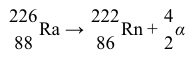
-Moving down the column, the alkaline-earth metals are observed to give increasingly vigorous reactions when forming ionic bonds with nonmetals (Reactions 1-3) . Based on atomic properties, this trend in reactivity is best explained by comparing:
A) the energy required to remove an electron from each atom.
B) the tendency of each atom to attract electrons within a bond.
C) the extent to which the electron cloud of each atom can be distorted by an external charge.
D) the energy released when an electron is added to each atom.
Correct Answer:

Verified
Correct Answer:
Verified
Q4: Passage<br>Dmitri Mendeleev is credited with grouping the
Q5: Which of the following molecules has the
Q6: Which of the following molecules exhibit an
Q7: Passage<br>Depending on the active compound's specific method
Q8: Passage<br>Cyanide (CN<sup>−</sup>) is a powerful, rapid toxin
Q10: Copper plays a vital role as a
Q11: Passage<br>The alkaline-earth metals are a highly reactive
Q12: A sample of potassium-42 was measured to
Q13: Passage<br>Catabolism is an oxidative process in which
Q14: Passage<br>Oxytocin is a naturally occurring peptide hormone