Multiple Choice
Passage
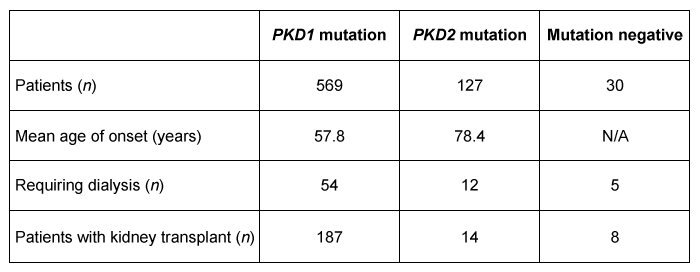
Autosomal dominant polycystic kidney disease (ADPKD) is one of the most common heterogeneous disorders, with a reported incidence of 1 in 1,000 people. The primary pathology is the development of numerous fluid-filled renal cysts that ultimately expand and severely impair kidney function. By age 60, approximately 50% of patients with ADPKD progress to end-stage renal disease (ESRD) and kidney failure. Clinical complications include high blood pressure, urinary tract infections, and cysts in other organs such as the liver and pancreas.Approximately 85% of ADPKD cases are caused by mutations in the PKD1 gene, which codes for the protein polycystin-1 (PC1) . The remaining 15% of cases are caused by mutations in the PKD2 gene, which codes for the protein polycystin-2 (PC2) . The PC2 protein functions as a mechanically activated calcium (Ca2+) channel in ciliated renal epithelial cells. PC1 and PC2 interact via their C-terminal cytoplasmic tails to form a heteromer that modulates intracellular calcium homeostasis. Disruption of calcium signaling as a result of mutations in either PKD1 or PKD2 is associated with increased cell growth and cyst formation in ADPKD patients.To identify individuals with mutations in PKD1 and PKD2, researchers analyzed phenotypic and genetic data from patients with established renal disease, as shown in Table 1.Table 1 Comparison of Renal Disease Onset and Symptom Severity in Various Patient Groups
 Next, researchers examined how phenotypic disease severity was affected by both the position of the mutations in PKD1 (5′ or 3′ end) and the type of mutation in PKD1 or PKD2. In Figure 1, disease severity is given as the cumulative probability of renal survival as a function of age.
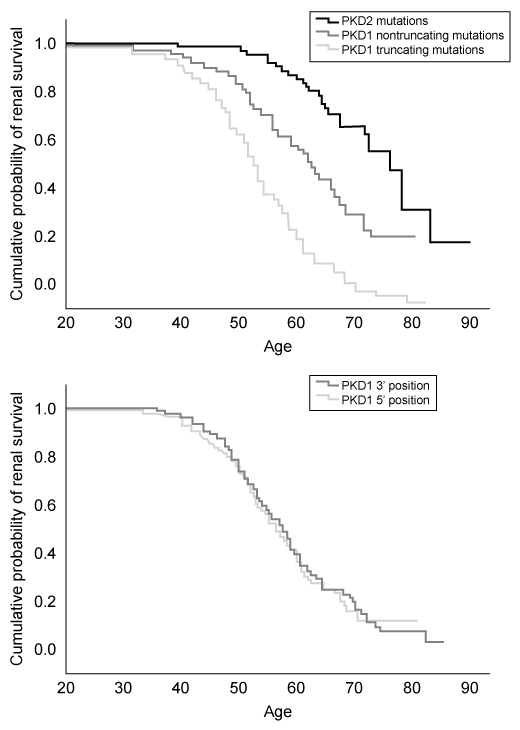 Figure 1 Probability of maintaining healthy kidney physiology as a function of age, analyzed by mutation type and position
Adapted from Cornec-le gall E, Audrézet MP, Chen JM, et al. J Am Soc Nephrol. 2013;24(6) :1006-13.
-Which set of amino acids would most likely be found in the pore of the channel formed by PC2? (Assume the amino acids are at physiological pH.)
A) D and E
B) R and K
C) V and L
D) S and T
Correct Answer:

Verified
Correct Answer:
Verified
Q237: Passage<br>Within the Actinopterygii (bony fish) lineage, marine
Q238: Which of the following cellular processes would
Q239: Passage<br>Each time a eukaryotic cell replicates its
Q240: Passage<br>A 6-day-old, genotypically normal (46,XX) female patient
Q241: Which of the following is generally true
Q243: During a parasitic infection, which of the
Q244: Passage<br>Bone remodeling is the continuous, microscopic process
Q245: Passage<br>Abnormal blood lipid levels play a significant
Q246: Renal studies in mice have revealed that
Q247: Passage<br>Viruses are known as obligate intracellular parasites